Tuesday, June 12, 2007

Bookmarks for April/May 2007

Okay, so this is a bit late, but I've been doing the paying job and so haven't gotten to much else in the past few weeks.

First, let me note that I have let my subscription to Poetry lapse. I have had it now for just over two years (and I bought copies now and then before that), but I have been conflicted about the magazine for a while, and having gotten about three issues behind in reading, wondered if it was worth the $35 a year to keep it coming. Few of the poems do much for me, the reviews are sometimes helpful and often times piss me off (their anti-religion bias, in particular, really upsets me), and the special features either thrill me or just frustrate me with their pretentiousness.

I originally subscribed for two main reasons. First, as a poet, I wanted to read what is considered, by many whose judgement is beter than mine, good work, to find what I could do to improve my own poetry. Second, I love poetry, and this is the premier publication. But I don't know that I should keep it up. Any comments would be helpful.


Speaking of things I've read in Poetry, an essay I read there a few months ago lead me to purchase a copy of Poems of Paul Celan. I am probably a sucker for stuff that connects art and suffering, and when I found Michael Hamberger's translation (1980) for a small price, I decided to get a copy. After a couple of months of trudging through it, I've come to the conclusion that either I am not reading right, or the poems are indecipherable. I don't mind working to read poetry, but there is nothing to hold most of these poems together. They seem to work on a juxtapostion of images and distorted syntax, much like that of E.E. Cummings. But unlike Cummings' verse, these just hang there. Celan appears to have had a much darker vision of the universe than Cummings, but there isnt much to even look at in the images. I just didn't get it.

A few weeks ago, I finished reading Robert B. Parker's version of the gunfight at O.K. Corral (and I guess the events leading up to it), entitled Gunman's Rhapsody. This was, as usual with Parker, an entertaining read, but not much more. The draw for many readers is going to be that we get to see, supposedly, Wyatt Earp and his brothers in a more real, human light than history books typically render them. Maybe that happens, but I couldn't help thinking I had Spenser in a cowboy hat. The story moves along well enough, and I did find myself caring for the characters, but while Parker gives us, in Wyatt Earp, a man with scruples and foiables of his own, he paints his villians so broadly that the old Time/Life books seem interesting. And I hope I was not the only one to see the irony in that Earp is supposed to be the quintessential "man of few words," but that he had an awful lot to say.


Several months ago, I set out to read an anthology I've had on my shelf for some time, Contemporary American Poetry, edited by A. Poulin Jr. and Michael Waters (seventh edition, 2001). I am finishing it now. I won't quibble about the exclusion of poets that have come into more reknown since this edition was published, but I am a little concerned that writers like Stephen Dunn and Raymond Carver are omitted. I know that like "best of" lists, none can make everyone happy. However, leaving Dunn, in particular, out seems almost criminal. That said, I do very much recommend this book. Each poet, from Ai to James Wright, is amply represented here, and there is much to demonstrate that American Poetry did not die with Frost.


Thursday, March 22, 2007

Bookmarks for March 2007

Reflections on Classrooms and Their Characters by Elizabeth Joseph. I have to admit up front that Elizabeth Joseph is a friend and colleague. I also have to be honest I am a sucker for good teacher stories. So you should not be surprised when I heap praise on her book. I won't gush for now, but I do want to recommend this collection of wonderful stories to anyone who can find it. Betsy writes about the people, mostly students, she has encountered in her fascinating journey as a teacher. She now teaches English at Eastfield College, but has also worked at the high school and middle school levels, and has taught kids at a school for Orthodox Jewish boys and inner city students at W.T. White. What I like best about these stories is that although the book as a whole is about her journey, the focus is not on her. There is nothing that screams "Look at what I did!" in these memoirs. That is a difficult achievement to pull off. One gets an honest glimpse, without overexuberance and without the bitterness that could mark years of teaching, but not without real feeling for the women, men, and children that have had the great blessing to be in her classrooms.


A Thousand Nights of Stars by Walt McDonald (2004). Readers of this blog will note that I am a fan of McDonald's poetry. The book jacket notes that this may be his final collection, and that makes me sad. Here, McDonald's usual subject matter is present. He writes about childhood, raising children (and letting them go), his experience with war (as a young man watching relatives and friends go off to it and as a former pilot). Some of the poems here could use a little revision, but on the whole this is a very satisfying and sometimes powerful collection.


In preparation for my American Literature class, I also re-read Winesburg, Ohio by Sherwood Anderson. Anyone wanting to learn to write fiction would do well to read this book. These are some of the most beautifully sad stories I've read in my life.

Monday, February 19, 2007

Bookmarks for January/February 2007


After I'd finished Franz Wright's Walking To Martha's Vineyard (2003), I immediately started over and read it again. Something about the collection bothered me. I'd read a handful of Wright's poems before, some from this book, and I had found most moving and thought provoking, but as I read the whole book the first time, I couldn't shake the fact that this volume had earned Wright a Pulitzer Prize, and I just couldn't see why. However, after a second helping, I began to realize that the first time through I was focused on the pieces here that seem to rely mostly on image for their effect on the reader, and I just wasn't always sure what that effect was supposed to be. During the second reading, I noticed that there is a narrative here that is like real life: in one moment disjointed, in another fluid, days and nights filled with startling moments of sadness and joy, thrill and disgust. Walking to Martha's Vineyard is also an inspiring volume of poems, not because one reads them and feels vaguely better, but because one senses that the poet has encountered grace, a frightening and beautiful communion with God.


I tried reading A Coney Island of the Mind by Lawrence Ferlinghetti (1958) more years ago than I care to admit, but I know it was when I was quite young. I never finished it then, and ironically, my youth probably worked against me. I say this is ironic because the book is filled with the brashness and vigor of youth. The poems rebel against many things, but they are not about rebellion for rebellion's sake. The bring the reader to rethink the world in lines that are as fresh today as when they were first read (or heard), and even if one does not come to the same philosophical place as Ferlinghetti, one does have to realize that powerful thoughts have fueled these verses. Ferlinghetti has no problem dropping in lines from other poets, often in parody (especially of Eliot). The poet is "constantly risking absurdity," but these poems aren't act, but a call to action.


Have started reading an interesting book by Ted Kooser, Winter Morning Walks: 100 Postcards to Jim Harrison. These poems were written during Kooser's convelescence from his chemotherapy, and so far they are a bit different from the crafted poems of his other books. These seem to be just what they say they are: notes on postcards. But oh what notes! Most of these poems don't drop the kind of bombs I found in Kooser's Delights and Shadows, but they hit with short jabs, image and mood driving action that takes place mostly within.

Wednesday, February 14, 2007

Music Notes for January/February 2007


Pat Metheny and The Heath Brothers: Move To The Groove. This is a disappointing release not because the material isn't good, but because it is uneven. Metheny's guitar is a bit subdued in some places, but the solos are nice, and the Heath Brothers are terrific to listen to. But the disc as a whole seems like a bit of a compilation, rather than a cohesive whole.

The first two songs, "Sassy Samba" and "Arthurdoc" are a nice collaborations of what might seem too disparate musical entities. They swing nicely and provide plenty of room for nice solos. The final, title track works the same. But in the middle are also good pieces that just don't seem to fit the disc. I really like the "Guitar Improvisation." Metheny transmits a lucid, beautiful solo that takes a piece of his composition "James" near the end. Next comes the group's take on "All The Things You Are," a classic nicely rendered.

My liner notes say that the next two songs, "Is That So" and "I Waited For You" have someone other than Metheny at the guitar. One of these songs, however, has guitar/and vocal (as instrument, not singing words) lines that remind me of some of the pieces on Metheny's fantastic Secret Story.

This is a disc that fans of Pat Metheny and/or The Heath Brothers will want in their collections. But I suspect it won't get as much play as others.


I am very happy to see that one of my favorite radio stations, KNTU, has finally gone twenty four hours a day. For years, they have gone off the air at midnight and returned at six in the morning. Now we can get more of that sweet jazz (and some interesting classical programs on Sunday) in the middle of the night/early morning (during the time I'm usually working!). I know that with the Internet, there are many good stations available playing jazz, but I am thrilled to be able to get more of the station I probably listen to most.
Speaking of Internet radio, I did run across something (through iTunes) recently that I have enjoyed: Modernera.fm. This station provided a fascinating mix of classical, new age, and ambient music that is not only relaxing, but actually works very well together. Instead of solo or chamber pieces that are called classical, but are really not, this station actually plays real classical music and seques it well with the other genres. I've not been much of a fan of ambient music, but whoever runs this station has managed to pick good material (like Fripp and Eno). I don't care for their website, as it is only a portal for the station. I'd like to see a bit more information about the music, playlists, and that sort of thing. But the station is well worth listening to.


Sunday, January 21, 2007

Observations (#5)


There are wounds
that cannot be dressed
cuts that cannot be stanched
and mending that will
not hold together.

Tuesday, January 16, 2007

Sports Notes for January 2007

Shut up, Dale Hansen. You and the rest of the Dallas media wouldn't know a good coach if he went undefeated. The problem is that you and the rest of the sport media world get pissed when someone thinks questions are stupid or gets tired of answering the same old questions. Or just doesn't want to talk at all. Whatever happened to the right to remain silent?

Usually I don't give a damn about the idiotic things that come out of the mouths of athletes and sometimes coaches. But isn't it odd that players and coaches are fined and hated by sports media when they choose to not talk and the same often happens when they choose to give less than pat answers?

Beckham is coming to the U.S. Here's is what doesn't surprise me. 1. Rock star soccer player goes to the city of stars rather than a team he'd be a fit for. 2. The sports media uses the event to further make fun of the world's most popular sport. Next time some football fanatic spouts some crap about how "boring" he thinks soccer is, remind him of that sham-event-travesty-dull-as-rust piece o' crap called the BCS Championship game.

What was that bullpucky Sha-squeal O'Neal was saying about he and Martin Luther King? Can anyone actually believe him?
What's the matter with my Stars? They did beat the Kings the other night without some of their top players, so maybe things are looking up. I'm happy for Turco and Boucher making the All-Star squad, but there are some other names that deserve the be there too.
The Mavericks are going to win it all this year. Tremble, Miami. My man Dirk should win the MVP, unless something goes horribly wrong in the second half of the season. Clearly no one is better so far this year. Again tonight he lights up the fourth quarter. The team is making a way to win nearly every game. Even the most recent loss (to the much hated Lakers) was close. Tremble, foes. Tremble.

Sunday, January 07, 2007

Music Notes for December 2006

Okay, I haven't been able to get any new music, and no one has sent anything to me to review, so I don't have much to say right now. However, I figured I could pass on a few thoughts on that have been going through my speakers as I work.

On iTunes:
I have been listening to a couple different radio stations. The last few days, I've listened to Pat Metheny Radio (which can also be accessed by his website). They rotate about three or four different playlists, but I don't know how often. This gives a wonderful cross section of his work in all contexts, demonstrating the breadth of Metheny's music without a lot of the jarring feeling one might get moving from a piece he might have recorded with his group to something he did for a soundtrack. Speaking of which, I even got to hear pieces from his Passagio Per Il Paradiso, one of the few cds he has recorded that I have not hear all the way through. Each playlist contains at least one track from his latest with Brad Mehldau. Right now, the playlist features two songs from the upcoming quartet disc with Mehldau (Metheny Mehldau 2).

In the "Classical" section of iTunes radio, there is a stations called Whisperings. It is solo piano, but it really isn't classical music. I could see most people categorizing it as new age, but I don't quite see it that way. It is relaxing and enjoyable. I have listened to it mostly in the morning during my quiet reading time or while I was trying to relax at work.

In the "Jazz" section is a pretty nice station called Forever Cool. This is a pretty nice place for some classic jazz, particularly if you are into West Coast or "Cool" jazz. I have really liked this station not only for the good tunes I already enjoy, but they do play some cuts that aren't likely to make it to KNTU, my regular jazz station, like from imports or alternate takes. It is the one place lately I'm likely to hear Wes Montgomery, Miles Davis, and Dave Brubeck in the same hour. That makes for some nice listening!

All these iTunes stations have free and pay versions, though the only "commercial" on the Pat Metheny station is really for the station itself and his website. I'm too cheap and broke to listen to radio I have to pay for, but the commercials aren't too bad. My main problem with this, and often with iTunes in general, is that the player takes so much memory or something to play that if I am multi-tasking too much, then I sometimes end up with my machine freezing up as I'm working. That can be more than a bit of a hassle.

Welcome back Mark Chapman!
Alright, I know Mark and his show, The Art of Sound, didn't really go away, but I didn't get to listen to it for awhile, and when I came back, there was a lot of stuff in its place, including a Big Band show that was really the same damn thing every single time I listened. But it does appear that his show is back to mostly regular times (about 7 to 10 p.m., weekdays, with some other jazz shows following). If you enjoy an eclectic mix of great jazz then this is the place to be. Mark (with Bruce Tator joining on Wednesdays) knows a lot about the history of America's music, and is fascinating to listen to, but doesn't talk so much that you forget the music.

And for those who like Smooth Jazz (I prefer to call it Safe Jazz mixed with R&B), KETR does play this from 5-7 weeknights and from 11 p.m. to 6 a.m. overnight.

Playlists on Winamp
Of course, I've been listening to a few of my playlists through Winamp lately too. I have a good playlist for jazz piano trios and one for jazz guitar. Also there is one for my quiet times called "relax." That one sometimes gets started and stays on as I work. Too much stress for the holidays. I love Winamp because it does not require a lot of memory and there are hundreds of skins that make it a bit fun. I've actually set mine to change skins with each song. Doing that is fun, but sometimes when it goes from a "Classic" skin to a "Modern" one and back again, there are problems. But overall, this is an excellent player for listening to stuff on your computer, which for me, is the best stereo I've ever had. Anyway, i don't know who or what the llama is, but its ass is definitely kicked with Winamp.

Christmas Pageant
Of course the highlight of my Christmas in the past few years has been the Pageant at my church. This year my Christina has a little solo and it was delicious. The whole thing went really well this year and I again found myself warmed and actually ready to enjoy Christmas. Much praise to God and thanks to Helen and the multitude of volunteers for a truly edifying experience.


Tuesday, December 26, 2006

Bookmarks for November/December 2006

Well, I have managed to do a little reading..precious little as far as I'm concerned. But until summer comes and I can spend my days with books, here is what has come along lately.


I came across Harry G. Frankfurt's On Bullshit (2005) in a stack of books my wife was assigned to read for a course designed for teaching students how to do research and write about History. Of course, the title caught me and as a professor of English who must read each year so many pieces that flirt, ignore, and presentiment the truth, I had to read the book as soon as she was done.


Perhaps what is most interesting about this book is Frankfurt, a professor of Philosophy, spends a great deal of time distinguishing bullshit (and those who produce it) from lies and liars. In doing so, he comes to an important conclusion: "The bullshitter...does not reject the authority of the truth, as the liar does, and oppose himself to it. He pays no attention to it at all. By virture of this, bullshit is a greater enemy of the truth than lies are" (61).

I recommend this little essay to anyone who cares about what is true as opposed to what seems right. If I can get it past those who might be offended by the title and use of what is considered by some to be cursing, I'll certainly consider making it required for my English 1302 classes (where argument and research are essential elements).

I have also read books by Lawrence Block (Hit List) and Robert B. Parker (Back Story). I have re-written my reviews for these books a couple of times and for some reason Blogger keeps losing this material, so I'm going to post this for now and try to get the reviews on later.

Wednesday, November 22, 2006

Small

Before dismissing the small stuff
remember the kidney stone
as tiny as sand
can make a man believe
death is on the way.

Thursday, November 09, 2006

Knowing


And the rain came
and the weeds grew stronger
but the grass thought
itself better. The rain
was quiet. Knowing.

Friday, October 27, 2006

Not Smart

I cannot be
intellectual
because
when I sin
I am out
of the mind
You gave me.

Thursday, October 26, 2006

Bookmarks for September 2006


Not much for personal reading these days. Bogged down with the paying job. But a few things have come my direction....

Poetry Magazine. The double July/August "Humor Issue" is better than last year's. There were some fine parodies, a few attacks on Bush (who frequently provides paint to the palette of every humorist), and some interesting cartoons.

The September issue had a few fine pieces, but what struck a chord with me was Dan Chiasson's review of Mary Karr's Sinner's Welcome. There are two serious problems with this review. First, Chaisson uses his forum to attack religion in general. He writes, "Sinners are going to like it: in a culture where conversion-narratives, particularly if they involve a certain crucified someone, sell books, and elect presidents, Karr seem to have found another very marketable story to tell" (450). So Karr's faith is not genuine because the idiot president used religion to get elected? So Karr's poetry isn't good because she happens to profess to believe in God and actually allow her poetry to be colored by her beliefs and her spiritual struggles? In discussing Karr's afterward, Chiasson belittles religious people of every faith by misreading her intent and writing that Karr "presents her HBO-ready conversion in commodity terms" (451).


Chiasson further misses the mark when he writes of Karr's poems, "There has never been a style more gilded with workshop aptness" (451). Okay, maybe some of the poems read like they have been through the workshop wringer. But isn't it ironic that Poetry often features pieces decrying such work, yet the majority of what they publish (particularly from new poets) comes from just the same place.

Click here should you wish to read my review of the same book.

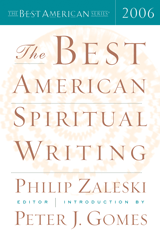
Finished reading The Best American Spiritual Writing. This seems to be an eclectic mix of genres that in some general way are about spirituality. Actually, most of the pieces seem to be personal essays and poetry, so I was mostly right at home. After wading through the forward and introduction, I found myself reading through "The Gift of the Call," an essay that might have had more resonance with me had I expected a personal testimony. Not a great start, but then I read "The Acusmata of Pythagoras" by Brian Blanchfield. Here, if nothing else, was something new. When I got to "Best of Intentions" by Harvey Cox (after some thoughtful poems), I was a little more into the book. I may have been biased at his focus on teaching and tolerance, but I think this piece is worth reading. "Sighs Too Deep for Words" is an honest account of Helen Gardner's spiritual journey summed up well by the subtitle: "On Being Bad at Reading the Bible."After a few more okay, but not terribly memorable essays, I found myself reading two moving pieces, Todd Gitlin's "A Skull in Varanasi, a Head in Baghdad" and "When the Candle Is Blown Out," by Natalie Goldberg. I liked reading, after these, the meditation on suicide bombers by Mary Gordon called "Appetite for the Absolute." I don't think I understood what I believe is the only short story in the collection, "Dr. King's Refrigerator" by Charles Johnson. I did like the essay "High Fidelity" by Bill McKibben about people who stay through many changes in their church over the course of their long lives. "Kierkegaard for Grownups," by Richard John Neuhaus, is particularly interesting and informative. I am still at a loss to understand the inclusion of Oliver Sacks' essay "Speed." I had read it before in the Best American Essays volume, and reading it again helped me appreciate it more, but I didn't see it as a spiritual piece of writing, even in the broadest sense. On the other hand, I found Huston Smith's "The Master-Disciple Relationship" and Kenneth L. Woodward's "The Passion's Passionate Despisers" to be thought provoking.

Probably the best thing about this book is that it contains some pretty good poems sprinkled throughout. Almost every one is a gem, most by notable poets like Scott Cairns, Philip Levine, and Charles Wright. On the whole I recommend the book, though I supposed some will pick and choose pieces more to their liking.

Next month, I hope to write about a book in Lawrence Block's "Keller" series and perhaps one of Robert Parker's more recent Spenser books. But who knows....

Thursday, October 19, 2006

Music notes for September 2006


I have waited a long time to get hold of Bob Curnow's L.A. Big Band playing The Music of Pat Metheny and Lyle Mays (1995). Now and then, KNTU will play a cut from this, but a single song only gets me thirsty for more. Finally it has become available on iTunes.
Just as with the Jason Vieux disc I reviewed recently, this project demonstrates what strong composers Metheny and Mays are. Standout songs from the Metheny Group repetoire, like "The First Circle," "Minuano," and "-It's Just-Talk" avoid what could be stale arrangements in the big band setting. The tunes sound fresh, as if they had been originally composed for this format. I also enjoyed the new setting for songs that originally appeared on Metheny's solo project Second Story: "See the World" and "Always and Forever." Here one can nearly hear that even when Metheny works around a simple melody, there is always an orchestra in this mind ready to sweep the listener into a joy that can only be expressed with the rhythmic nodding of the head. And "In Her Family" loses none of the grace that the original ballad retained, but hits with a powerful calm.


If you are a fan of big band music or a fan of Pat Metheny and Lyle Mays (the musicians or composers), this is a project that you will probably want in your collection.
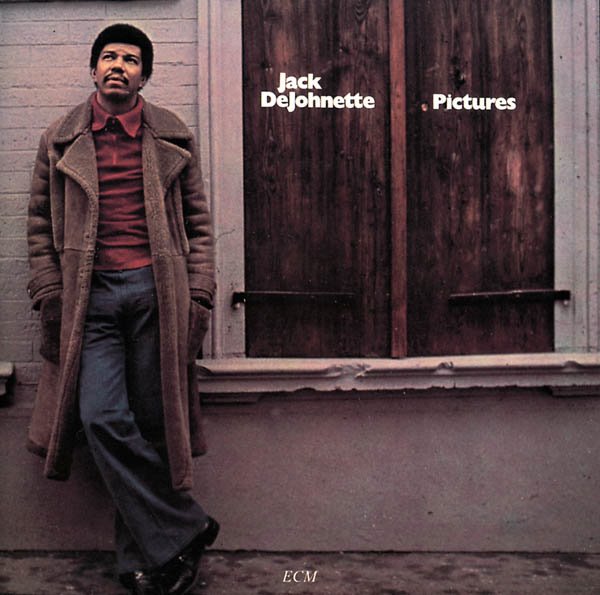
Those who love Jack DeJohnette the drummer should enjoy this little disc called Pictures (1977). It is a bit different from his work with Keith Jarrett's trio, and perhaps some of the seemingly free jazz or ambient type sections might be offputting, but I think this project is worth a listen. It is also nice to see DeJohnette the keyboardist, one who may not knock your socks off with amazing playing, but his sense of melody will show the discerning listener why he is such a great drummer.
Only two muscians: Dejohnette on drums, piano, and organ; John Abercrombie on electric and acoustic guitars. A fine mix.


The highlight of my musical month has to be the first release of a collaboration between Pat Metheny and Brad Mehldau (Metheny mentioned in his podcast that another disc would come out early next year). I am not surprised by how much I like this disc. What is nice is that there seems to be a real collaboration of performance. Most of the tunes were composed by Metheny, but Mehldau doesn't sound like a substitute for Lyle Mays. Both players' individual voices are clear here without drowning out the other. Most of the tunes are performed by only Metheny and Mehldau; however two songs come with Mehldau's bassist and drummer. (Metheny says the next disc will be more quartet oriented.)Two of the songs were previously recorded: Mehldau's "Unrequited" and Metheny's " Say The Brother's Name." The new versions are fine, neither improving or diminishing the earlier performances. Standout cuts are, "Ring of Life" and "Make Peace." But everything on this disc is good.

Miscellaneous: I've come across a few old discs that have peaked my interest and been added to various playlists for my working and reading times. I revisited Metheny's Question and Answer, something that should be in every guitar lover's collection....And speaking guitars, check out the project A Guitar Supreme: Giant Steps in Fusino Guitar. This is a terrific compliation of performances, produced by Jeff Richman, of great players handing tunes either composed by John Coltrane (like "Naima" and the title track) or made famous by Coltrane's performance (such as "Afro Blue" and My Favorite Things"). Great stuff...Just added tracks from Thrush Hour: Music to Make It Through Your Day by Jeff Thrush (former sax ace for Steve Taylor's band) to my quiet time playlist (called "relax" for reference)... Maybe next month I can write more, like about an old Michel Petrucciani cd called Date With Time that I scandalously found for 99 cents, or Larry Carlton's latest, Fire Wire, or maybe a cool project from an interesting group: California Guitar Trio's Rocks The West.
But we shall see...or rather, hear.

Wednesday, September 20, 2006

Nature


nothing
is so
natural
as a machine
breaking
down
or a body
rising
to fix it

Monday, August 28, 2006

Bookmarks for August 2006

Well, school is a startin' and so I need to post some thoughts on the last few books I've read.
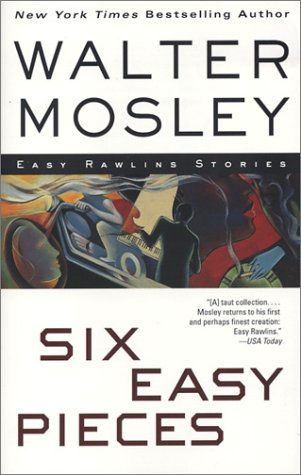
Walter Mosely's Six Easy Pieces (2003) is another novel told through short stories, this time involving his long-time character Easy Rawlins. Easy is dealing with the loss of his best friend Mouse, and doing so isn't made simpler for him by the questions he has to encounter, one of which is whether or not Mouse is actually dead. He also is unsure whether his beautiful girlfriend is faithful to him, and though he is trying to just do his job as head custodian at Sojourner Truth High School, he keeps getting pulled back to the detective work in the L.A. streets where it is hard to tell who is innocent. Most of these stories were originally published in paperback editions of other books, and each stands alone just fine. However the connected narrative, for me, is much more satisfying.
47 (2005) is Mosely's first attempt at the young adult novel, and it is a winner. Here Mosely tells the story of 47, a young man who is destined to be a force for emancipation, not only for the slaves on his master's plantation, but also for those bound by the mindset of slavery. 47 meets another slave named Tall John who speaks and acts as if from another planet and who helps 47 to realize his real identity, not his name, but who he really is and is meant to be.

This book is one of the most fascinating novels for young people I have read in years. The deft weaving of history and science fiction is masterful, but what I think is most important is how Mosely provides his readers an idea of mental slavery that engages his characters. This is a powerful, uplifting story. If it does not find its way onto high school reading lists, then something is seriously wrong.


My main complaint about Mary Karr's Viper's Rum (1998) is that it is too short. There is only 45 pages of poems plus the inclusion of Karr's now infamous essay "Against Decoration." But what is here is certainly worth reading. I did find myself a little put off by a couple of the poems. Well, put off isn't really accurate. The word "squeamish" comes to mind, but that might not be quite right either. Poems like "The Wife of Jesus Speaks" and "The Invention of God in a Mouthful of Milk" are likely going to make the more conservative reader uncomfortable, but careful reading will, I believe, show these to be as thoughtful and as inspiring as the rest of the collection. I did not find myself as moved as I did with Sinners Welcome; however, this volume has plenty to recommend it.

Sunday, August 20, 2006

A "Review" of Wikipedia

This summer I have become a bit of a Wikipedia addict. For now, I won't get into why, despite some reservations about credibility, I sometimes get distracted from important work by the desire to look up articles about interesting musicians, not so famous writers, and esoteric ideas. Suffice it to say that I often start to look up something I want or need information about and end up reading for hours.

But something has come up over and over as I read that has bothered me more than a little. This is the problem of including in the external links section of many articles, particularly those on contemporary and modern poets, links to what are supposed to be "reviews" or "critiques" of work by these writers. The issue may be one of simple semantics. However noting the discrepancy between critical analysis and criticizing is really important because those who are likely to make use of such links are probably going to be high school and college students, many of whom do not know the difference.

In terms of literature and other arts, the word criticism concern close reading (or observing) so that finer details (hopefully significant ones) and important, thematic connections are noted. Admittedly this is a realm that is not popular, particularly since it is rather foreign to most young students and unimportant to most of them or any other person except to professors whose life work seems to revolve around these writers. However, the rest of the world usually hears the word criticism only in its negative context: at best a list of flaws in a particular work; at best a bunch of reasons it doesn't live up to one's particular tastes. But literary criticism is not always critical in the same sense.

A review can be critical, and many publications contain reviews that incorporate critical analysis. However a review is usually a way or recommending one either buy the book (or go to the movie or listen to a cd) or avoid the same based on criteria that are usually matters of personal taste. I've never met a reviewer that didn't claim to have good taste or high standards. There are reviewers who are able to set aside their personal tastes to recommend something that might appeal to other people (I'm reminded of Roger Ebert giving thumbs up to some children's movies that he only enjoyed nominally because he thought that children would like them.) And reviews come in many different tones, from the snooty, supposedly highbrow voice of one who speaks as if she/he is the harbinger of good art to the angry voice of one who cannot tolerate anything outside his/her limited experience (I have in mind the many, whining reviews of jazz albums on websites devoted to heavy metal. Why bother?). This latter is a form of snootiness.

Not all reviews or reviewers are snots, but we do have to keep in mind that a review is about two things: taste and value. A good movie reviewer is not just telling you why he/she thinks you should or should not see a movie, often using his/her personal viewing experience as a guide, but also because one can only see so many movies, and it costs quite a bit to go to the theater. (At least it does for someone like me.)

Okay, so what does this have to do with Wikipedia? Well, the problem is that many of the "reviews" or "critiques" found in the external links section of articles about poets are not reviews or literary criticism at all, but mean-spirited, sometimes personal attacks by writer/reviewer/poet Dan Schneider from the This Old Poem section (called TOPs) of his website. Here Schneider picks apart one or more poems by a poet he has taken a great deal of time and energy to hate, usually working to revise the poem to, presumably, make it better. He uses a scoring system to eventually demonstrate how his version of the poem is of greater quality.

Look, I must admit that despite my own differences between his tastes or values and mine, Schneider has some important things to say about the state of contemporary poetry. While it might make me feel squeamish to have him attack poets I happen to like, it is fair for someone who loves poetry to expect writers to work harder than they often do and not produce mediocre work. It does appear, in the more reasonable arguments, that Schneider's war is really with two things, the mediocre and a publishing industry that produces what Donald Hall calls the
McPoem. I happen to value poetry, and so I, guardedly, applaud Mr. Schneider's effort and energy, if not his presentation.

But these are not, as I said, reviews. Many of these pieces are really personal attacks on the writers themselves and often use words like "stupid" or "boring" in the way a college freshman uses them to describe a textbook he has had to read. In what seems to be an attempt to be honest with his readers, Schneider relates a story of the writer in question, sometimes telling how that writer has been rude or unkind to him (he seems to take a lot personally). Some of these tales, perhaps unwittingly, show Schneider as a person who enjoys being a jerk. And while parts of these "reviews" fairly demonstrate where he thinks these poems stand up or fail, many just are just complaints.

Let me make a few things clear. Dan Schneider has every right to write and publish/post what he thinks about poets and poems. EVERY RIGHT. And as I stated before, he makes good points now and then, points that not only deserve, but need, attention. But they are not reviews, and Wikipedia should seriously consider dropping them. I suspect that unless Wikipedia better evaluates such things, the rift between students and the academic world will only widen, a problem Wikipedia should be concerned about.

Wednesday, August 09, 2006

Music notes for August 2006

Three good CDs this month. My main complaint is that they are all too short.

Jaco Pastorius/Pat Metheny/Bruce Ditmas/Paul Bley -- Jaco (1974). Though I was feeling a bit unsure as I sampled this in CD Source, I went ahead and got it. The disc is on the free jazz side and though I have supposed expanded (or degenerated) my taste, I am sometimes cannot listen to such things. But this one is not wild and harsh going in a dozen directions at once. There is still a sense of harmony and each piece (many of them rather short) segues into the next, so there is a feel that the disc is one continuous piece. All but one of the songs was composed by Paul Bley (electric piano) or by his then wife Carla. It is difficult to hear where Metheny is playing, but when you do, the solos are pretty nice. Of course this disc also documents Pastorius in all his youth and energetic glory. I believe this was recorded around the same time as Pat Metheny's first solo record, Bright Size Life, on which Pastorius also shines.
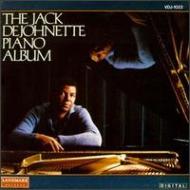
I picked up The Jack DeJohnette Piano Album (1985) at the same time I found Jaco. Of course any fan of modern jazz knows that DeJohnette is one of the finest drummers in music, producing his own terrific CDs as well as his stellar work with the Keith Jarrett Trio. But many are not aware that he is also a mighty good pianist in his own right. This is, for the most part, an enjoyable trio project where Dejohnette gives up the drum chair to Freddie Watts who is ably supported by bassist Eddie Gomez. DeJohnette plays synthesizer on a couple of cuts. While the purist might complain, the only song the synthesizer really got in the way is on "Time After Time," the Cyndi Lauper song that seems to be a favorite among many jazz musicians. On this song, the synth sounds like one of those keyboards one bought for sing alongs at home. Otherwise this is pleasant cd, demonstrating DeJohnette's considerable skill on the piano and as a composer. Several of the songs are tributes to his wife and to other great musicians like Ahmad Jamal and Bill Evans. In the liner notes, DeJohnette is quoted as saying about playing the piano, "I actually deal with it pianistically, not percussively as some people might expect." One listening to this disc could hear DeJohnette's strong understanding of what makes good music and perhaps even understand how that sense makes him a superior drummer.

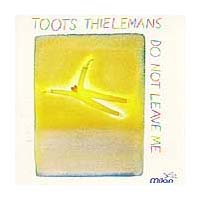
I found Toots Theilemans' Do Not Leave Me (1988) at a garage sale and paid 50 cents for it. This is a disc that is certainly worth more than that. Here the greatest harmonica player in the world (and not a bad guitarist) is documented in concert in his native Belgium performing with Fred Hersch (piano), Marc Johnson (bass) and Joey Baron (drums). This set (not really a whole concert it appears) opens with Jacques Brel's classic ballad "Ne Me Quitte Pas" ("Do Not Leave Me"). This seems an odd way to open a concert, but it works here, setting a good tone with Theilemans' expressive harmonica. Next comes medley of "Blue 'N Green" and "All Blues" that clocks in at over twenty minutes. This is probably the highlight of the disc each player getting a chance to solo and wind around two great jazz standards. Next comes "Stardust," and then "Autumn Leaves." On the last two songs, "Velas" and "Bluesette," we get to hear Theilemans on guitar, the latter where he accompanies his trademark whistling and the former in a tasty quartet piece. The disc ends with the last song and the audience fading out, leaving an unfinished feel to the project. I wanted/expected more. However, what we have is most satisfying.

Brief notes concerning last months discs: The B.B King disc Spotlight on Lucille was fine, highlighting the blues master's playing, though some cuts seem to be cut out of other pieces. The Lee Ritenour cd Alive in L.A. was much more like real jazz than I thought it was going to be. I got a kick out of his tribute to the great Wes Montgomery. New Age Bach by Joel Spielgelman was exactly what I thought it would be. It was probably worth the buck I paid for it.

In the future: I have preordered an upcoming album featuring my favorite guitar player and my second favorite piano player. I am so excited, I'm scared.

Another note: I was sad to see that Robby Steinhardt had left Kansas (by mutual consent), but happy to see David Ragsdale back to take his place. Click here for a good interview with drummer Phil Ehart at Classic Rock Revisited.

Bookmarks for July 2006

Okay, so I said, I'd be reading mostly poetry, but I got a bit caught up in these books...
I know that Walter Mosely is a bestselling author, but even more people should read him than they do. Most people I know haven't, and I'm not sure why. He has written the fine series of mysteries around the character Easy Rawlins and some well received science fiction books and one adolescent novel (which I hope to read in the near future). He also has a series of books about the world wise ex-con Socrates Fortlow. I had read the second in this series, Walkin' The Dog, some time ago. Recently, I read the first, Always Outnumbered, Always Outgunned. (Click the title to read an excerpt.)

The book is a series of linked short stories where readers watch Socrates wrestling with getting enough money to get by and with the moral and ethical questions faced by a black man and by the society he lives in. In the first story, "Crimson Shadow," he catches a young boy who has killed a neighbor's rooster. How Socrates handles this situation and tries to take care of this boy is not only touching, but speaks to the responsibility we all have to children and families in our neighborhoods. Mosely deftly walks us through Socrates' attempts to get a good, steady job in "Double Standard." We also see the role that guilt plays in a person's life and a hunger for redemption, not only Socrates' but that of the young man he wants to save, is a significant theme of the book.

The stories weave together nicely forming a novel that can easily be read at once or a little at a time. Mosely's well crafted narratives are thoughtful and real. Without sentimentality, this is a book of much needed hope.


Cherry is, I suppose, Mary Karr's sequel to The Liar's Club (click here for my post on this book). Where the first memoir focused on Karr's early childhood, Cherry concerns the years of middle school and high school. The book opens with a chapter about Karr leaving home, but the rest of the story is about the events which lead up to this moment. The book jacket describes the book as the "story of her tumultuous teens and sexual coming of age." I don't know about "coming of age," but sex is one of the main things this book revolves around. That and drugs and the usual problems of fitting in with people in a place one is not sure one wants to fit in.

I like many things about Cherry. I particularly like that Karr tells her story in her own powerful, honest way neither glorifying the era of "sex, drugs and rock and roll" (not that this time is any different) nor telling her readers "don't let this happen to you." Few writers focus on this time in one's life with such emotional honesty without going overboard in either direction. The story is what it is, and is powerful enough on its own. I also found myself strongly relating to her and her friends who read a lot and want more out of life than just the next dance. Further the book is funny where it needs to be and serious (without being maudlin) where necessary. I was particularly drawn in when I read passages where Karr tells of her own shortcomings as a friend.

A couple things bothered be about the book. I suspect that Karr's frequent shifts from first person to second person (speaking of herself with the pronoun "you") were meant either to create a kind of emotional distance from from whatever situation she was describing or to create a connection with the reader (a kind of you've been there too feeling). Karr is too smart a writer for gimmicks, but I found this a little distracting. I'm not sure everyone will feel this way, however. I was also a bit uncomfortable with the frank (though not graphic or pornographic) discussions of her sexual, really sensual, feelings. This is not a criticism of the book. These were not titillating or even unnecessary sections. I'm sure my discomfort largely comes from being a male and that I'm not used to such reading, particularly about women. Read the book, but be forewarned.

Madeline L'Engle's collected poems, The Ordering of Love, got better as I moved through it. Some of the pieces are really no stronger, well-meaning as they are, than greeting card verse that if you get you find nice because someone thought to put the words together and someone else thought well enough of you to send them. Some of these pieces would make terrific hymns. These poems will, undoubtedly, be inspirational to some. I even found myself edified by them. But many were not really good art.
Fortunately, not all of the poems in this collection are mediocre and banal. I got the sense that L'Engle, a writer of considerable skill and craft, learned more with each collection how to write not just a poem that expresses, but one that actually says something in thoughtful and cleaver ways. She is best in two areas: the sonnet and the monologue. The voice in most of the monologues are biblical characters. One sees encounters with God from a position that removes the distance created by time and the dry page.

Somewhere (I can't remember where) L'Engle wrote about the creativity that occurs in the tight form of the sonnet. Those in this collection do not disappoint. While I usually have a preference between traditional and free verse, L'Engle is much better in the stricter forms. In particular, the sequence written in 1966 (collected here for the first time) that addresses the death of her husband is striking in that while it is deeply personal, it plucks the common chords we hear in our hearts when grieving without resorting to cliche or the usual trite platitudes about God in his Heaven and all is right with the world. At times, she questions or rails at God, not with the voice of one losing faith, but of one who, like many pilgrims, has been faithful but has yet to see the fruits of their spiritual labor. These and other sonnets by L'Engle are rich, accessible, and thought provoking.


I've got three issues of Poetry, two books by Walter Mosely, and Karr's Viper's Rum to read and comment on. But that will have to be for next time. Until then, peace.

Wednesday, July 12, 2006

Sports Notes for the first half of the summer

Last night, a Texas Ranger was awarded the most valuable player award for the MLB All Star Game. So I wonder where Michael Young will play next year.

Jerry Jones, it isn't too late to get me back to watching football this season. All you have to do is come to your senses and lose that sorry sack of crap Owens. The release of his "book" is only the beginning. Watch it sell poorly and then watch him blame someone other than himself for his "misfortune." The controversies that follow this guy are not good for football or any other sport. I'm only one fan, and I know you don't care too much what fans think, Mr. Jones. But I see no reason to watch any football whatsoever until this person is removed from the game.

Zidane. Gee whiz. Did you just have to do that?

Some otherwise exciting matches were marred by the presence of poor, poor officials. Zidane's idiocy notwithstanding, people were carded and sent off for some of the dumbest fouls, and often flagrant fouls went unpunished. I can't say there was some sort of conspiracy to help any particular side, just inconsistency and a disregard for the purposes of rules. Usually, I'm the one screaming at the t.v. set that an offense should receive a card, but almost all of the matches I watched was marred by such actions. For more, read Barry Wilner's interesting column.

Yes. I am upset that my Mavericks lost the NBA Finals. My pain is made worse in seeing the grinning mug of one of the world's most overrated and classless players, Shaquille O'Neal, as he held that trophy. And Cuban, I love ya, man, but chill...just a little.

For a cartoon that expresses much of what I think about O'Neal, click here.

Don't even get me started on the Stars' early demise. Here's hoping for next year.

Thursday, July 06, 2006

Music notes for July 2006

Okay, so a dearth of posting here about music does not mean that I haven't been listening to anything new. I did post recently about the "new" Charlie Peacock disc, but haven't mentioned the other stuff that I've been listening to lately.

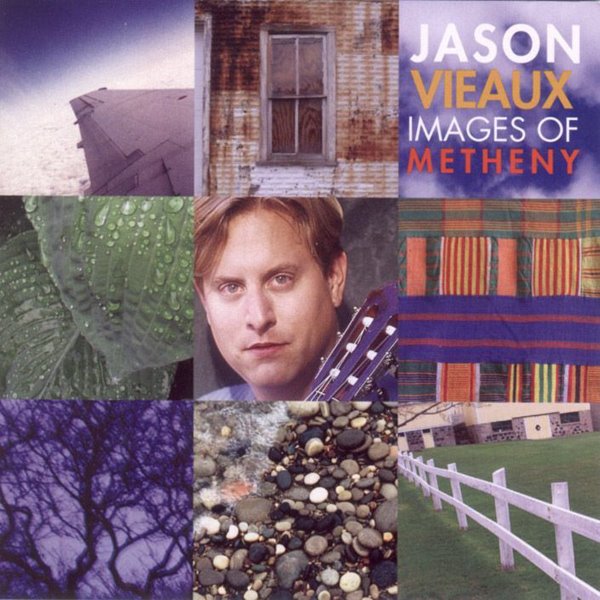
Just downloaded an album from iTunes by Jason Vieaux called Images of Metheny. This disc is growing on me. At first it bugged me a little that most of the tunes seem to come from the ballad side of Metheny's catalog, but as I realized this effort is a classical rendering of the great guitarist's ouvre, I found myself really enjoying what I heard. I guess what really bothered me is that two of my favorite Metheny songs, "Question and Answer" and "James" (played as two of five sections in a baroque suite), are given rather short attention. Don't get me wrong. I love the mellower songs. But I was not expecting so many.

As I keep listening, however, I see that these compositions lend themselves to the format really well. Vieaux has chosen well and performed these songs really well. The opening, "Every Day (I Thank You)" is particularly masterful. It is one of the few songs that was originally recorded with a saxophone, and I really like what Vieaux does with it. The aforementioned favorites, though shorter than I wanted, work well in their places in this suite, and do demonstrate not only Metheny's powerful abilities as a composer, but Vieaux's technique on the instrument.

Anyone who reads this blog knows that Keith Jarrett is probably my favorite pianist. I am particularly fond of his records of improvised concerts for solo piano. Not long ago, I was able to acquire La Scala (1997) The liner notes tell a story of a man who had worked at La Scala as a assistant to conductors and who had all Jarrett's albums who claimed that the concert he had just been to (which is recorded here) "was the strongest, most moving...musical experience he ever had." I can't say that the disc worked on me that way, but it is terrific recording. There is a short section (maybe a minute or so) in the second of the two parts where Jarrett seems to get lost in his improvisation, but mostly this disc presents the kind of playing that does move people. If you are the kind of musician that likes to now and then take out an instrument and just play whatever comes to mind, this disc will thrill you. The last track is a beautiful rendering of "Over the Rainbow" that should tell you why this song has been recorded so many times by so many people. In the hands of Keith Jarrett, it is fresh with every listen.
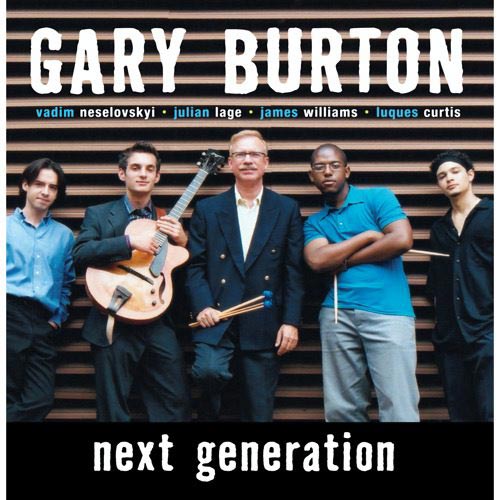
Gary Burton brings back guitar sensation Julian Lage from his Generations recording and adds more young, talented musicians on Next Generation, an exciting and thoroughly enjoyable release. Every song is terrific, but standout cuts for me include the Metheny penned "B & G," "'Ques Sez" (written by bassist Luques Curtis) and my favorite, pianist Vadim Neselovski's "Get Up And Go." I think it ironic that there is a song entitled "Summer Band Camp" here because the cover photo might lead you to believe that this is an album of people Burton hand picked from some sort of Camp audition. But this is a band that sounds as polished and tight as if they had been playing together for years. All the above mentioned youngsters stand out in some way on this disc as well as drummer James Williams. Burton, of course, is in top form, knowing when the back off and let others take the stand and when to allow his virtuoso playing to shine. This disc is a joy to listen to.

Speaking of virtuosos (or virtuosi), I do want to recommend An Evening with John Petrucci and Jordan Rudress (2004). Certainly fans of Dream Theater will enjoy this album of guitar and keyboard duets recorded in 2000 at the Helen Hayes performing Arts Center in New York, but others should enjoy it as well, since it doesn't really sound like two guys mimicking their main band (or bands), perhaps with the exception of cut "State of Grace," originally featured on Rudress' second Liquid Tension Experiment project). The duo play well together, creating an environment for each to stand out without always taking over the music with self-indulgent solos, but letting the tunes speak for themselves. There is one studio track, but it doesn't seem out of place because the music is what we hear. Thankfully, we don't have to endure much in the way of audience histrionics. But this is a live album, you can believe it. The sound is crisp as if these guys are playing right inside your head. Much fun from two terrific players.

So what else have I listened to/acquired lately? A couple of things I haven't listened to enough to feel comfortable commenting on, but here goes:

Two "best of" discs by Medeski, Martin, and Wood -- "Last Chance to Dance Trance" (1999) and "Note Bleu" (2006). I already liked these guys, hence my willingness to pick up two collections.

Lee Ritenour's Alive in L.A (1997). Admittedly, I haven't listened much to this, but so far, I'm not thrilled. It has a couple Wes Montgomery tunes, and I do like Ritenour as a guitarist, but the first impression wasn't positive. A little too much on the light jazz (or safe jazz, as I call it) side for me.

Spotlight on Lucille by B.B. King (1991). I haven't listened to this yet, but B.B. is the man (or at least one of them), so I know I have to get around to it eventually. The album appears to be collection of instrumental pieces from a variety of concert appearances.

What else is in the bin to talk about? The Yellowjackets Politics (1988), a compilation of John Coltrane ballads called Ballads, something called New Age Bach: The Goldberg Variations by Joel Speigelman (1988) I found for a dollar, and The Dallas Jazz Orchestra Presents Victor Cager. With a little prodding and some more time, I'll write reviews of these or whatever else comes across my ears. Here's hoping someone sends me the new Ralph Towner cd.

Subscribe

Sorry, I couldn't invite you, but I was throwing myself a little pity party. See I was not sure how many people were actually reading this blog and I have been realizing just how ignorant I am about how to get interested people notification when Monk Notes had changed. But don't worry, you didn't miss much. The party was mostly me sitting in a corner feeling sorry for myself, drinking Pepsi One and watching reruns of Seinfeld.

Anywho, I think I've solved the problem. I have a Bloglines button now on the page and if you are so inclined, you can click it and sign up. I hope the process isn't too complicated. If it is, blame Splenda.

I have also been wondering just who might be reading this blog on a semi-regular basis. I'm sure I haven't posted enough to make it worth while, but I also haven't had much to say (or perhaps I haven't been motivated to write regularly -- I blame the coffee and Kramer). Anyway, if you are someone who drops by now and then, do take a few moments to subscribe and also to send me a note to let me know you are reading.

Until next time, peace.

Wednesday, July 05, 2006

This is mostly a test

I am testing something and reminding people to visit my other website: Wrestling Light. Hopefully people will soon be able to subscribe to the blog. We shall see.

Monday, July 03, 2006

Review of Charlie Peacock's recent jazz disc

Wrote and posted the following review for iTunes today:


Those who have enjoyed Charlie Peacock's music over the years and have even seen his work on other projects have to stand up and cheer for this release. Few could make good art out of pop music, even fewer in CCM. Now we can see why Charlie Peacock has stood above the rest. Peacock has the playing and compositional chops to impress any discerning listener. And it certainly doesn't hurt to have some fine players like Kurt Rosenwinkel, Kirk Whalem, Victor Wooten, Ravi Coltrane, and Jerry McPherson helping him out.
The disc opens with the lively "When Diana Dances," a song I see has gotten some airplay on Sirius Satellite Radio. If your toes aren't tapping when you hear this song, then you aren't listening. Most of the album hit me this way. If you are looking for wallpaper music don't expect to get much done. "Frank the Marxist Memorial Gong Blues" is a nice slow number (despite its odd title) and leads nicely into "Bucketachicken." "London Twist n' Turn" and "Longing for Louis" should demonstrate why no genre of music is exclusive of others. My personal favorite tune is "Be Well Johnny Cash," a thought provoking number that sticks in one's head the way only a great composition can.
All of this release should have your toes tapping and make you smile with its unique melding of sounds and melodies that make some for fine contemporary jazz. (Even non-jazz fans should enjoy it.) I'm sure it will surprise a few CCM fans, but hopefully not in a bad way. Good music, like this disc, doesn't need a genre. It just is. Enjoy!
By the way, click the link above to go to the site and hear tunes from the album.


Saturday, July 01, 2006

More bookmarks for June 2006

Well, the end of the month comes and it appears that being home agrees with me because I have finished a few more books.

Whenever I read a poem by A.R. Ammons, I wonder to myself why I haven't read any books of his all the way through. Well, I just finished Ammons' The Selected Poems: Expanded Edition (1986), and I don't know if I have an answer to the question. As has been noted much better by a number of literary critics, Ammons was a nature poet; some have even gone so far as to see him as a transcendentalist. I can see that. Some have compared him to Frost, noting that he has a more positive vision of the natural world. I can see that too. Ammons sees into the minutest detail and finds that there is order and wonder amidst what the rest of us see as chaos. I admire that vision, even as I don't always understand the expression.

Many of these poems are quite powerful and engaging. I particularly like the tight, short poems. I also was taken by poems like the much anthologized "Corsons Inlet" and the new (to this book) "Easter Morning." However, there were a few poems that no amount of re-reading would enlighten for me. These were either syntactically difficult or had such attention to biology that I felt I needed to be an insider to "get it."

Overall, this is a fine collection, probably a good introduction to this major poet. I think I will try to read Garbage before the summer is out.


Over the past couple months, I have been making my way through The Best American Essays 2005, edited by Susan Orlean, and yesterday, I finally finished. As with all the book in the Best American series (and there a volumes covering many different kinds of writing -- click here to see a few), I found the collection daunting and interesting, and sometimes baffling. Certainly there is a representative variety of essays. As with any collection, one wonders why some pieces, even enjoyable or well written pieces, made the cut. But for the most part, this is a satisfying selection of writing.

Pieces that stood out for me are Jonathan Franzen's "The Comfort Zone, " "Dog Trouble" by Cathleen Schine, and David Sedaris' "Old Faithful." There were essays that surprised me because at first I didn't see why they were included, like "Skill Display in Birding Groups" by Bert O. States and Holly Welker's "Satin Worship." But these offered insights not only into the specific subjects they covered, but also into human psychology. I might not have seen these any other place but in a book like this.


Mary Oliver's A Poetry Handbook (1994) is an interesting and useful book for anyone who is genuinely devoted to being a good poet (and a good writer in general for that matter). There are too many who say they are poets or wish to write poetry,but who really just wish to place words on paper, depositing their emotions and really saying nothing. That person doesn't really want this book, but that person needs it.

There are a few chapters that could use some updating not because they are dated, but because the author needs specific examples. I suspect that Oliver does wish to get herself in trouble by by giving examples of poor diction. However, since I think the chapter on Revision is very important (since this is a step most beginning poets wish to skip), I think this section could be improved with attention to how a poem or two changed over time.

I say this not only because it is true, I think, but because one of the significant strengths of this book is how it uses examples of good poems, both classic and contemporary, to illustrate its points. I believe the beginning chapters "Getting Ready" and "Reading Poems" are particularly important. In the first, Oliver writes, "Writing a poem...is a kind of possible love affair between something like the heart (that courageous but also shy factory of emotion) and the learned skills of the conscious mind" (7). In the second chapter, she reminds us "Good poems are the best teachers. Perhaps they are the only teachers. I would go so far as to say that, if one must make a choice between reading or taking part in a workshop, one should read" (10). I am glad that she begins so well, and I don't think she contradicts herself when she speaks of workshops later in the book because she demonstrates when they can be valuable to a poet's development and also notes the importance of solitude.

Oliver's A Poetry Handbook is a book that could help writers of all kinds, but anyone who wants to write poetry (and even those who choose only to read it) should make this part of her/his collection.

Friday, June 23, 2006

Bookmarks for June 2006

Some of these books were actually read or started in May, but I'm just now getting around to writing about them. Will warn you, I plan to read mostly poetry this summer, so that's what I will likely write about.

When I re-read a poem right away, it typically this means that 1) the poem is so dense that I just can't figure out what the heck is going on, 2) the poem is so simple that I don't know what is going on, or 3) I was so tired or distracted that by the time I got to the end I knew I had missed something important. But I found myself re-reading many of the poems in Dick Barnes' collection A Word Like Fire simply because they were so good, so strong that I could not go on to the next without experiencing it again. In fact, there were poems quoted in whole or in part in Robert Meezy's forward that I ended up reading several times for the simple pleasure of enjoying Barnes' startling images and thoughtful metaphors. (For a link to an essay that quotes from this forward, click here.) Barnes has been neglected, I think, for a couple of reasons. He was a religious poet, not one that proselytizes or is pious or dogmatic or self-abasing, but one that had a clearly sacramental vision of the world. Further, he did not write from the academic/workshop molded model. He crafted his poems carefully and revised them to make them work well. But Barnes did not seem not wallow in obfuscating language or imagery that is only clear to the college professor. Further, he apparently was not a self-promoter.

We have ignored this valuable contribution to American Literature far too long. Read this book and see if you don't find yourself cheering infinite possibilities for humans in the universe and railing against a poetic establishment that has fed on the products of its incest.


In a previous post, I mentioned Sinners Welcome by Mary Karr. This is another book by a religious poet that I fear is going to be ignored simply because the writer is a person of faith (though her celebrity may bring it more attention than Barnes' work). Karr's vision, like Scott Cairnes', is brutally honest and real. One gets the impression that when she writes about the resurrection of Christ, she hasn't had some vague experience that the rest of the world cannot possibly share (though they are expected to). And these are not all poems about religious experience, though some are certainly about moments in the life of a person working out her own salvation, practicing faith in every sense that work, "practice," denotes.


For a link to the University of California at Berkeley's Lunch Poems series, where you can hear Karr read poems from this collection, click here.

For some reason, Karr's The Liars Club passed me by when it came out and so many people were reading it. I had recommended reading Sinners Welcome to some friends and colleagues and they said, "Oh yeah, didn't she write...?" I felt foolish, but then I quickly got hold of the book and took a couple days to make my way through it. Now that phrase, "make my way," isn't intended to imply that the book was bad and difficult to get through. It was difficult to get through because it is so honest and blunt and while I find Karr's honesty refreshing, it is sometimes also rather painful. It isn't bleak all the way through because Karr tells of the tough times with the direct (not flat) tone of one who has (mostly) come to grips with a difficult childhood where as a child one doesn't always know that life is difficult, but does know more about pain than children in supposedly healthy families. I highly recommend this book and look forward to reading Cherry.

I stated at first that I was planning to read mostly poetry this summer. For those thinking of coming back to see what else I've looked at, I also plan to read Mary Oliver's Poetry Handbook, some short story collections (at the moment, I'm thinking of Chekhov and Chandler). I also am slowly finishing The Best American Essays of 2005.

Wednesday, June 21, 2006

Poems read in class during National Poetry Month 2006

For the past two years, I have tried to read a poem a day at the beginning of each class during April as a celebration of National Poetry Month. Below are some of the poems I shared with my classes.

Poetry Marianne Moore April 3
The Little Ways That
Encourage Good Fortune William Stafford April 4
Bank Fishing for Bluegills *
Ted Kooser April 5
One Art Elizabeth Bishop April 6
Ode to the Cat Pablo Neruda April 7
Happiness Mary Oliver April 11
Words for Worry
Li-Young Lee April 12
Photograph of My Father In
His Twenty-Second Year Raymond Carver April 13
Inspiration Karol Woytyla April 17
“A night full of
talking that hurts” Rumi April 18
Visiting the Master * Stephen Dunn April 20
“When I have fears that I
may cease to be”
John Keats April 21
Conversation in the Mountain + Li Po April 24


I copied this into the blog (the publish from Word feature not working on my computer right now). Most of the links here are on the wonderful site for The Academy of American Poets. (Sadly Poets.org has no page for Raymond Carver, despite my pleas with them and offers to write it myself.)

* Poem not here, but the poet does have his own webpage.
+ Not the same version I read to my classs, but nice nonetheless.