Posts
Posts


 Before dismissing the small stuff
remember the kidney stone
as tiny as sand
can make a man believe
death is on the way.
Before dismissing the small stuff
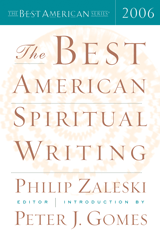 Finished reading The Best American Spiritual Writing. This seems to be an eclectic mix of genres that in some general way are about spirituality. Actually, most of the pieces seem to be personal essays and poetry, so I was mostly right at home. After wading through the forward and introduction, I found myself reading through "The Gift of the Call," an essay that might have had more resonance with me had I expected a personal testimony. Not a great start, but then I read "The Acusmata of Pythagoras" by Brian Blanchfield. Here, if nothing else, was something new. When I got to "Best of Intentions" by Harvey Cox (after some thoughtful poems), I was a little more into the book. I may have been biased at his focus on teaching and tolerance, but I think this piece is worth reading. "Sighs Too Deep for Words" is an honest account of Helen Gardner's spiritual journey summed up well by the subtitle: "On Being Bad at Reading the Bible."After a few more okay, but not terribly memorable essays, I found myself reading two moving pieces, Todd Gitlin's "A Skull in Varanasi, a Head in Baghdad" and "When the Candle Is Blown Out," by Natalie Goldberg. I liked reading, after these, the meditation on suicide bombers by Mary Gordon called "Appetite for the Absolute." I don't think I understood what I believe is the only short story in the collection, "Dr. King's Refrigerator" by Charles Johnson. I did like the essay "High Fidelity" by Bill McKibben about people who stay through many changes in their church over the course of their long lives. "Kierkegaard for Grownups," by Richard John Neuhaus, is particularly interesting and informative. I am still at a loss to understand the inclusion of Oliver Sacks' essay "Speed." I had read it before in the Best American Essays volume, and reading it again helped me appreciate it more, but I didn't see it as a spiritual piece of writing, even in the broadest sense. On the other hand, I found Huston Smith's "The Master-Disciple Relationship" and Kenneth L. Woodward's "The Passion's Passionate Despisers" to be thought provoking.
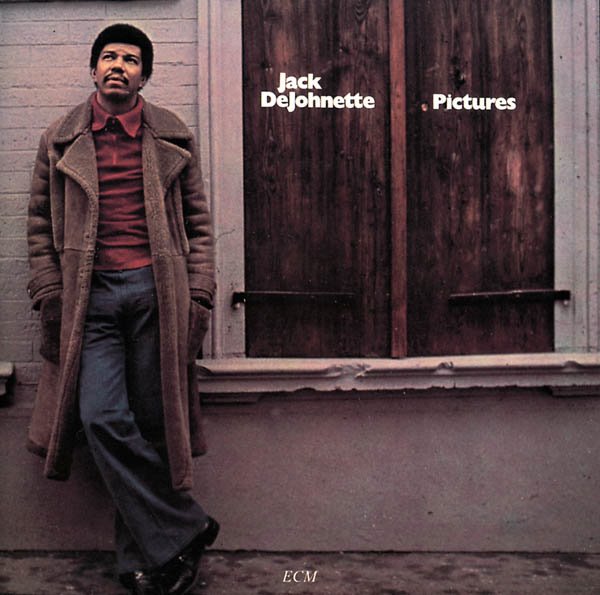 free jazz or ambient type sections might be offputting, but I think this project is worth a listen. It is also nice to see DeJohnette the keyboardist, one who may not knock your socks off with amazing playing, but his sense of melody will show the discerning listener why he is such a great drummer.
 The highlight of my musical month has to be the first release of a collaboration between Pat Metheny and Brad Mehldau (Metheny mentioned in his podcast that another disc would come out early next year). I am not surprised by how much I like this disc. What is nice is that there seems to be a real collaboration of performance. Most of the tunes were composed by Metheny, but Mehldau doesn't sound like a substitute for Lyle Mays. Both players' individual voices are clear here without drowning out the other. Most of the tunes are performed by only Metheny and Mehldau; however two songs come with Mehldau's bassist and drummer. (Metheny says the next disc will be more quartet oriented.)Two of the songs were previously recorded: Mehldau's "Unrequited" and Metheny's " Say The Brother's Name." The new versions are fine, neither improving or diminishing the earlier performances. Standout cuts are, "Ring of Life" and "Make Peace." But everything on this disc is good.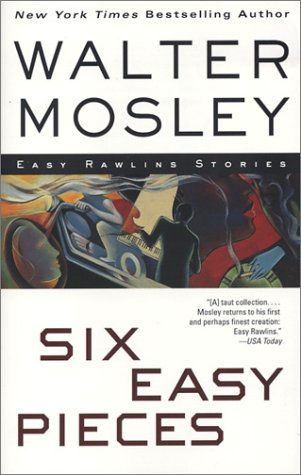
 My main complaint about Mary Karr's Viper's Rum (1998) is that it is too short. There is only 45 pages of poems plus the inclusion of Karr's now infamous essay "Against Decoration." But what is here is certainly worth reading. I did find myself a little put off by a couple of the poems. Well, put off isn't really accurate. The word "squeamish" comes to mind, but that might not be quite right either. Poems like "The Wife of Jesus Speaks" and "The Invention of God in a Mouthful of Milk" are likely going to make the more conservative reader uncomfortable, but careful reading will, I believe, show these to be as thoughtful and as inspiring as the rest of the collection. I did not find myself as moved as I did with Sinners Welcome; however, this volume has plenty to recommend it.
 I picked up The Jack DeJohnette Piano Album (1985) at the same time I found Jaco. Of course any fan of modern jazz knows that DeJohnette is one of the finest drummers in music, producing his own terrific CDs as well as his stellar work with the Keith Jarrett Trio. But many are not aware that he is also a mighty good pianist in his own right. This is, for the most part, an enjoyable trio project where Dejohnette gives up the drum chair to Freddie Watts who is ably supported by bassist Eddie Gomez. DeJohnette plays synthesizer on a couple of cuts. While the purist might complain, the only song the synthesizer really got in the way is on "Time After Time," the Cyndi Lauper song that seems to be a favorite among many jazz musicians. On this song, the synth sounds like one of those keyboards one bought for sing alongs at home. Otherwise this is pleasant cd, demonstrating DeJohnette's considerable skill on the piano and as a composer. Several of the songs are tributes to his wife and to other great musicians like Ahmad Jamal and Bill Evans. In the liner notes, DeJohnette is quoted as saying about playing the piano, "I actually deal with it pianistically, not percussively as some people might expect." One listening to this disc could hear DeJohnette's strong understanding of what makes good music and perhaps even understand how that sense makes him a superior drummer.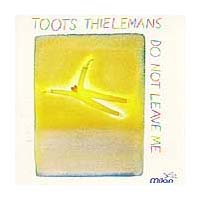
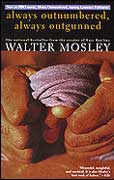 The book is a series of linked short stories where readers watch Socrates wrestling with getting enough money to get by and with the moral and ethical questions faced by a black man and by the society he lives in. In the first story, "Crimson Shadow," he catches a young boy who has killed a neighbor's rooster. How Socrates handles this situation and tries to take care of this boy is not only touching, but speaks to the responsibility we all have to children and families in our neighborhoods. Mosely deftly walks us through Socrates' attempts to get a good, steady job in "Double Standard." We also see the role that guilt plays in a person's life and a hunger for redemption, not only Socrates' but that of the young man he wants to save, is a significant theme of the book.
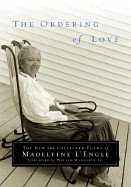 Fortunately, not all of the poems in this collection are mediocre and banal. I got the sense that L'Engle, a writer of considerable skill and craft, learned more with each collection how to write not just a poem that expresses, but one that actually says something in thoughtful and cleaver ways. She is best in two areas: the sonnet and the monologue. The voice in most of the monologues are biblical characters. One sees encounters with God from a position that removes the distance created by time and the dry page.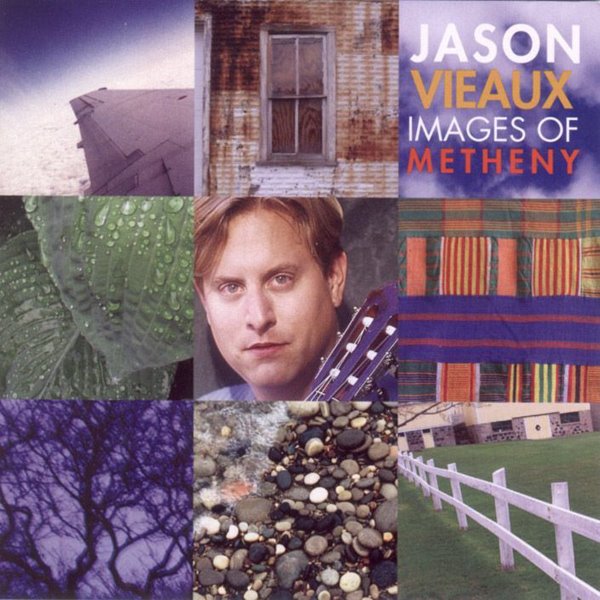
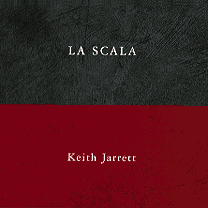 Anyone who reads this blog knows that Keith Jarrett is probably my favorite pianist. I am particularly fond of his records of improvised concerts for solo piano. Not long ago, I was able to acquire La Scala (1997) The liner notes tell a story of a man who had worked at La Scala as a assistant to conductors and who had all Jarrett's albums who claimed that the concert he had just been to (which is recorded here) "was the strongest, most moving...musical experience he ever had." I can't say that the disc worked on me that way, but it is terrific recording. There is a short section (maybe a minute or so) in the second of the two parts where Jarrett seems to get lost in his improvisation, but mostly this disc presents the kind of playing that does move people. If you are the kind of musician that likes to now and then take out an instrument and just play whatever comes to mind, this disc will thrill you. The last track is a beautiful rendering of "Over the Rainbow" that should tell you why this song has been recorded so many times by so many people. In the hands of Keith Jarrett, it is fresh with every listen.
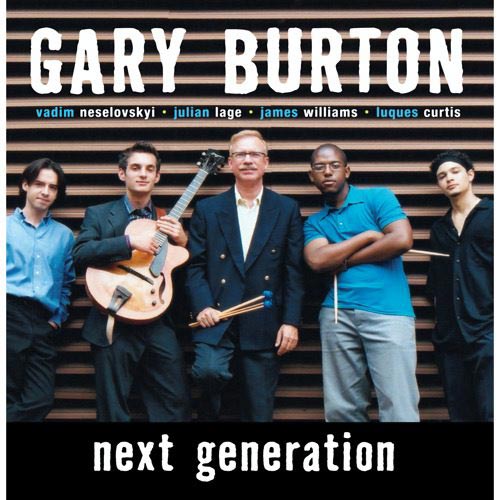 ble release. Every song is terrific, but standout cuts for me include the Metheny penned "B & G," "'Ques Sez" (written by bassist Luques Curtis) and my favorite, pianist Vadim Neselovski's "Get Up And Go." I think it ironic that there is a song entitled "Summer Band Camp" here because the cover photo might lead you to believe that this is an album of people Burton hand picked from some sort of Camp audition. But this is a band that sounds as polished and tight as if they had been playing together for years. All the above mentioned youngsters stand out in some way on this disc as well as drummer James Williams. Burton, of course, is in top form, knowing when the back off and let others take the stand and when to allow his virtuoso playing to shine. This disc is a joy to listen to.
 Speaking of virtuosos (or virtuosi), I do want to recommend An Evening with John Petrucci and Jordan Rudress (2004). Certainly fans of Dream Theater will enjoy this album of guitar and keyboard duets recorded in 2000 at the Helen Hayes performing Arts Center in New York, but others should enjoy it as well, since it doesn't really sound like two guys mimicking their main band (or bands), perhaps with the exception of cut "State of Grace," originally featured on Rudress' second Liquid Tension Experiment project). The duo play well together, creating an environment for each to stand out without always taking over the music with self-indulgent solos, but letting the tunes speak for themselves. There is one studio track, but it doesn't seem out of place because the music is what we hear. Thankfully, we don't have to endure much in the way of audience histrionics. But this is a live album, you can believe it. The sound is crisp as if these guys are playing right inside your head. Much fun from two terrific players.
 The disc opens with the lively "When Diana Dances," a song I see has gotten some airplay on Sirius Satellite Radio. If your toes aren't tapping when you hear this song, then you aren't listening. Most of the album hit me this way. If you are looking for wallpaper music don't expect to get much done. "Frank the Marxist Memorial Gong Blues" is a nice slow number (despite its odd title) and leads nicely into "Bucketachicken." "London Twist n' Turn" and "Longing for Louis" should demonstrate why no genre of music is exclusive of others. My personal favorite tune is "Be Well Johnny Cash," a thought provoking number that sticks in one's head the way only a great composition can.