Saturday, August 30, 2014

Cute, but not Clever, Cat Poems

I Could Pee on This: And Other Poems by CatsI Could Pee on This: And Other Poems by Cats by Francesco Marciuliano
My rating: 3 of 5 stars

Poetry lovers and cat lovers have often intersected in the same people, and so this book should appeal to both. But it is really for those find cats amusing. I would not say the book is only for those who are addicted to cat videos, but poetry lovers are going to have been tolerant to get through it.

Authored by Francesco Marciuliano, the creator of the comic strip Sally Forth, I Could Pee on This is really cute and at times very funny. As a whole, it isn't a strong collection, but a fine way to pass the time in a doctor's waiting room or as you pretend to watch on of your partner's favorite t.v. shows.

There are some nearly clever lines in the collection, like, "besides, I think I can cure/hookworm with my mind" and "Well, I also don't watch you having sex/And let's just say the dog talks." And the senryu titled "Sushi" and the poem "Kubla Kat" are gold. But there is really too little of that quality for the whole group. And adorable pictures only amp up the cute factor, not the quality.


View all my reviews

Monday, August 18, 2014

A Notable, but not Striking, Collection

Some Imagist Poets, 1916 An Annual AnthologySome Imagist Poets, 1916 An Annual Anthology by Richard Aldington
My rating: 3 of 5 stars

This is an anthology containing work by six poets from the "Imagist" school. I'll leave it to the reader to look up what that means because it never is quite clear, particularly since many poets categorized this way never stayed with the movement (most notably, William Carlos Williams and Ezra Pound, not found in this book). However, here are some brief notes/impressions of the poets whose work is found in this volume.

Richard Aldington -- angry bore
H.D. -- Sea themed verse. Several references to mythology. Sometimes doesn't seem to say much. Sometimes quite powerful ("Orion Dead").
John Gould Fletcher -- Some delightful lines, interesting ideas. Some blah.
F.S. Flint -- Strong, imaginative lines. But what is he saying other than death happens?
D.H. Lawrence -- I'm not sure how he is an imagist poet. Almost too emotional. Maybe it is just my prejudice against so many exclamation marks!
Amy Lowell -- Not sure what to make of these. Most I like, but I don't know why The short, lyrical poems pack a punch.

This is interesting book may have historical and literary value, and may serve as an introduction to the Imagists. The preface does provide a bit of an understanding of the goals of the movement, goals that need to be revisited now with so much over-academic and over-workshopped poets dominating American publishing.

View all my reviews

Thursday, August 07, 2014

Joyce's First Book

Chamber MusicChamber Music by James Joyce
My rating: 3 of 5 stars

This small collection of lyric poems, first published in 1907, has a good deal going for it. Joyce clearly had command of meter, and most lines are very musical to the reading ear. I am surprised that there is little innovation or creativity of language, but there are no forced rhymes and everything seems to flow smoothly. There are no wasted words or phrases. Though there are some nice lines and nice sentiments, the collection, as a whole, is merely that: nice. I'm sure any lover would be thrilled to receive one of these poems from a beloved. However, there is little that is special or memorable.

Don't get me wrong. I enjoyed Chamber Music. This is a fine read for a rainy day and a warm cup of tea. But not much more.

Get the book at Gutenberg for free here. More information about the book can be found here.


 View all my reviews

Friday, August 01, 2014

Don't call it discipline when you know it is abuse

Teaching is hard, and despite the plethora of quaint mugs and bumper sticker out there that might indicate a contrary sentiment, it is truly a thankless job. Even when teachers make mistakes, I have a difficult time criticizing. Many have to spend their own money to make sure their students have needed supplies at the same time politicians and school boards, who have no understanding of how learning works, continually thwart the best practices of even our most dedicated educators. Add to this a society and culture which gives lip service respect for teachers by saying how important they are, but doing all they can to discourage people from entering the profession and encouraging an adversarial relationship between them and those in their charge. And in the world of ratemyprofessor.com and standardized testing, the word of a felon is often taken over that of a lowly civil servant whenever conflict arises.

But recently I read this article about a teacher who forced a young child to sit on the floor for four weeks as punishment for writing on her desk, and was livid. The crime -- and make no mistake, this is a crime -- is bad enough. The teacher compounded the problem by lying to the parents about what really happened, and put so much fear and humiliation into the child that the child would not tell her parents. Then the school district merely "reprimanded" the teacher.

That's right. They just told her "Now. Now. That's not right. Don't do that again."

The teacher has lost nothing and does not suffer for her abusive actions. She was not suspended. She was not removed or even moved to another school (though now the family has to navigate the problem of having children at two different schools). She did not lose pay. The article, circulating on a number of websites, does not even name the teacher. So this person has not had to suffer a day of shame for what she did to small person. We don't even see an apology from the teacher or school district.

I have no proof, but I believe a teacher who does this has anger and control issues which should be dealt with before she is allowed to enter a classroom again. She may be an otherwise wonderful instructor. But a school district that merely reprimands an barbarous person, not only enables the abuse, but sends the message that some children are not human enough to warrant reasonable discipline.


If a parent did the same thing to his or her seven year old, most teachers of that seven year old would call child protective services and the family would be investigated. The parent would likely go to jail. This teacher gets a finger wag. For mentally abusing a child. It was not a momentary lapse of judgement where someone lost her temper, but an injurious act, one that the school district is complicit in, not only because of the soft consequences, but for allowing it to happen in the first place. Remember that this went on for four weeks. It is highly unlikely that only the teacher and the class were privy to the site of a deskless student.

Other than the crazy injustice revealed in this story, we need to consider that teachers and school districts like this who give fodder to those no-nothing politicians and school boards (as well as entertainment media) to cut funding, create ludicrous requirements and regulations, and demonize the mostly good people in education. Such incidents are held up as examples, and not seen as the anomalies they are.

People love to bandy the phrase "children are our future" about without really thinking about what that means. So I'm asking what the future is for a first grader treated with such indignity. What is the future for her classmates? What is the future for education when the people in charge don't call such behavior what it really is?

T.S. Eliot's short story

Eeldrop and AppleplexEeldrop and Appleplex by T.S. Eliot
My rating: 4 of 5 stars

The two parts of Eliot's only short story were originally published in 1917 in separate issues of The Little Review. While there are a few ways to look at this story, I saw it mostly as an exploration of the limitations of seeing the world through an academic lens.

Like Eliot's poems, some of the story might be obtuse for readers who miss the references, but the story moves along well enough, I believe, for people to enjoy without prior knowledge. Also, like Eliot's poems, one can see the influence of Robert Browning's dramatic monologues.

Not exactly a "page turner," the story is still an enjoyable social satire. I'm surprised "Eeldrop and Appleplex" missed my attention for so long. However, I'm really glad I found it.

Download the story for free at iTunes or Amazon. You can also find it here.

View all my reviews

Friday, July 25, 2014

Important Perspectives on the Hebrew Scriptures

Bible Jesus Read, TheBible Jesus Read, The by Philip Yancey
My rating: 4 of 5 stars

Mr. Yancey's personable style is one element that is makes The Bible Jesus Read a winner for me. Don't expect cold exegesis or hellfire ranting, but a friendly, honest exploration of a few of the (for him) troublesome books of the Hebrew Scriptures, a la Kathleen Norris (whom he quotes a few times). One should not expect theological ramblings, though the theology seems pretty solid to me. One of the cornerstones of Yancey's argument is that these books of the Bible are about different aspects of God's relationship with Creation. To that end, this book is about Philip Yancey's evolving relationship with these powerful, but baffling works.

After an introductory chapter outlining why the author felt led to explore these books and his approach, he tackles Job. Probably my favorite part of The Bible Jesus Read, it reorients the reader concerning the legendary suffering of the title character, demonstrating that the story is more about faith than about pain. Then comes a look at Deuteronomy, where Yancey imagines the thoughts and feelings of the soon to die Moses as he makes his last speech to the Israelites before they enter the Promised Land. While an interesting exercise, I felt this was too speculative. I kept wondering, "How would he (Yancey) know this?"

The fourth chapter is about my favorite book of the Bible: Psalms. Here Mr. Yancey does a masterful job looking at the famous poems as much from a literary point of view (without being academic) as from a religious perspective. He reminds the reader that these verses, though part of the canon of Jewish public worship, are very personal words from people of varying socio-economic and political perspectives, and even those that make us uncomfortable portray a people with faith in a God who can take their bitterest complaints.

Next, the author covers Ecclesiastes. For me, this is one of the most interesting parts of the book. Ecclesiastes is a tough, depressing part of the Bible, but other than repetition of the statement "Everything is meaningless!" I put my finger on why. But Yancey helps the reader see the theme in its context. Written probably after Solomon's death but certainly during a time when the people were still reaping the benefits of his reign, the book explores the emptiness of having it all. The sixth chapter is about the prophetic books, and though I would have like a more detailed look at a single prophet, I realize that it would be disingenuous to pick one, and to get at them all would take another book. Besides, the chapter seems rambling and repetitive to me. It does have an important idea that should those who struggle with this part of the Bible. Readers are encouraged to look at these writers less as men who foretold the future, and more as seers, people with the ability to observe the world (past, present, and sometimes future) more deeply than most.

The final chapter of The Bible Jesus Read works to make the point that what Christians call the Old Testament does more than foretell Jesus as Messiah, but has additional resonance for Christians. It should not be segmented so we can find lessons for daily living, but seen as a more complete picture of our relationship to God than the New Testament alone provides. I suspect that non-Christian readers may find this ending a bit tedious. However, Yancey's story about attending a performance of Handel's Messiah does make for a fascinating connection.

A brief word about the title. It seems a little misleading in that the author spends little time discussing Jesus' responses to or references to these the Hebrew Scriptures. However, the main audience seems to be those who are familiar with the New Testament, most of whom assumed that Jesus was well verses in these writings. I suppose The Bible Jesus Quoted or The Scriptures Jesus Read More Carefully Than the Pharisees and Teachers of the Law isn't very catchy.

The Bible Jesus Read was first published in 1999, but is not at all dated. And despite a couple of missteps, at least for me, the book is overall quite edifying.


View all my reviews

Thursday, July 10, 2014

Repent! Or Perish?

"Do you think that these Galileans were worse sinners than all the other Galileans, because they suffered this way? No, I tell you; but unless you repent, you will all likewise perish."

Reading this is troublesome for me because on the surface it seems that Jesus is contradicting himself, or at least the picture of a nice, forgiving man who wants us all to know that God love us. But taken in context, we find that the contradiction lies in us, not Him.

The same Jesus who said this also told people he had healed their sins were forgiven. Once his disciples, assuming that there was a direct correlation between sin and suffering, asked if a man born blind or his parents had sinned. The Lord's answer was neither, but "that the works of God might be displayed in him." We find that Jesus does not adhere to formulas and calculations, but always to glorify His Father.

Jesus told the woman caught in adultery "go and sin no more." It is clear He does not condone wrong action. However it is also clear that Jesus was more concerned with the sinful nature in humans that in the specific acts that resulted in that nature.

The people speaking to
Jesus when He pronounced this warning were asking him for a response to a rumor about a heinous act, one they surely believed showed how horrible the authorities were. Supposedly Pilate had mixed the blood of people he'd killed with sacrifices. Remember that those who watched Jesus were looking for a Messiah who would be an military leader against the Romans and who would restore Israel as the world power.

The people questioning Jesus did not get what they hoped for. They might have wanted
The Lord to focus on the injustice; however, He countered that the sins of others (Pilate or those who were murdered) did not negate the truth of their own sinfulness.

A minister may tell you that the word repent means to turn around. But the way most people react to the word, one would think its meaning is, "Stop doing whatever it is you are doing that I don't like that I'm sure displeases God, and then you will be okay."

Injustice happens, and along the way we may well suffer unfairly at the hands of another. But pointing our finger at the sins of others seems a good way to block the finger of God from touching and healing us.

Wednesday, July 09, 2014

Work and Healing: Dispelling a Myth

But the ruler of the synagogue, indignant because Jesus had healed on the Sabbath, said to the people, "there are six days in which work ought to be done. Come on those days and be healed, and not on the Sabbath day."

I could not help but wonder, as I read this passage, "If people are working, how can they come to be healed?" The woman in this story, ignored by the leader, had been locked in her pain for eighteen years. She "could not fully straighten herself." How was she going to work? How much longer should she wait for healing, especially from someone who has no interest in the women and men in his charge, much less the Spirit of God?

The story tells us something of our present times. Too often people in power, in an effort to protect what they think belongs to them, make mistakes about the nature of work and the reality of suffering. How often have we heard a politician or minister or some other talking head say, "If you are sick, get a job (or a better job) so you can go to the doctor to get better"? These may not be the exact words, but it is the intent of their logic.

People are inherently selfish, and will fight to protect what they believe belongs to them, instead of understanding that all we have comes from God, and that God's purpose for us is to love Him. And to love him, we must love others. John wrote, "If anyone says, 'I love God,' and hates his brother, he is a liar; for he who does not love his brother whom he has seen cannot love God whom he has not seen." 


That "brother" includes the woman who has suffered for eighteen years coming to you on the day you have set aside for yourself.

Monday, July 07, 2014

Never Mind the History; Enjoy the Story

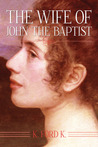
The Wife of John the BaptistThe Wife of John the Baptist by K. Ford K.
My rating: 4 of 5 stars

The Wife of John The Baptist is not likely to be what readers expect, and for the most part, that is a good thing. I found myself disappointed by a couple of things, but that should not stop readers from giving this novel a try.

The story is told through Hessa, the daughter of a Greek merchant and a young woman with an extraordinary gift. When she touches something, she can tell about more than its authenticity and quality. She knows its history. When she touches the hands of others, she knows if they are honest or if something is troubling them. Her ability is useful to her father, who dotes on her, and encourages her with tales of his adventures.

When a mysterious young traveler named John appears in town, Hessa's life changes dramatically. Before long, he has won her heart and she marries him against her father's wishes. There is passionate honeymoon, and then she joins John in his wandering.

They seek solitude, partly so John can be alone with God, but it seems mostly so John can avoid people who are all too ready to make him the prophet his father said he would be. But after they lose their first child, John decides to take on disciples and live in community so that Hessa will have a proper midwife for her next pregnancies.

Eventually, John succumbs to the pressure of becoming a prophet. The problem is that several factions are seeking him as a leader against the hated Romans, and John does not believe a revolution can come by armed force. He does discover some sort of power in baptism and begins to perform them in the Jordan. It is then that John's pronouncement against Herod's marriage to his brother's wife gets him into trouble.

Though there is a surprising lack of sensory details, this is still a very interesting story, not just about John and his bride, but about the people and politics of this time. I had trouble putting it down. The characters are well-drawn and authentic. And John and Hessa's love for each is not just the passionate attraction of two young people, but romance that builds rather than wanes as they get older. For me, this made the story richer and more satisfying.

While a novelist does not have any obligation to stick to every particular of history, especially a history many prefer to believe, I am not thrilled with some of the deviations and omissions from John's story. John's purpose to announce the arrival of the Messiah is completely ignored, and Jesus is relegated to a single, brief sentence, where John is said to have been "very impressed with him." Readers will also find differences between K.Ford K.'s portrait and the Biblical account. Most of these are minor, but I suspect those looking for something to solidify their beliefs will be disconcerted.

I was also disappointed with the ending, not because it isn't "happy," but because it seems to all too mystical where little hint of such is provided by the story. The reincarnation angle seems to give the novel a more Hollywood ending than the reader would expect.

These problems do not detract completely from the story itself, but I must confess most of them troubled me. However, this novel is gratifying, and its challenges should not put off good readers.


View all my reviews

Friday, June 27, 2014

An Uncomfortable and Necessary Memoir

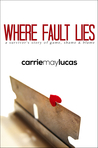
Where Fault Lies: A Survivor's Story of Game, Shame & BlameWhere Fault Lies: A Survivor's Story of Game, Shame & Blame by Carrie May Lucas
My rating: 4 of 5 stars

I did not enjoy reading Where Fault Lies. I am not supposed to. This story is not just about rape, but the relationship the victim had with her attacker and her very painful and real struggle for justice as she works to heal.

This memoir could easily have been titled Red Flags, especially considering the first third of the book, where the reader sees an intelligent woman getting duped by a man who is clearly not just a jerk, but a psychopath. Aspects of Sayed's personality which show his damaged mind seem to be what make him more attractive to Ms. Lucas. Sayed reminds her that people are in his life until they are no longer of use to him. There are no second chances with him; people who stand up to him or displease him are "cut out." Sayed leads her to believe that their relationship is unique and that the rest of the world cannot possibly understand how special what they have is. But he is grooming her to be controlled.

As I read this section, I could not help but wonder why not only women are attracted to men like Sayed, but why anyone would even be friends or have business associations with him. We see by the end of the book that he is a complete fraud. I am surprised no one else notices this.

The second third of the book is about the rape itself and the immediate aftermath. Here readers see Sayed's brutally in not just a physical sense, but emotionally as well as he makes his victim feel bad for his hurt feelings. Soon after, he breaks off the relationship and her reaction is what is normal for a rape victim, but he uses her actions against her and twists the events to make himself look like the injured party. His behavior further demonstrates what Ms. Lucas makes clear through the whole book: that rape is much more about power and control than about sex.

Where Fault Lies is painfully detailed throughout. The final section of the book brings us into work place and the social circles and the family relationships where rape is hardly believed or brushed aside because doing something (even merely listening) is uncomfortable and inconvenient. We see callous police and sympathetic lawyers working for underfunded advocate agencies. We see a self-centered assailant who is willing to do almost anything to save his reputation and multiply the harm he has caused. Most of all, we see a human being tormented and emotionally beaten down before finding a measure of (not complete) triumph.

There are times when the details are too much and don't help the narrative, and Ms. Lucas, independent to a fault, is not going to be very likable to a few readers. However I see these issues as minor. One might say these are all the more reason to read the book. NO ONE deserves what happened to Ms. Lucas. A sub-segment of our society claims that an independent and stubborn woman deserves such treatment, but no one does, and justice should be for everyone, not only those who conform to our twisted scale of likability. This is a story that needs to be read and thought about deeply, not just by women, who face these threats more often, but by all of us. Too easily people dismiss rape as something deplorable, but never let the whole of the act touch them. This memoir forces us to be more than emotionally affected. And that is needed.


View all my reviews

Thursday, June 19, 2014

Great Hymns Find Fresh Treatment

Instrumental albums are not terribly popular among Christians, and when most American Christians hear instrumental music, it is typically bland or syrupy versions of comfortable and safe hymns played as background. Rarely do we see skillfully played, fresh versions of some of the world's most meaningful music, and so believers should not be surprised when few take their music seriously.

Richard Souther, however, is no ordinary musician. His own compositions are beautiful and uplifting. And though he primarily works with a palette of keyboards and synthesizers, his recent project, Hymns Revisited, has the solo piano shining like a candle in a darkened chapel. Souther's arrangements and sensitive playing are simply remarkable.

The album opens with "Morning Has Broken," introduced with an improvisation that is like opening slowly onto a new day, like waking gently. This song is followed by rendition of "Fairest Lord Jesus" which manages to be stately without sounding pompous. Next comes one of my favorites of this project: "It Is Well With My Soul." Here Souther melds the joy and fire of the original tune with flights on the keys (particularly the left hand work) that accentuate the quiet power of faith.

Much of "I Surrender All" sounds stark, almost naked, as the chorus sounds like a lone voice crying out to a God who is sure to save. Here there are also flurries and improvisations that never stray so far from the original as to be unrecognizable, but which put me in my mind a heart led by the wind of the Holy Spirit. Next comes "Turn Your Eyes Upon Jesus," a good follow up as it sounds less like evangelism than a word spoken to the troubled, surrendering soul.

For some reason, iTunes and Amazon have marked "Softly and Tenderly" as explicit. Explicit what? Explicitly beautiful piano? Explicitly true to the beauty of the old tune? Explicitly warm and inviting? Explicit in expressing a faith so deep it needs no words?

Next comes "Swing Low, Sweet Chariot" sounding like heart dancing.  A solo piano version of this tune can go very wrong, by making the song either too maudlin or so much like a romp that the sense of joy is lost. But Souther keeps at just the right tempo. This is followed by "Come Thou Font Of Every Blessing," which like the first three tracks is stirring and soulful. I've always loved this song, so I think I'm particularly sensitive to poor versions of it. This is one of the finest I've ever heard.

The last two songs on Hymns Revisited are "I Need Thee Every Hour" and "His Eye Is On The Sparrow." The first played like the gorgeous and thoughtful prayer it should be. I find myself inwardly bowing as I hear it, wanting to be closer to the great God it addresses. The latter also is also like prayer, but not the expression one gives to God, but what God returns in the conversation.

So many musicians would take these hymns and turn them in to Liberace-like opportunities to show of their ability to add flourishes, drawing attention to the player and not the music. Others merely render the melodies and assume that because the songs are traditional, they will move the listener. Both approaches diminish the power of these great songs and hide the very God they purport to reveal. Many people would claim that without the words, there is nothing to be said. But Richard Souther's album is so well done it demonstrates the scope and love of a living God. I cannot recommend it more highly.


Tuesday, June 17, 2014

Lemonade

One might expect, if one knows of the work Charlie Peacock – either as a producer, songwriter, or musician– that if he wanted to make a solo piano album, it might filled with standards of pop tunes and well-known jazz songs. And he could do that and do it well.  But Peacock doesn't do this on Lemonade. He fully embraces the spirit of improvisation and what we get is delightfully quirky sometimes but always delightful. 

My favorite tunes on this album include the more introspective pieces such as "Like Monet's Table," "Homeless in the Cosmos," and "How Maria Fell Behind." Other songs, like "Jude, as in Hey Jude," may take some getting used to by listeners who are not used to the twists and turns of improvisation a la Keith Jarrett, but I think the rewards are worth the time spent.

For me, there are too few jazz albums by Charlie Peacock. Prior to Lemonade, he had only given us Love Press Ex-Curio and Arc of` the Circle with saxophonist Jeff Coffin. Mr. Peacock's work in other genre's is stellar and much better known, but let's hope it does not take another several years to bring us another fine jazz album.

Friday, May 30, 2014

A Good Deal of Truth in the Fiction

The Ink Garden of Brother TheophaneThe Ink Garden of Brother Theophane by C.M. Millen and Andrea Wisnewski
My rating: 5 of 5 stars

This is a charming and delightful book about a daydreaming monk who discovers how to make different colors of ink to illuminate the books transcribed by he and the brothers in his monastery. As much about art and chemistry and poetry as it is about work and imagination, I could not stop smiling as I read the story and gazed at the illustrations. I may be 50, but I felt like a child as I experienced the wonderful tale.

After writing the above for Goodreads, I ran across another review which spens a great deal of space on the fact that the character of Brother Theophane was not a real person. And I think I can understand the writer's concerns, particularly about the story's impression on children. However, the version of Millen and Wisnewski's book I read contained notes at the end about how the character was a fictional recreation of what several monks had done in experimenting and "discovering" new shades and methods for illuminating manuscripts. (The poems in the book were also from a number of different anonymous monks.)  While I too am troubled by the idea that discovery is some solitary action done by one smart or brave soul, I also believe that one should not be troubled so much by this book.

The story and the character are truer in the sense that all great fiction is true: it tells about humanity in all its imperfections and potential. Brother Theophane may not be a single real person, but he is at the heart of many people's experiences and hopes -- then and now.


View all my reviews

Wednesday, May 07, 2014

Where were you when you were here?


It is nearing the end of another semester, and once again, the expressions of frustration are pouring forth from instructors and students alike. Many students feel overwhelmed and lost as they prepare for exams over material they claim was never covered and finalize papers whose parameters often remain a mystery. Teachers try to hold in painful sighs as they repeat information for tenth time this week for this one class, and bite their collective tongues at the students who are just now realizing they have zeroes on some assignments or have suddenly become privy to the attendance policy.

Sometimes I want to shout, “Where were you when I covered all this information? What were you doing while the whole class was doing research on this? What were you listening to while I darn near begged students to see me during my office hour or go to the Writing Center for help?

I know when people miss a lot of classes, I can point to lack of participation as a reason for poor grades and an absence of learning. But so many students are physically present, but not really “there.”

So I propose to answer some of these questions in the hopes that if you are student who seems to be missing something, you can learn to “Be here now,” as one of my own professors cautioned me. And if you are a teacher, you probably won’t feel better, but at least you will know what to watch out for.

Where were you when the teacher covered that in class?

  • Texting your friends.
  • Checking your Facebook 
  • Chatting with your neighbor.

Where were you went the instructor offered to answer questions about the assignment or explained the assignment for the third time?
  • Asking the guy next to you for clarification. You know, that dude who barely speaks or understands English, but has a nice smile? 
  • Talking to that woman who seems smart because she always remembers her book, but is lost in her own problems?
  •  Grinning at some YouTube video on your laptop.

Where were you when the rest of the class was completing an in-class assignment?
  • Checking Wikipedia for some information on the subject.
  • Making an outline of the paper you should have completed a week ago. 
  •  Checking your grades for another class.

Where were you when the teacher set aside class time to do research in the library?
  • Studying for a test in your next class by staring at random pictures in the textbook.
  • Playing Candy Crush as you wait for an opportunity to sign the roll sheet.
  • Driving your car to Taco Bell convinced today was a “free period.”

Where were you when the professor was explaining how your final grade is figured or when he was giving the class information about the Final Exam?
  • Packing your bags to leave.
  • Wondering what this guy is talking about and why he thinks it is so important. (It is a particularly bad sign if you are wondering who this guy is.)
  • Checking your notebook or folder to see if it is too late to drop the course.
Where were you just before you asked the instructor about extra credit?
  • Noting for the first time this semester that you have seven zeroes in the grade book.
  •  Posting a Facebook status about your unfair teacher.
  • Listening to other classmates talk about excuses they used to get extensions on assignments.
  • Trying to remember whether your grandmother has already “died” this semester.
  • Searching RateMyProfessor.com for “better” instructors to take in the fall.

Certainly the above does not represent all undergraduates. Some weak students make an effort to figure out what is going on, and plenty of good students lose their way now and then. And I know there are teachers who operate under the “I said it; therefore I taught it” pedagogy, and so they have no idea what actually “works” in a classroom, and thus short change the whole system. But every semester, I find more students walk onto campus already tuned out, blaming the subject matter for being boring (instead of their vapid lives), and expecting teachers to entertain them (or at least tolerate their raging apathy).

The problem isn’t all about the students either. The actions and attitudes noted above indicate a growing trend of nearly militant ignorance. Many of our college students have failed themselves, but have also been failed by their parents, teachers, administrators, friends, and politicians who know nothing about education, but seem perfectly willing to make up rules about it while stripping funding from everything except football and stealing power from all who can make education in this country the envy of the world again. But the past, no matter how recent, is no excuse.

Students need to imagine the actual piece of paper we call a diploma. The name they see will not belong to all the people who had a role, for good or ill, in the education that paper is supposed to represent. And that education, if it is to be worth something, needs to start with students doing more than getting marked “present.”