Showing posts with label Bookmarks. Show all posts

Tuesday, August 23, 2016

An insightful, but slightly lacking portrait of one of America's most influential writers

Dashiell Hammett: Man of MysteryDashiell Hammett: Man of Mystery by Sally Cline
My rating: 4 of 5 stars

This biography of one of the greatest crime writers is a bit too Freudian for my tastes in the beginning, and since it contains so much about his relationship with Lillian Hellman and his struggles against red-scare tinged U.S. Government, I think it ends a bit abruptly. There should have been some about the difficulty Hellman had in getting Hammett (twice a veteran) buried at Arlington.
On the other hand, the book is well researched, often contesting accounts in previous biographies. It is quite readable, and provides unflinching insight into Hammett's fiction as well as his lengthy writer's block. It may be even more valuable in what it tells us about not only his complicated relationships with his wife and Hellman, but also his influence and help on Hellman's celebrated plays.
This book is not just for Hammett scholars, but a good read for anyone interested in some of the history of the United States, as seen through the life of unique and surprisingly influential person.

View all my reviews

Tuesday, May 17, 2016

A Essential Poet

Collected PoemsCollected Poems by Jack Gilbert
My rating: 5 of 5 stars

I have a number of theories I won't bore you with to explain why Jack Gilbert isn't better known. Instead, I suggest that every person who claims to love poetry buy this collection (or one of the terrific volumes represented in it), read the work of this real and accessible master craftsman, and then buy another copy to donate to a library or to give a friend.

Gilbert wrote of love and loss, common themes for poetry, but like no other poet I know. And yet, his poems, for the suffering a reader might imagine was involved in the writing of them, are also life affirming. In "Half The Truth," he writes, "God has put off his panoply and is at home with us." Elsewhere we have the assertion, "I believe Icarus was not failing as he fell,/but just coming to the end of his triumph." And in "A Kind of Decorum," the poet states, "my spirit sings like the perishing cicadas/while I sit in the back yard hitting an old pot."

Here also are poems earthy and philosophical without ornament to obfuscate. In "I Imagine the Gods," the speaker is given three wishes, and asks to eat not luxurious food, but "the great hog/stuffed and roasted on its giant spit/and put out, steaming, into the winter/of my neighborhood when I was usually/too broke to afford even the hundred grams." When told he could be given wisdom, he asks to go and see a woman he was too afraid to be with. Then the gods say they could make him famous again. His response is splendid:

Let me fall in love one last time, I beg them.
Teach me mortality, frighten me
into the present. Help me to find
the heft of these days.
That the nights will be full enough and my heart feral.


This book contains all five of Gilbert's volumes plus twenty-one previously uncollected poems. Most of these last pieces are not a striking as the others in the collection, but they are still good, and round the book out nicely.

I cannot more strongly recommend this book to poets and readers. Jack Gilbert's name should be familiar to everyone in love with the written word. In fact, I suspect if his poems were read by students, there would be more people in love with poetry.


View all my reviews

Sunday, April 24, 2016

Notes on 2016 North Texas Teen Book Festival


So I attended the North Texas Teen Book Festival with my wife and son. I'm not a writer of teen books or a teacher of teens, but my wife works in a library, and specializes in children's and adolescent literature. We are all readers, and I always think I can learn something with these programs. What you see below are notes, taken on my phone and quickly edited, of my experience. At the end, I'll give you a couple of general thoughts about the experience, ideas I hope you will take with a grain of salt, as I am very much an outsider.

No mugs in the swag shop. 


Keynote speaker Holly Black
"Why Magic?" 
--won some sort of award 
--applause when she said she would never write anything but fantasy. 
--quoting Tolkien 
--straw man argument
--ghost named Robbie
--folk tale to illustrate belief/fear of fairies
--fantasy helps us "look at ordinary things in a new way" (ugh)
--what Magisterium series is about 
-- Callum's (sp) fears are "like mine"
{left to retrieve something for my wife}

Arrived late for a panel titled "A Class of Their Own" 
--description: "All men are NOT created equal in these society stories." Panel of all women
--one other male (working event) (one photographer came later)
--one author referenced Nina Simone "It's a New Day"
"Old husband people"
--one boy showed up late
--almost skipped president question
-- interesting looking books
--"writing as a woman is political" (Elissa Sussman)
Some dissing of English teachers/assignments

{tasked to stand in line for tickets for author signings}


Teenagers and 35-40 year old women looking at me like I'm a pervert while I stand in line for my wife for authors I don't know and don't care about. I'm here a freaking hour and a half when the line starts to move. Teens letting people in line. 


Afterward, I can't get into anything, and so I wait. Then I think maybe I can sneak into one of the panels, but the only one I am interested in won't let anybody in even though they are not full.

So I try to find my son. I figure he's going to the panel on time travel, only I can't find it. I guess they went to a different place than what was on the damn schedule. I suppose I will enjoy the irony of that later.

Ah! I find it. However, it is also closed: "this room has reached full capacity." And of course there is no place to sit, and I realize that with a room full of people -- most of them children, and the rest mommies of children, and just mommies-- I can't say any fucking cuss words. 

Phone about to die. We both forgot to bring plugs. 
~~~

Mom and son picking books before signing. 

While waiting in line, Whovian Max holds court over favorite doctors. 

Covertly taken photo of guy who wrote The Maze Runner. Apparently he's some kind of big deal.   

Sarah Dessen. I accidentally had her autograph a book to my wife instead of the daughter who bought it. 

Soman Chainani: a very nice who wrote a nice inscription for my daughter Tina. 

And then, while waiting for my wife to return from her second trip to get Holly Black's autograph, my phone died. 

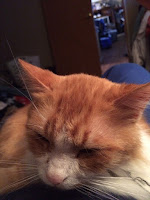
This guy pretended he wasn't glad to see me when I got home. 
http://phoenixcatandpoet.tumblr.com/ 

So here are some takeaways from the event/experience:
First the good--
  • It is always exciting to see so many young people who like to read, and the fact that the line for Holly Black was longer than the one for James Dashner (for whom you had to have tickets in order to get an autograph) tells me that these kids aren't just there because of a movie. When kids have writers as heroes, you can feel a little better about the world.
  • Pretty knowledgeable and helpful volunteers and staff. I had a lot of questions, and was lost a lot. Was never steered wrong or given a teenage eye roll with "Go ask someone else."
  • Authors seemed quite personable (though I personally did not talk to any).
  • Seriously glad that they had strong, well attended panel over LGBT issues/writing/readers.

Now the not so good--
  • I know I am not the audience here, but I take exception with the constant implication that English teachers and adults are out to stop kids from reading what they perceive are dangerous books. Come on! Do we have to make everything look like an us against the world thing?
  • The idea that three authors were so dang important that fans had to stand in a special line to get tickets to get their autographs does not sit well with me. That some people paid $100 or $200 for special packages to spend a handful of minutes with these writers reminds me of baseball players who are paid millions and then charge kids for the privilege to get an autographed card.
  • No bookmarks or coffee mugs in the swag shops? Really? Do they know anything about readers?
  • It baffles me that something as large as this could not find a couple of poets or put together a panel on poetry. We know every third angsty teenager is scribbling poems in notebooks. There are poets who would be happy to spend time talking to young readers and their parents and teachers. When you omit something like this, you tell people it isn't important.
  • Speaking of unimportant, why were so few men involved? I believe there were less than ten male authors, and the board and staff that put this event together is made up completely of women. What do you think such a thing says to the young boys at this crucial time of life when much of how they respond to reading is getting formed?

Sunday, July 12, 2015

Scott Cairns' The End of Suffering

The End of Suffering: Finding Purpose in PainThe End of Suffering: Finding Purpose in Pain by Scott Cairns
My rating: 5 of 5 stars

This book was not what I expected, and at first, not what I wanted. I cannot tell yet if it is what I needed. While some of the ideas may not be new to people who have spent a good deal reading this niche of literature, it is certainly more honest and better grounded, theologically and rationally, than other work I have read on the subject, including Lewis' sometimes infuriating The Problem of Pain.

View all my reviews

Thursday, December 18, 2014

Encouragement in the Small Graces

Traveling Mercies: Some Thoughts on FaithTraveling Mercies: Some Thoughts on Faith by Anne Lamott
My rating: 5 of 5 stars

Traveling Mercies is a book which encourages readers, not because it tells them how wonderful they are or how terrific the world is despite the awfulness they see or what the terrible things they feel. Lamott doesn't give the us such bullshit optimism or "it could be worse" dismissiveness. What we get is the sense that pain is real, even the troubles that seem small and petty to the outside world. But we also see that pain, even the worst of it, can be lived through, and that grace can be found in the smallest acts of love and mercy.

It has been a long time since I have read a book about the transforming power of love and living in the moment. This isn't a book that tells you how to live. It tells you that life matters. And I can't speak for others, but I needed this.


View all my reviews

Monday, December 15, 2014

Difficult Meditations on Sickness

Devotions Upon Emergent OccasionsDevotions Upon Emergent Occasions by John Donne
My rating: 4 of 5 stars

John Donne’s Devotions Upon Emergent Occasions is difficult to read for a number of reasons. First is the language of the 1600s. That would be little problem for good readers if not for the second reason: Donne's penchant for extended metaphors. A third problem concerns references to a Bible few Christians are familiar with. The fourth is the combination of subject matter and the sense that Donne did not seem to be writing for a particular audience. Despite these issues, or perhaps in part because of them, this is a book worth reading.

Of course, what makes the Devotions most valuable is its painful and moving rumination on sickness and death. Donne contemplates mortality, but also the similarities between physical and spiritual disease. It is difficult to read statements like, “I must be poor and want before I can exercise the virtue of gratitude; miserable, and in torment, before I can exercise the virtue of patience” on their own, but they lead to, “To hear thy steps coming towards me is the same comfort as to see thy face present with me; whether thou do the work of a thousand years in a day, or extend the work of a day to a thousand years, as long as thou workest, it is light and comfort.” There is a good deal of learning in these passages, but not all of that education came from books.

One doesn't have to be a Christian to find hope and comfort in Donne's prose. Though I'm a Christian (and Episcopalian) I must point out there are moments where the author’s theology is suspect. These instances are minor, however, and do not overshadow the power of these meditations.

Devotions Upon Emergent Occasions is often paired with “Death’s Duel,” Donne's final sermon, which addresses similar themes. I wish it wasn't. While there is some to recommend it, the piece is the kind of rambling, cut and paste hodgepodge of scripture and long winded jabbering that reminds me of many of the reasons I don't go to academic conferences. One can pass on it, and not miss much.

As a middle aged man going through my own illness and spiritual angst, I find the Devotions particularly important. I read some of these several years ago in graduate school, and fell in love with the language and the metaphors, the insight into the spiritual condition of humankind and the mercy and love of a sometimes confusing God. Now they resonate deeper for me, and I suspect I'll return to them a few more times before making my way to my sick bed, "where all that the patient says there is but a varying of his own epitaph."


 View all my reviews

Thursday, December 04, 2014

Sweaty Joy

Plan B: Further Thoughts on FaithPlan B: Further Thoughts on Faith by Anne Lamott
My rating: 4 of 5 stars

Not every chapter of this book is a winner, but most are enjoyable and thoughtful. Lamott's humor and warmth show here, as always. There are stories of trying to raise a surly teenage boy and trying to love one's enemies (not in the same chapters). I also was touched by her stories of loving the dying and difficult, and the length of time it took for her to come to peace with her mother, well after the latter's passing.

Among the many things I love about Anne Lamott's books is her ability to weave joy -- hard won, sweaty joy -- from the difficulties of life, and her respect for the process of working out one's faith in trials. Here such themes are present, and no matter where people are in their own journeys, this walk is worth the time.


View all my reviews

Saturday, November 22, 2014

A Writing Book For Everyone

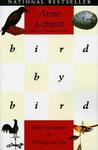
Bird by Bird: Some Instructions on Writing and LifeBird by Bird: Some Instructions on Writing and Life by Anne Lamott
My rating: 5 of 5 stars

I loved this book! Lamott doesn't fool around with vague instructions meant to show how smart she is or narrow prescriptions which work for only a handful of people. She's honest and funny and open about writing, careful to tell would be authors about the difficult toll the writing life takes on the brain and emotional well being, but also about the worthwhile joys of the craft. Along the way, she provides wonderful insight into the inventive mind, so that this book might even be good for people who are not interested in being the next literary sensation.

There are a few things Lamott tells readers that might seem to be in nearly every book of its genre (write every day, don't stress over the quality of first drafts), but her warmth and humor make these points much more than mere directives or mantras. There are also suggestions which need careful consideration (be vindictive, but be kind, for example), and may make the budding scribe more than a typist. Further, while many writers bore the reader with long winded stories about their successes (the main reason I stopped reading articles and books about writing), Lamott's illustrations are brief and filled with the kind of pathos that makes them worth reading for more than lessons.

Bird by Bird is concise and witty and fun, like a good workshop should be, but rarely is. It ought to be on the bookshelf of every person who cares about art and the creative life.


View all my reviews

Monday, August 18, 2014

A Notable, but not Striking, Collection

Some Imagist Poets, 1916 An Annual AnthologySome Imagist Poets, 1916 An Annual Anthology by Richard Aldington
My rating: 3 of 5 stars

This is an anthology containing work by six poets from the "Imagist" school. I'll leave it to the reader to look up what that means because it never is quite clear, particularly since many poets categorized this way never stayed with the movement (most notably, William Carlos Williams and Ezra Pound, not found in this book). However, here are some brief notes/impressions of the poets whose work is found in this volume.

Richard Aldington -- angry bore
H.D. -- Sea themed verse. Several references to mythology. Sometimes doesn't seem to say much. Sometimes quite powerful ("Orion Dead").
John Gould Fletcher -- Some delightful lines, interesting ideas. Some blah.
F.S. Flint -- Strong, imaginative lines. But what is he saying other than death happens?
D.H. Lawrence -- I'm not sure how he is an imagist poet. Almost too emotional. Maybe it is just my prejudice against so many exclamation marks!
Amy Lowell -- Not sure what to make of these. Most I like, but I don't know why The short, lyrical poems pack a punch.

This is interesting book may have historical and literary value, and may serve as an introduction to the Imagists. The preface does provide a bit of an understanding of the goals of the movement, goals that need to be revisited now with so much over-academic and over-workshopped poets dominating American publishing.

View all my reviews

Thursday, August 07, 2014

Joyce's First Book

Chamber MusicChamber Music by James Joyce
My rating: 3 of 5 stars

This small collection of lyric poems, first published in 1907, has a good deal going for it. Joyce clearly had command of meter, and most lines are very musical to the reading ear. I am surprised that there is little innovation or creativity of language, but there are no forced rhymes and everything seems to flow smoothly. There are no wasted words or phrases. Though there are some nice lines and nice sentiments, the collection, as a whole, is merely that: nice. I'm sure any lover would be thrilled to receive one of these poems from a beloved. However, there is little that is special or memorable.

Don't get me wrong. I enjoyed Chamber Music. This is a fine read for a rainy day and a warm cup of tea. But not much more.

Get the book at Gutenberg for free here. More information about the book can be found here.


 View all my reviews

Friday, August 01, 2014

T.S. Eliot's short story

Eeldrop and AppleplexEeldrop and Appleplex by T.S. Eliot
My rating: 4 of 5 stars

The two parts of Eliot's only short story were originally published in 1917 in separate issues of The Little Review. While there are a few ways to look at this story, I saw it mostly as an exploration of the limitations of seeing the world through an academic lens.

Like Eliot's poems, some of the story might be obtuse for readers who miss the references, but the story moves along well enough, I believe, for people to enjoy without prior knowledge. Also, like Eliot's poems, one can see the influence of Robert Browning's dramatic monologues.

Not exactly a "page turner," the story is still an enjoyable social satire. I'm surprised "Eeldrop and Appleplex" missed my attention for so long. However, I'm really glad I found it.

Download the story for free at iTunes or Amazon. You can also find it here.

View all my reviews

Friday, July 25, 2014

Important Perspectives on the Hebrew Scriptures

Bible Jesus Read, TheBible Jesus Read, The by Philip Yancey
My rating: 4 of 5 stars

Mr. Yancey's personable style is one element that is makes The Bible Jesus Read a winner for me. Don't expect cold exegesis or hellfire ranting, but a friendly, honest exploration of a few of the (for him) troublesome books of the Hebrew Scriptures, a la Kathleen Norris (whom he quotes a few times). One should not expect theological ramblings, though the theology seems pretty solid to me. One of the cornerstones of Yancey's argument is that these books of the Bible are about different aspects of God's relationship with Creation. To that end, this book is about Philip Yancey's evolving relationship with these powerful, but baffling works.

After an introductory chapter outlining why the author felt led to explore these books and his approach, he tackles Job. Probably my favorite part of The Bible Jesus Read, it reorients the reader concerning the legendary suffering of the title character, demonstrating that the story is more about faith than about pain. Then comes a look at Deuteronomy, where Yancey imagines the thoughts and feelings of the soon to die Moses as he makes his last speech to the Israelites before they enter the Promised Land. While an interesting exercise, I felt this was too speculative. I kept wondering, "How would he (Yancey) know this?"

The fourth chapter is about my favorite book of the Bible: Psalms. Here Mr. Yancey does a masterful job looking at the famous poems as much from a literary point of view (without being academic) as from a religious perspective. He reminds the reader that these verses, though part of the canon of Jewish public worship, are very personal words from people of varying socio-economic and political perspectives, and even those that make us uncomfortable portray a people with faith in a God who can take their bitterest complaints.

Next, the author covers Ecclesiastes. For me, this is one of the most interesting parts of the book. Ecclesiastes is a tough, depressing part of the Bible, but other than repetition of the statement "Everything is meaningless!" I put my finger on why. But Yancey helps the reader see the theme in its context. Written probably after Solomon's death but certainly during a time when the people were still reaping the benefits of his reign, the book explores the emptiness of having it all. The sixth chapter is about the prophetic books, and though I would have like a more detailed look at a single prophet, I realize that it would be disingenuous to pick one, and to get at them all would take another book. Besides, the chapter seems rambling and repetitive to me. It does have an important idea that should those who struggle with this part of the Bible. Readers are encouraged to look at these writers less as men who foretold the future, and more as seers, people with the ability to observe the world (past, present, and sometimes future) more deeply than most.

The final chapter of The Bible Jesus Read works to make the point that what Christians call the Old Testament does more than foretell Jesus as Messiah, but has additional resonance for Christians. It should not be segmented so we can find lessons for daily living, but seen as a more complete picture of our relationship to God than the New Testament alone provides. I suspect that non-Christian readers may find this ending a bit tedious. However, Yancey's story about attending a performance of Handel's Messiah does make for a fascinating connection.

A brief word about the title. It seems a little misleading in that the author spends little time discussing Jesus' responses to or references to these the Hebrew Scriptures. However, the main audience seems to be those who are familiar with the New Testament, most of whom assumed that Jesus was well verses in these writings. I suppose The Bible Jesus Quoted or The Scriptures Jesus Read More Carefully Than the Pharisees and Teachers of the Law isn't very catchy.

The Bible Jesus Read was first published in 1999, but is not at all dated. And despite a couple of missteps, at least for me, the book is overall quite edifying.


View all my reviews

Monday, July 07, 2014

Never Mind the History; Enjoy the Story

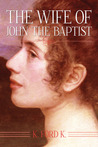
The Wife of John the BaptistThe Wife of John the Baptist by K. Ford K.
My rating: 4 of 5 stars

The Wife of John The Baptist is not likely to be what readers expect, and for the most part, that is a good thing. I found myself disappointed by a couple of things, but that should not stop readers from giving this novel a try.

The story is told through Hessa, the daughter of a Greek merchant and a young woman with an extraordinary gift. When she touches something, she can tell about more than its authenticity and quality. She knows its history. When she touches the hands of others, she knows if they are honest or if something is troubling them. Her ability is useful to her father, who dotes on her, and encourages her with tales of his adventures.

When a mysterious young traveler named John appears in town, Hessa's life changes dramatically. Before long, he has won her heart and she marries him against her father's wishes. There is passionate honeymoon, and then she joins John in his wandering.

They seek solitude, partly so John can be alone with God, but it seems mostly so John can avoid people who are all too ready to make him the prophet his father said he would be. But after they lose their first child, John decides to take on disciples and live in community so that Hessa will have a proper midwife for her next pregnancies.

Eventually, John succumbs to the pressure of becoming a prophet. The problem is that several factions are seeking him as a leader against the hated Romans, and John does not believe a revolution can come by armed force. He does discover some sort of power in baptism and begins to perform them in the Jordan. It is then that John's pronouncement against Herod's marriage to his brother's wife gets him into trouble.

Though there is a surprising lack of sensory details, this is still a very interesting story, not just about John and his bride, but about the people and politics of this time. I had trouble putting it down. The characters are well-drawn and authentic. And John and Hessa's love for each is not just the passionate attraction of two young people, but romance that builds rather than wanes as they get older. For me, this made the story richer and more satisfying.

While a novelist does not have any obligation to stick to every particular of history, especially a history many prefer to believe, I am not thrilled with some of the deviations and omissions from John's story. John's purpose to announce the arrival of the Messiah is completely ignored, and Jesus is relegated to a single, brief sentence, where John is said to have been "very impressed with him." Readers will also find differences between K.Ford K.'s portrait and the Biblical account. Most of these are minor, but I suspect those looking for something to solidify their beliefs will be disconcerted.

I was also disappointed with the ending, not because it isn't "happy," but because it seems to all too mystical where little hint of such is provided by the story. The reincarnation angle seems to give the novel a more Hollywood ending than the reader would expect.

These problems do not detract completely from the story itself, but I must confess most of them troubled me. However, this novel is gratifying, and its challenges should not put off good readers.


View all my reviews

Friday, June 27, 2014

An Uncomfortable and Necessary Memoir

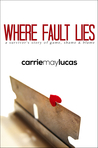
Where Fault Lies: A Survivor's Story of Game, Shame & BlameWhere Fault Lies: A Survivor's Story of Game, Shame & Blame by Carrie May Lucas
My rating: 4 of 5 stars

I did not enjoy reading Where Fault Lies. I am not supposed to. This story is not just about rape, but the relationship the victim had with her attacker and her very painful and real struggle for justice as she works to heal.

This memoir could easily have been titled Red Flags, especially considering the first third of the book, where the reader sees an intelligent woman getting duped by a man who is clearly not just a jerk, but a psychopath. Aspects of Sayed's personality which show his damaged mind seem to be what make him more attractive to Ms. Lucas. Sayed reminds her that people are in his life until they are no longer of use to him. There are no second chances with him; people who stand up to him or displease him are "cut out." Sayed leads her to believe that their relationship is unique and that the rest of the world cannot possibly understand how special what they have is. But he is grooming her to be controlled.

As I read this section, I could not help but wonder why not only women are attracted to men like Sayed, but why anyone would even be friends or have business associations with him. We see by the end of the book that he is a complete fraud. I am surprised no one else notices this.

The second third of the book is about the rape itself and the immediate aftermath. Here readers see Sayed's brutally in not just a physical sense, but emotionally as well as he makes his victim feel bad for his hurt feelings. Soon after, he breaks off the relationship and her reaction is what is normal for a rape victim, but he uses her actions against her and twists the events to make himself look like the injured party. His behavior further demonstrates what Ms. Lucas makes clear through the whole book: that rape is much more about power and control than about sex.

Where Fault Lies is painfully detailed throughout. The final section of the book brings us into work place and the social circles and the family relationships where rape is hardly believed or brushed aside because doing something (even merely listening) is uncomfortable and inconvenient. We see callous police and sympathetic lawyers working for underfunded advocate agencies. We see a self-centered assailant who is willing to do almost anything to save his reputation and multiply the harm he has caused. Most of all, we see a human being tormented and emotionally beaten down before finding a measure of (not complete) triumph.

There are times when the details are too much and don't help the narrative, and Ms. Lucas, independent to a fault, is not going to be very likable to a few readers. However I see these issues as minor. One might say these are all the more reason to read the book. NO ONE deserves what happened to Ms. Lucas. A sub-segment of our society claims that an independent and stubborn woman deserves such treatment, but no one does, and justice should be for everyone, not only those who conform to our twisted scale of likability. This is a story that needs to be read and thought about deeply, not just by women, who face these threats more often, but by all of us. Too easily people dismiss rape as something deplorable, but never let the whole of the act touch them. This memoir forces us to be more than emotionally affected. And that is needed.


View all my reviews

Friday, May 30, 2014

A Good Deal of Truth in the Fiction

The Ink Garden of Brother TheophaneThe Ink Garden of Brother Theophane by C.M. Millen and Andrea Wisnewski
My rating: 5 of 5 stars

This is a charming and delightful book about a daydreaming monk who discovers how to make different colors of ink to illuminate the books transcribed by he and the brothers in his monastery. As much about art and chemistry and poetry as it is about work and imagination, I could not stop smiling as I read the story and gazed at the illustrations. I may be 50, but I felt like a child as I experienced the wonderful tale.

After writing the above for Goodreads, I ran across another review which spens a great deal of space on the fact that the character of Brother Theophane was not a real person. And I think I can understand the writer's concerns, particularly about the story's impression on children. However, the version of Millen and Wisnewski's book I read contained notes at the end about how the character was a fictional recreation of what several monks had done in experimenting and "discovering" new shades and methods for illuminating manuscripts. (The poems in the book were also from a number of different anonymous monks.)  While I too am troubled by the idea that discovery is some solitary action done by one smart or brave soul, I also believe that one should not be troubled so much by this book.

The story and the character are truer in the sense that all great fiction is true: it tells about humanity in all its imperfections and potential. Brother Theophane may not be a single real person, but he is at the heart of many people's experiences and hopes -- then and now.


View all my reviews

Tuesday, March 11, 2014

God Particles: PoemsGod Particles: Poems by Thomas Lux
My rating: 4 of 5 stars

Mr. Lux never ceases to astound and delight me with his mastery of surreal landscapes and the possibilities of language. I don't always "get it," but I always want to.

This collection seems more personal than others, but I confess I am not sure how I would know. It isn't that there are so many voices, but the same voices speaking from different perspectives.

The title poem is a gem.

And speaking of gems, one should never say of Lux's poems that they are diamonds in the rough. In his world the diamonds are rough, and sometimes the rough shines.

View all my reviews

Monday, February 24, 2014

Warmth and Bite

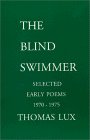
The Blind Swimmer: Early Selected Poems 1970 - 1975The Blind Swimmer: Early Selected Poems 1970 - 1975 by Thomas Lux
My rating: 4 of 5 stars

Clearly Mr. Lux has been writing surprising and thought-provoking verse for many years. This little collection demonstrates the strange combination of charm and shocking imagery that would become even more pronounced in his later poems.

It is difficult to compare Thomas Lux to anyone because his work is so unique, but it is not uniqueness for its own sake. There is warmth and bite here, like the cat that purrs and scratches, and leaves you to figure out how the motivation for both is the same.


View all my reviews

Tuesday, January 28, 2014

Making Useful Connections

The Tipping Point: How Little Things Can Make a Big DifferenceThe Tipping Point: How Little Things Can Make a Big Difference by Malcolm Gladwell
My rating: 4 of 5 stars

In my writing classes, I often have to tell my students that cause and effect connections are difficult to prove. I may have to encourage them soon to read this book to help them learn the sort of critical thinking required to look at problems and come up with and communicate viable solutions.

At first glance it may seem that Gladwell's connections are silly or oversimplified. But they not only work, and not merely as some intellectual exercise. He demonstrates the complicated relationships between actions and events. The book also illuminates the potential humans have for problem solving. This is a book that should be required reading, particularly for managers and administrators. It certainly can be a boon to those who wish to improve critical thinking skills.

View all my reviews

Monday, January 27, 2014

Augustine's Confessions

Confessions (World's Classics)Confessions by Augustine of Hippo
My rating: 4 of 5 stars

This is a magnificent book. Well, parts of it. Augustine's actual account of his life is beautiful and stirring. I was particularly struck by his love of his mother and his friends.

But when he gets into his ruminations about time and all that, I kept thinking, "What does this have to do with his conversion or his spiritual and intellectual growth? Shouldn't this be in another book?" Maybe that is modern impatience creeping in on my part.

Yet it is all worth it to see not only his devotion, but honesty. More Christian writers, especially memoirists, would do well to read this before thinking their journey is all that special. And even those who are not Christian could benefit from Augustine's story and reasoning. His faith comes not from backwoods ignorance, but from careful thought and an open search for the truth.

View all my reviews

Thursday, January 09, 2014

Honoring Companionship

Dog SongsDog Songs by Mary Oliver
My rating: 4 of 5 stars

Reading Dog Songs, I get the impression Mary Oliver is not just a dog lover, but a person who loves life with dogs as companions. This volume, many of the poems of which were culled from previous collections, is not only a fine tribute to lives of dogs, but is a wonderful portrait of a person who has learned to live well with them.

Oliver writes accessible poems which do not have to rely on cliché or the ordinary. These poems honor not only the dogs she has lived with, but also the wonder of a life lived in the tension between solitude and companionship.

I would like to rate this book a little higher. But there are some pieces with lines that in need polish or pruning. However I think this is likely to bother very few people other than myself. Dog Songs is an otherwise a earthy and enjoyable read.

View all my reviews