Wednesday, October 05, 2005

Bookmarks for August/September 2005

With the semester starting, I seem to already be behind, so I'm combining some thoughts on the what I've been reading to cover two months...

Dien Cai Dau by Yusef Komunyakaa (1988). A few years ago, I read Neon Vernacular and was immediately a fan of Komunyakaa. As I was piecing together the syllabus and assignments for my American Lit class, I decided I needed to read this book to try to let it impact me as it did readers when it first came to the attention of poetry lovers.

This volume should be required reading for anyone studying the literature of the Vietnam War. The much anthologized "Facing It" is one of most powerful pieces I've read about the Memorial Wall and the many issues and problems soldiers dealt with and continue to deal with. The poem's placement in the collection is key. Reading the poem in an anthology will have, I presume, an impact on readers. However, since Dien Cai Dau reads like a diary or journal of the experience, I think readers are likely to have a stronger reaction.


The verse is accessible and pulls no punches. It needs no tricks to shock the reader, and it does not rely on its subject matter to carry the emotional weight. This is also a book that leaves politics to the politicians, though in a way that does not ignore the subject, but allows the personal to become universal. No matter where one stands on this war, or even on the subject of poetry, Dien Cai Dau is a must read for any American.
Life Studies by Robert Lowell (1959). In the "Groundbreaking Books" section of the Academy of American Poets website is an nice introduction to this volume. After reading this short article and a couple other notes about Lowell, I read all his poems in an old textbook I had at the house this summer. Then I made up my mind to look at this whole book, and I'm very glad I did.

Life Studies is a rather personal book, one that might be partially responsible for the so called "confessional" sub-genre in American letters. However, one doesn't need to know Lowell or even sympathize with his various problems to find something meaningful in this book. (An exception to this might be Part Two, and long prose section entitled "91 Revere Street." I found this piece quite interesting, but I could see how it might not be to the liking of the average reader.)


One problem with the Confessional poets is that their works are so filled with emotional outbursts and supposedly "honest" feelings about people close to the writer, that readers are often left out of the experience. One is expected to vicariously experience events in the poet's life. Sometimes the subject matter is supposed to be enough for us to be interested in and empathize with the poet. I think good poetry stands on its own no matter who the writer him/herself is. This is why Life Studies is such an important book. One does not have to have a domineering mother or sometimes weak father or have been born into the same socio-economic class as Lowell to "get" what is going on here. One does not have to suffer from depression (or know someone who is depressed) to understand the pain and anxiety addressed here. (However, I do have some sense that reading this book may shed some light for those who wish to understand the disease more.) This is particularly apparent in the moving "Home After Three Months Away" and "Memories of West Street and Lepke."

One might also note Lowell's social and political commentary, as in "Inauguration Day: January 1953" and "Words for Hart Crane."

The Broker by John Grisham (2005). I was given this book as a Father's Day present, and finally got around to reading it. If you are looking for something that is entertainment only, this novel is okay...at least until a more compelling one comes along. I found the idea for the story very interesting, but the story itself is not plausible. The Broker is about Joel Backman, a man who is given a presidential pardon he does not ask for and does not deserve. He is taken to Italy, presumably to protect him from the many people and nations that want him dead. However, the real reason is so the CIA can see who kills him first. Somehow this murder is supposed to provide the CIA with information they need, enough to go through the trouble of whisking a convict across the globe, giving him a new identity, and teaching him a new language. The basic story of the main character trying to save his life was interesting, but I could not buy into the premise.
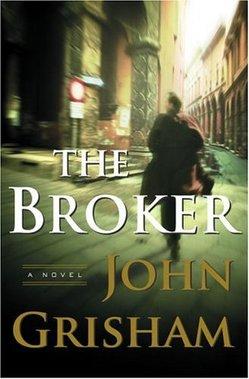
The book does not contain, for me, as much drama as I've come to expect from Grisham thrillers. The protagonist is a guy people want to kill, and I was pretty sure he'd get away, but the story is bogged down with conversations in coffee houses and at historic sites with agents and tutors. I had the impression that Grisham took a nice vacation in Italy and wrote a novel with this setting so he could write the trip off as a working expense. The novel is enjoyable, but nothing to get excited about.

Next month: Two issues of Poetry magazine and The Call of Stories by Robert Coles.

Friday, September 23, 2005

Music Notes for August 2005

Here are some of the things I've been listening to in the month of August:

Live at Budokan by Dream Theater (2004). This is a fine recording of their set during the Train of Thought tour. Three discs, impeccably produced, once again demonstrating the band's massive storehouse of energy and musicianship. "Instrumedley" is a fun tune, and it was great to hear the house come down with "Pull Me Under."
Unspeakable by Bill Frisell (2004). Mr. Frisell's Grammy winner should delight people who like contemporary jazz and even a few who would not normally taste a soundbyte of America's music. I've long admired Frisell's playing and ability to weave elements of other genre's in his music. Samples and turntables are used tastefully, never overpowering the skillful playing or delicate compositions. It is hard to pick standout cuts, but my personal favorites are "1968" and "Alias." Of course if you ask me next month, I'll likely have different songs at the top.

Fly By Night by John Adams (1999). I have had the privilege of watching John perform several times with either his group or with Mike Drake. He is fun for me to watch because without drawing attention to himself, a listener gets the sense that all is right in the musical world, that a group, or even an audience, would be very different without him. This 1999 collection shows his fluid and sensitive style. He has a fine group with him as well: Dennis Dotson on trumpet, Joe LoCascio at the piano and Ed Soph on drums. Here is a nice mix of standards and original tunes. If you are ever in the Dallas area looking for some fine jazz, you have to check this man out.

Up All Night by The John Scofield Band (2003). I love Scofield's fuzzy and funky guitar. And even when he plays something that goes away from the elements of his signature sound, Like Quiet, Works For Me, or Enroute, I find the music feels right on the first hearing and grows better every play. But for some reason, I'm having trouble getting into this.

Sorry the thoughts are so short this month, but its been busy...not too much work to listen to music, but certainly too much to give hard working musicians their due by listening well. Hopefully I can do better next month. I'm hoping to rave about Kurt Rosenwinkel, an old Weather Report disc I finally got, a compilation of Charlie Hunter tunes, and an interesting treasure from Alex Acuna.

Friday, August 19, 2005

Summer Sports Notes

So while I've been lounging around the house this summer, I've noticed a few things happened in the world of sports. Here's a few thoughts:

Little Boy Green. I have always hated the Philadelphia Eagles, and when Mr. Owens signed with them, I had all the more reason to do so. People use the word "distraction," "disruptive," and sometimes "distasteful" to describe this person. I say epitomizes all that is wrong in the world of sports. He used the phrase "be a man" in his invitation to have his coach do what he wants. He tells people "I'm a grown man" as some sort of excuse for being allowed to behave as he does. Mr. Owens is not a man; he is a child. He is like a spoiled teenager whose hormones and impulses drive his thoughts and actions.

And he was given a timeout by the Eagles, a move I heartily applaud. But he has been coddled enough. When (not if) he throws his next tantrum or his next prank, this team and the league need to send him to his room until he realizes he isn't the only person on the planet and that he and football can survive just fine letting others have attention. That or send him, in his infamous fatigues, to Brat Camp.

(I refused to call him "T.O." because nicknames and cute shortened versions of one's name lend an air that he is actually important.)

The right to remain silent. What seems to have been lost in all the rhetoric here is that Rogers was harangued by people for some time before he blew his stack and injured men doing their jobs (sort of). Mr. Rogers should not have attacked these men; however, everyone has a breaking point and given his circumstance we should be surprised he held his temper so long.

Further, the incident has brought me back to a problem I've noticed throughout sports. Why must an athlete or coach talk to anyone? Dale Hanson, among others, whined long before the violence about Rogers's refusal to talk to the media. Could it be that much of the anger had come from reporters initially, and not from Rogers?

Sports fans should notice that often players and coaches are fined for not speaking to the press, and not just when they refuse to participate in special media days (another odd idea--everyday is Media Day) or autograph sessions. I'm sure in most cases, it is good PR to speak to the media who can easily hurt a man's career (right Mr. Switzer? right Mr. Reeves?). However, what is the rationale for forcing players and coaches to give their usually banal thoughts?

A little juice, Mr. Palmero? I'm more than a little disappointed the Rafael Palmero has not only tested positive for steroids, but that he lied so much and so long about it. He should probably quit trying to convince us that there was some sort of accident and that he is going to discuss "his side of the story." Unless his side is to tell the truth (including why he seems to have lied so vehemently to Congress, a moment that strikes me as being like gangsters shooting other gangsters for being gangsters), I'm not sure anyone is going to be listening except to find more soundbytes for talk radio hosts and comedians to skewer. Otherwise, just shut up.

Does anyone remember Steve Moore? Hockey is back, and none too soon. I am excited that soon I will be able to watch slap shots and hear the scrape of blades on ice. But wait a minute! Bertuzzi gets to return to play after serving only twenty games. Why this guy isn't living out the next ten years in prison followed by an exciting career sacking groceries is beyond my comprehension. Both Commissioner Gary Bettman and the Players Union should be ashamed for letting this happen. I'm also taken aback that Wayne Gretsky supports the decision, noting that he is happy Bertuzzi will now be available to play for Team Canada.

Bertuzzi will earn 5.2 million dollars this year while Steve Moore will struggle to walk normally. If we can't get rid of Bertuzzi, how about a clause that states Moore's family gets at least half of Bertuzzi's salary until Moore can play again?

The most popular sport an afterthought. Just thought I'd throw in a thought that while the U.S. National Team is poised to go back the World Cup, and this team may be even stronger than last, the sport of soccer still gets little or no press. Most of the local media coverage for FC Dallas has been over the new stadium, not the actual games. I know that soccer is not the most popular sport in the United States (most who even mention it on talk radio do so in derision), but how much broadcast time does Mr. Owens really need?

Monday, August 08, 2005

Music notes for July 2005

So I got a couple "new" discs from my CD club and have been listening to them lately.
Whisper Not by Jarrett, Peacock, and DeJohnette (2000). Many who read my writing will note that I am particularly drawn to Keith Jarrett's music. I think it must be the intense, but controlled, emotion in his playing that makes me almost need this music. This two disc set, recorded in Paris, makes me wish all the more that I could see his "Standards" trio in person. The group moves quite naturally between bebopping numbers like the opening "Bouncing With Bud" and ballads such as the closer, "When I Fall In Love." I'm not sure why, but I really love "Poinciana," which earns its groove with skillful, emotive playing rather than tricks. I prefer to listen to this disc with the next selection in a playlist on my computer so I can have a few hours of uninterrupted bliss.

The Out-of-Towners by Jarrett, Peacock, DeJohnette (2004). I have heard a few of these pieces on KNTU, most notably the title track and "It's All In The Game" since the disc's release, and have looked forward to hearing the whole thing. I am certainly not disappointed; however, I do wonder why this isn't also a two disc-set. I feel as if I'm getting highlights from a terrific concert. I keep wanting more. Every cut is a winner. The trio plays like one might expect from three men who have been listening to each other for decades, but who have the energy of musicians just starting out.

I do wish to comment briefly on the fact that these discs have no liner notes. I suppose I can live without more pontificating prose, but something in me wants more to read. However, it is more important perhaps to let the music speak for itself.

As Falls Wichita, So Falls Wichita Falls by Pat Metheny and Lyle Mays (1980). I had heard this album before and enjoyed it as much as the group recordings from this time period, however I had not listened much to it. A few weeks ago, on the way to visit someone in the hospital, I heard the title track. Well most of it. The song is over twenty minutes long, so I didn't get to the end. I couldn't remember for sure which disc it was on, a problem furthered by the fact that I probably first heard this song on Travels, one of the best live albums I've heard. Most of this disc is made up of the title track, a 20 plus minute opus that prefigures what we have twenty-five years later with The Way Up. This is an exciting and thoughtful composition, highlighting both virtuoso players. Nana Vasconcelos's percussion and vocal work is excellent. One can see why Metheny and Mays have used, in their group and in their solo projects, great percussionists. I remember hearing "September Fifteenth" on the Imaginary Day Live DVD and "'It's For You'" is featured in Metheny's Rarum: Selected Recordings disc. This is a must particularly for fans of Metheny's group works. (Now if we could get the duo to a release of acoustic duets as they have done on tour.)

Weather Report's Live and Unreleased. Critics have faulted this two-disc work with being uneven. It does juxtapose recording from different sets between 1975 and 1983 in what seems to be a haphazard collection rather than placing the cuts in chronological order. Perhaps if I was a more astute listener or musician, I would be bothered by this. Perhaps I need to listen closer. I enjoyed these quite a bit, however. I worried that this would have a bootleg quality that would belie the sound that never gets old or dated for me. I hear this and wish I'd been listening to jazz when this group was still together (I'm already sad that I never got to see Jaco Pastorius in any setting.).

What does trouble me about this is the omission of two of Weather Report's best songs, "Birdland"and "Boogie Woogie Waltz." Both of these are found on 8:30 a disc I haven't heard yet, but which gets pretty good reviews from fans of the group. The first song is probably their most popular and the second, one of my personal favorites, is even mentioned in the liner notes to this disc as being a breakthrough tune for the band. However, there is much to enjoy here and I'm likely to keep at it. I sure am thirsty to find 8:30 however.

For next month...Bill Frisell's Unspeakable and Live At Budokan by Dream Theater.

Monday, August 01, 2005

Bookmarks for July 2005

Have been looking at a smattering of things this month, taking a bit of my cue from my Mom who likes to alternate light books with heavy ones.

Skipping Christmas by John Grisham. Found a first edition of this book at a little garage sale in Mineola when visiting my brother John. Did not intend to read it right away, but having forgotten to bring the books I was reading, and not able to sleep one night, I started it.

So far I haven't seen the movie version of this book, but from the commercials, I sense the film is supposed to be a comedy. This book does have its funny moments (It is somehow hard to keep from laughing at a man hanging upside down by an extension cord), but it seems that Grisham wanted the story to be somewhat serious, at least in the beginning. I was mostly interested in seeing how the Krank family was going to get through not doing the usual, material, Christmas thing. The book was a fun read, but a little disappointing. The story seems a bit uneven and some of the prose needs a little polish. On the other hand, watching Luther Krank rebel against his neighbor's and then find the power of community (however heavy handed) was enjoyable, a nice Christmas in July present.

The June issue of Poetry. Okay, I was a bit slow on this one. But I have a tendency to read this magazine in no particular hurry. I actually started it last month and finished in July.

Some of the poems in this issue baffle me, even with re-reading, and a couple seem, to be blunt, too average for what many consider the premier publication of verse. However, I must be honest: I feel that way about pretty much every journal or poetry magazine I encounter.

I have noticed that much of the space in Poetry is devoted to essays and reviews. Though many reviews are perhaps unnecessarily harsh, and most essays repeat the lament of how too much modern poetry comes from the universities, I do find snippets that are interesting to read.

The July/August issue of Poetry. This is the once a year issue devoted to humor. Garrison Keillor, a fan of good poetry (see his fascinating anthology), once told Larry King that one thing missing from American poetry is humor. I am inclined to agree. So it is refreshing to me to find that one of the most prestigious publications in letters devotes its double issue the subject. And here we find humor fit for a variety of tastes. I honestly did not get all of it, but that didn't bother me. Most of the poems were enjoyable and not "light" in the sense of being an easy to read source of momentary chuckles. There were a few disappointments (notably parts of Richard Wilbur's poem, but mostly because I think he is a better poet that some of this suggests). On the whole, this was a good read.
I have mixed feelings about the prose material. I'm glad to see that Poetry doesn't, at least for one issue, take itself too seriously, and even pokes a bit of fun at the pretensions of the community. Particularly interesting, as well as funny, is Kay Ryan's "I Go To the AWP." The piece is probably depressingly insightful for those who are hoping to make their way into the "business" of writing poetry. Dean Young's fake reviews were quite humorous. These and Michael Lewis's "How To Make A Killing From Poetry" struck me as satire that is easily could be mistaken for real criticism.
Three volumes by Wallace Stevens. Stevens himself admitted late in life that he seemed to write for a rather limited audience. I felt I might not be in that audience, but I must admit that I might not have been reading in the right frame of mind. Usually it was late at night and I was tired; therefore, I may have hurt my best chances to be edified in some way by his well-crafted verse.
Harmonium (1923, 1931) was Stevens's first book. It contains his most well known , and I think most powerful, poems. While Ideas of Order (1936) had some moving and interesting passages, I was felt lost most of the time. The Man With The Blue Guitar (1937) was fascinating one moment and infuriatingly dense the next. I am taken by the theme of imagination's importance; however, I may need to look at these volumes at a later date, a date I could bring more of my own imagination to the task.
Presently reading: The Collected Poems of Thomas Merton. Perhaps next month I can give a fuller report of this book. For now, know that I consider Merton to be one this country's most neglected poets. I have no evidence to this fact, but I suspect that one reason more is not known about him and why he is not anthologized is that he is a hopeful poet during a time of literary history marked by themes of doubt and alienation. Anyway, should I manage to make my way through this huge book, I'll try to write about it next month. In the meantime, I do recommend this poem, "Aubade: Lake Erie" at the Academy of American Poets website and his Selected Poems.

Friday, July 08, 2005

Art in my study


My study is ornamented with art from my children, mostly Christina, who deems herself the artist. But all my children draw and create marvelous things that make this space mine.

This mask hangs between a painting of a boy and girl holding hands and another of hearts within hearts. I think she took the picture of it too.

Perhaps I should look for prints of famous works. I can easily see the kids doing this in their rooms as they get older. I doubt I'll change much, except to add some new works as they mature and create. Who can fail to find a voice amidst so much love?

Here I have books and paper and, when necessary, a computer. The walls remind me of the difference between solitude and solitary confinement.

Saturday, June 25, 2005

Bookmarks for June 2005

Well, since school got out, I've been doing a bit of reading despite being busy with family stuff. Here's a few thoughts on what I've looked at so far:

Ten Poems to Change Your Life by Roger Housden. I really like the idea for this book, but it is a bit too new age-y for me. Hodgsen has selected some fine pieces, well worth reading on their own. I suggest, should you read the book, that you read each poem, then its corresponding chapter, then the poem again before going on to the next chapter. The book is not really for self-help or devotional purposes, but it can work that way.

I once asked a friend, someone I consider very intelligent and centered, why he read so many self-help books. He said that now and then he got a nugget of helpful information or advice. When I said that it did not seem worth the trouble read so much for the mere possibility of a small amount that might be useful, he noted that reading them just made him feel a bit better about himself. Ten Poems to Change Your Life is the sort of book that one might read in just that way. It encourages, it seems, the reader to see life as a journey that takes us to places we might not be comfortable with, but if we hang in there, we might see something good in ourselves and others. It is not my cup of tea, but I read it while I was particularly down, and I have to admit I felt a bit affirmed...sort of.

Ashes by Philip Levine. I think I read this book sometime when I was in college, but I don't remember. I have read a couple Levine books and several poems here and there in anthologies and journals. I've always been struck by Levine's rather down to earth, honest, poetry that does not have to be overly gritty or earthy (but isn't afraid to be when necessary). His work demonstrates that the poetic is what is part of real life, not that poetry is an escape from the real world.

The very first poem, "Father," knocks one down. It opens: "The long lines of diesels/groan toward evening/carrying off the breath/of the living." One sees that the poem's quiet anger is earned well before the punch of the final short line, "Don't come back." By the time we reach the last poem, "Lost and Found," the reader senses not resignation or bitterness, but a belief that some sort of connection can exist even in pain. This is the sort of affirmation, I think, we need -- imagination grounded in the universe we must inhabit, hope in just walking forward.
Unseen Rain by Rumi (translated by John Moyne and Coleman Barks ). These are (mostly) quatrains written, as the translators note, during the middle part of Rumi's life, during and immediately after the deep friendship (is that the right phrase?) with Shams. The poems are certainly not like haiku, or even in the spirit of haiku, yet some of them do seem to read like haiku that just sits there saying little, expressing little. I don't mean that to be a criticism except that apparently, like haiku, one might need to be in a particular frame of mind to get out of the verses something more than the image or sentiment. That is not to say that the image or the well phrased sentiment isn't sufficient. I did find some pieces that were quite powerful, lines that helped me see why Rumi is so often quoted these days.

As an example of what I mean, let me give you the following: "I have lived on the lip/of insanity, wanting to know reasons,/knocking on a door. It opens./I've been knocking from the inside!" This little poem seems to contain a "message" (something I normally eschew). Yet I think there is something there worth noting, and perhaps something different to be gained or enjoyed if read in a different frame of mind.
John Coltrane by Bill Cole. Cole's book is part biography of the great sax player and part analysis of Coltrane's music and genius, particularly as a spiritual artist. Most of the discussion of Trane's music is way, way over my head, but I can see it benefitting serious students of music. I like best that Cole works to connect Trane's life, philosophy/religion, and jazz history. Thanks much to my daughter, Angela, for giving me this for Father's Day.

June has been a difficult month. But reading has been quite a solace for me. Here's to the joys of quiet and the pleasure of holding words in one's hands.

Wednesday, May 11, 2005

What are we teaching our kids about sportsmanship?

Last Saturday was the last game of the Spring season for my daughters' team, the Titans. Our girls lost the game 2-1 to a team that I believe is not as good as ours. I don't think we lost because of a biased ref or bad calls. I can't say we lost because our girls didn't put forth the effort it takes to win. There are many reasons our team did not win. One reason is that our girls (I am assistant coach) did not know how to handle the sort of tactics used by the opposing team, particularly their coaches. The other team's coach encourages his kids to knock people down, pinch and step on feet when the referee is not looking, and intimidate through words. These same coaches complained throughout the game when their own girls fell down or got bumped during the normal course of play. One coach said to one of our players, "Too bad you suck!" as she went down the sideline and after the game refused to shake hand with any coaches or players.

What we have here is a sort of disconnect between the I'm a victim and Win at all costs mentalities. I see this professional sports all the time and I remember running into these sorts of players and coaches when I was involved with sports. Perhaps there is a little of this in all sports fanatics. But when a coach of young people feels the need to act this way, especially toward young children, then something is very wrong. For these people, it is not the momentary lapse of reason that one has when supporting a team. This is a lifelong attitude.

I'm not sure what can be taught to kids on the other team unless their parents see the problem and step in. But I have to teach our girls, or at least try. And the lessons they learn from this experience cannot be taught in a locker room session or discussion at the next practice. Surely kids need to know such people exist, and they need tools to deal with them. I certainly was not prepared to give this lesson, though I knew they were poor sports.

A few games ago, I had a run in of sorts with a different opposing coach. Our girls were winning quite handily and he made some comments about running up the score. I snapped back at him something inappropriate. He yelled at me. I yelled at him. Our conversation got quite heated. I knew I crossed a line when a curse word came out of my mouth. I stepped back, but he was too upset to let it go...for the moment. The referee had to stop the game to tell us to focus and to consider the girls on the field (most of whom, I believe) did not even notice what was going on.

The next week, when tempers were cooled, this coach made an effort to come speak to me and to our other coaches and apologize. I did the same. We both recognized that we had lost sight of the reasons we were out there: the kids. I have a great deal of respect for this coach. His own frustration, I believe, came from what he perceived as a slight against his girls. He wants to win, but he wants more to see those girls get something positive out of the experience of playing soccer. And forgive the sexist comment, but he acted like a man, not only in apologizing, but in being gracious in accepting my apology. That he treated my team with the dignity and respect he expects others to treat his team, I think teaches my girls as well as his, some of the important lessons that show why sports itself can be valuable.

Awhile ago the coach of my daughter's team got very caught up in a game and spent a lot of time screaming at the kids, the referee, and others. This is a person who I respected, a man who had taught my girl a great deal and improved not only her play, but her self-esteem. After a time, he wrote an email to all the parents apologizing for his actions. At the next practice, he took each girl aside individually and apologized to them. That took guts I know most people don't have, but I will think of him every time someone like the jerk I mentioned above comes along. We always say, "It's all about the kids" and "People need to take responsibility for their actions." But here I saw it. I think it is obvious what these people teach not just to kids, but to all of us on the lifelong journey for self-improvement.

Monday, May 09, 2005

End of the semester notes (Spring 2005)

Well, it has been a busy semester. I realized that I haven't blogged since February, and I have some catching up to do. For now, I'd like to discuss a few things about education since I have spent so much of my time and energy on this.

Plagiarism. I have been plagued by students who, despite all they have been taught, and all that they should know, either believe they have not committed plagiarism or want to pretend that they didn't know. Am I to really believe this? I have had a few students this semester who will claim over and over that they have not done this even when I take the time to show them how portions of their papers are word for word what I have found on the net.

Know yourself (Or at least read the syllabus). In the past couple weeks, I have had conversations with students who claim they did not know they were failing. I am inclined to believe them. I have a policy I call the "Five Error Rule." Basically it means that if a student makes five mistakes that he/she should not make at whatever level, then the paper must be rewritten, usually after consultation at our Learning Assistance Center. Students usually have a week to perform this task. This seems to work a bit better than giving the opportunity to revise after the students earns an F, because under that system, half the students just dropped the course and of those that did not, only a few papers were revised. But this semester, I have had a few students who have ignored my sometimes many notes to revise their work. When asked why, some said they did not know I had made such a request. Some had not even checked their grades online. Some did and figured that as long as they occupied a seat in the class, I would not fail them. (Of course, I fail no one. They fail themselves.)

I blame three things for this problem. First, I think that our system of organized babysitting that we call public school encourages such notions. Even when a hard working and gifted and dedicated teacher works to make students accountable for their own lack of initiative or drive, that teacher is often hindered by policies that give students chance after chance to do screw around all year and still pull it out. Second, we have a culture that hammers home the idea that if a student does not think the work of a course is important, then she/he can put less effort into their tasks. This goes with the third problem: laziness. One study showed that 75% of college students cheat. When asked why, most of these students state that the courses they cheat in are merely hoops they must jump through, are not important, and they would rather do anything else than spend the time and energy it takes to write a paper or study for an exam.

Take responsibility for your apathy. I'm sure every teacher gets students near the end of the semester who suddenly seem intensely interested in the course when previously they have shown not only no concern, but often open hostility to learning. Some of these students look for extra credit to do at the end of the term though they have not turned in some of the major assignments. Many act surprised that they are failing. One student a week ago actually told me that he figured he'd pass if he kept showing up and turned in something for each assignment. This week I have had two students take an option final exam though it could not possible improve their grades. One of the students told me she figured I would not fail her if she did it.

Look, I cannot make a student care. I try to be accessible, understand and all that stuff. I try to help students value the experience of my class and the skills they should gain, but I can only do so much. We need to quit allowing students in public schools to blow off the majority of the year only to pull it out at the end. I told a student the other day, "If you do not care about the course, that's fine. But you need to be prepared for the consequences of your apathy."

Some students complain that I do not give a "review" of their tests. Of course, I do tell students what the format of their exams is and I remind them of what material will be covered. But I refuse to try to re-teach students material they have spent weeks ignoring. There is a reason I am required to be on campus and available many more hours per week than I am in class. There is a reason I have email and a phone. Why students, after they have done little or nothing, expect me to give them a break...and don't get me started on the "I've just never been good at English." One student told me this right after telling me she usually got A's and B's in high school. My answer: You are there to learn, not perform.

Wednesday, February 16, 2005

This year's adventure in movies

Each year, my wife and I try to see as many of the five movies nominated for Best Picture before the Academy Awards. Often this means seeing as many of them as we can in a very short time period. In 1993, we saw three movies, including Schindler's List, in a single day/night. It can be exhausting, but usually is quite rewarding.

This year, partially due to the generosity of gift cards for movie and dinner from my daughter, we were able to see four of the five movies in a single weekend. We saw the fifth the evening before the Oscars. What follows are some brief thoughts on each film, all of which I enjoyed to some degree. Because I don't like ranking works of art, I'll remark about the movies in the order we watched them.

The first film we saw on Friday evening was Sideways. Of the four, I think this is my favorite movie. Perhaps this is an emotional reaction since I was quite surprised to like it. The commercials make the movie look, well, stupid. It is far from that. The performances are good and the writing sharp. After the "Why I Like Wine" scene, I thought that I'd just seen a very good example of how something becomes valuable to the point of near obsession even when one is not "doing it for a living." I don't know if that makes sense to someone who hasn't seen the movie. If not, then go see it and find out what I mean.

We left the comfortable seats of the Legacy in Plano and rushed over to the "dollar" movie in the same city to see Ray. (Can't tell you how disappointed I was to see the same five commercials I saw before the previous movie and only have one preview -- I do love those trailers!) Anyway, I thought this was a fine movie, very interesting, and certainly better than most bioflicks. Ray Charles does not come across as superman or as a twisted soul, but it seems we get an honest look at his struggle with addiction and his real genius as a musician and songwriter. The music, as one might expect, was great. That in itself might be worth the price of admission.

The following morning we returned the Legacy to see The Aviator. I am drawn to stories about tortured geniuses, and this film certainly fits. The movie was a bit long, but it covered a lot of ground. Hughes' famous phobia of germs was well documented, but I think my favorite scene in the movie was after Hughes spends considerable time locked away and is testifying before Congress. Alan Alda is nominated for Best Actor in a Supporting Role for this movie, and though he is marvelous, I don't think he was in enough of the movie to warrant the award.

Then we rushed to the movie theater in McKinney to see Million Dollar Baby. This is Clint Eastwood's opus. I did enjoy the movie quite a bit. The performances by Eastwood, Freeman, and Swank are all good. I guess I was surprised by the reaction. I was probably the only person who didn't cry rivers at the end. I don't agree with what Eastwood's character did, but I will say that the storytelling certainly earns that ending no matter what I think. (My philosophical objection, in other words, did not damage my view of the film as a piece of art.) When I most wanted to cry was when Swank's character is getting chewed out for buying her mother a house. Good movie. Not my favorite (or even my favorite Eastwood flicks), but a fine experience.

We did not see Finding Neverland until the day before the Academy Awards. I wish I had more to say about it. We took the kids thinking they would enjoy it because of the connection to Peter Pan, which my children love. They seemed to like it okay, but didn't get so excited. I enjoyed what I saw. I had to get up five different times during the movie to take kids to the bathroom or get some sort of snack. The movie is good, and I look forward to watching it again on video. I am glad, though I'm sure the kids didn't understand it, that the film does not shy away from the material about Barrie's marriage and his relationship with the children that inspired his play. I will add that my wife told me this was her favorite.

Well that's about it movie fans. Five good movies and I'm back in my cell. Maybe I'll get out during Spring Break and a couple times in the summer, but this is probably the highlight of my movie going time during the year. Ironically, I don't care for award shows, so I avoided watching them (that's more my wife's sort of thing). After Easter, I'll probably get back to my dish and see what's worth watching on video. Until then, happy viewing!

Monday, January 24, 2005

Thoughts from the cell -- volume 3

So much to write about, so little to say.

First weeks of Spring semester. It seems to have gone pretty well so far, at least with classes. Everyone seems reasonably happy. I have the usual problem with the bookstore ordering the right book for my a few of my sections, but perhaps a little less hostility this term. I'm grateful that the Wintermester schedule worked out so that I actually had a real weekend before reporting week. That helped a great deal.

Pinewood Derby. Max won first place for all the Tiger cubs, so Saturday was a pretty good day. Perhaps I'll get a picture up here soon. Max had a good time. Much thanks to Jim for help with the car.

Lent has arrived. So far, I'm keeping to my discipline. But the weekend may provide greater challenge.

Reading. Most recently read Walt McDonald's Blessings The Body Gave. I liked it very much. May write a review of it, but so far, I have not gotten around to it. Still going though The Spiritual Life Of Children by Robert Coles.


Writing. A couple poems. A non-fiction piece(s) on the subject of fear. A couple letters. Nothing earth shattering.

Monday, January 10, 2005

Brief reviews: Green/Malone, Nashville All-Stars, Pat Metheny Group

Was listening to: Jazz at the Bistro by Benny Green and Russell Malone (2003). I looked forward to hearing this. For some reason, I was just in the mood for some duet music, and really wanted to hear something between guitarist and pianist. I have mixed feelings about this disc. The music is pleasant enough. I like the mix of jazz standards, pop tunes and originals. As music to work or read by, this stuff is great. And I believe these two are terrific musicians. They collaborate well.

But this disc is, for me now, a bit disappointing. The songs seems arranged well, but there is little improvisation and little to excite the listener. And while I know the setting of this live disc is quiet and soft, there are some tunes that lack energy. A quiet tune can have plenty of energy, as these two have demonstrated.

As I stated, I think the disc is pleasant but not outstanding. I like the medley of "Killing Me Softly" and the old Bee Gees tune "How Deep Is Your Love." I really can't explain why I like it other than to say it comes off nicely.


A recent recommendation: I have my friend and colleague Glenn Clayton to thank for loaning me a most enjoyable collection called After the Riot at Newport (1960, 1989) by the Nashville All-Stars and for telling me the interesting story surrounding its recording. I have been enjoying this disc immensely. It features the playing of Chet Atkins, Boots Randolph, and Hank Garland, and Floyd Cramer as well as other musicians primarily known in the Country music genre. But this is some solid jazz jamming. I got the feeling I was hanging out with musicians who were oblivious to and without need of an audience. But this isn't music just for musicians. Standards like "'S Wonderful," "Round Midnight," and "Frankie and Johnnie" mix naturally with extended jam sessions like "Opus to Funk" and my personal favorite, "Relaxin'." Here we also hear a then young Gary Burton before his days as terrific bandleader and teacher.

As my friend Curt Bradshaw would say, "If you don't like this, then you don't like music." I noticed at least one website lists After the Riot at Newport among its 100 Greatest "Live" Jazz Albums. If you can get a copy, I suspect you will be inclined to agree.


Most anticipated: The music in my player (really on my computer, the best stereo I've ever had) lately has been the new opus delecti by The Pat Metheny Group entitled The Way Up. Pat is certainly one of my favorite musicians and composers and I've been excited about the release of every disc he's been a part of for the past ten years. When I read that this was to be a single, 68 minute long tune, I did worry that I'd have another Zero Tolerance For Silence or Sign of Four on my hands. The best I can say about those efforts is that I'm working to appreciate them.
But this album is everything that I hoped for. Longtime fans should love it because it seems to take the best musical ideas of Pat and Lyle Mays' many years of collaboration and expand them in a panoramic journey. I do not hear strains of old tunes here, but I get a strong sense of them. I'm not sure if that point communicates to anyone not familiar with the group's music, but I suspect fans will know what I mean.
Metheny has stated that The Way Up is a protest album. I think it is worth the trouble to go to the group's website and see what he means by this. But one thing he says is that the album can be seen as a "protest against a world where a lack of nuance and detail is considered a good thing, a protest against a culture that values that which can be consumed in the smallest bites over the kinds of efforts and achievements that can only come with a lifetime of work and study." I hope that reproducing these thoughts does not lead people to think this is pretentious music where one is expected to feel like an idiot if he doesn't "get it."
Metheny and company are as accessible as they have always been without sacrificing integrity. The Way Up, as a composition and as a recording, works on some pretty deep levels I'm only now starting to get at. At the same time, the experience of listening on the surface level is only heightened by repeated listenings. This is a rich, thoughtful piece that may well come to be viewed as a landmark in the ever blossoming history of jazz.

Thursday, December 23, 2004

Brief reviews: Mehldau, McDonald, Eternal Sunshine

Haven't written here in a while perhaps because I've been busy with a Wintermester class and little things like Christmas and birthdays. Seems I have lots to write about, but all I have for you at the moment are fragments.

Listening to: Brad Mehldau's Live in Tokyo. Very enjoyable disc. At the moment I'm hearing "Someone to Watch Over Me," a song I think I've never heard a bad version of. This has a nice "Intro" and then Mehldau has this beautiful bumping improvisation in the middle that never loses sight of the tender melody. Further into the song one hears q section that certainly shows me why some compare Mehldau to Keith Jarrett. Another cover of Radiohead's "Paranoid Android" (his studio version of the song is on Largo) is a particular favorite. Nineteen and a half great minutes, with not a single note wasted.

Most recently read: Walt McDonald's All Occasions. This volume was published in 2000 and while I had read some of the poems before, those poems were well worth re-reading. I allowed myself the luxury of taking my time with this, as one should do when reading good poetry. I never used a bookmark but trusted my failing memory to help me recall where I had last put down the book. Often times I came back to a poem I'd read the previous occasion and re-read it before moving the those new to me. I must say doing this was a very good experience for me.

Walt's poems have brought be great joy since I first encountered his work, even when he is digging in unfamiliar or unpleasant territory. I'm pretty much a city boy, but his description of life in rural areas seems common with my own in the most significant ways. In "Chocolate," the speaker recalls hiding from his father after eating candy that had been meant for his sister. Any adult who does not recognize the fear and thrill and guilt here isn't reading his or her own life well. As a sports fan, I'm particularly fond of pieces that reference baseball and football: "Batting Practice at Sixty," "Instant Replay," and "When Baseball Was A Game." The latter poem includes these marvelous lines: "Before Vietnam and the death of friends/I could chase down a ball off the wall/and turn and hurl a strike three hundred feet//to a teammate blocking home plate,/the capless runner diving but hopelessly out,/the home crowd going wild." The strength of this poem (and of the whole collection) is that one does not need to have been an athlete not only to get the surface level picture, but the larger vision of time's passage and power of memory on the present.

Many of the poems recall Walt's experience as pilot, particularly during the Vietnam War. These, for me, are further evidence of the fact that poetry is stronger than rhetoric. I do not know his political leanings or how he feels about war (either the one he served in or the present one). However, I don't know how to explain why or how I can support soldiers without supporting the war except to point to these poems. They provide the images and the events and the impact of those events on the life of those who lived what I never have. No reader should assume that Mr. McDonald's ideas mirror my own. However, they should likely rank these pieces right up there with another poet who has written powerfully about the Vietnam War, Yusef Komunyakaa.

Movie I recently watched: Eternal Sunshine of a Spotless Mind. I just watched this tonight, and I did think it very interesting, but I'm not sure what to say about it. It's story is not told in linear fashion, and that does not bother me. The narrative certainly works here. In fact the story must be told this way for the viewer to really get the experience being dealt with. One thing I liked was that the main characters, after saying and hearing the worst things the other thinks/says, decide to accept these flaws (foibles?) about themselves and each other and enjoy the relationship for what it is. I'm not sure if what I just wrote is very clear, but I'll leave it for now. I do recommend the movie, but don't blink. Definitely don't fall asleep.

There is much more to say, but my hands are tired.

Thursday, December 09, 2004

Toward a definition of the American Writer

Recently a former student emailed me about how I might define "the American writer." Since everything I want to blog about is too hot for me to comment, I thought I'd post what I wrote to him. I hope someone find this edifying.

I remember being asked a question similar to this one in graduate school, and though I was concentrating most of my study on American writers, I was at a loss to answer. I still am, to some degree. I suppose citizenship has a little something to do with it, but perhaps so does birth. This might be confusing: Auden became an American citizen; Eliot became a British subject (though I don't think he renounced his American citizenship). I can't say being here, in the U.S., has much to do with it. Some of our finest writers (and most "American") did their work abroad.

Nor can I say an "American Writer" is one that espouses American values, because despite what so many say, there are very few clear cut ones. Some have decided that certain things are or are not "American". Most of those people have a limited vision of America and of values in general.

One way to define a "American writer" — and I stress it is only one way — is to say that the American writer responds, in some way, to the vague concept of the American dream. Noting that the idea is vague, I know, means I may have contradicted myself. So be it. America is full of contradictions and I believe it is the tension between what the concept and the reality that really defines America as a people. Thus the American writer constantly examines the American Dream, not just to see where it is wanting, but to see where one's place is in it. Certainly there are questions, but it is to me not criticism, but the sort of doubt that produces faith.

The example that comes readily to mind is E.E. Cummings. Many of my students see him as particularly un-American. I disagree. Here is a man who made the choice to not fight in World War I for reasons of conscience, but who did serve his country. Because he refused to say "I hate the Germans" (instead proclaiming, "I love the French"), he was imprisoned in a concentration camp. His experience became the basis for his novel The Enormous Room. In one of his poems, he notes the irony of soldiers, presumably fighting for "freedom" who take the freedom away from some one who legally chooses to not fight in war ("i Sing of Olaf glad and big"). In another poem, he questions the image of the American male that is personified in western showman Buffalo Bill.

Okay, I said this was going to be brief, and of course, it isn't. However, I do hope this helps you. Thanks for trusting me with the question, and forgive me for delaying my answer.

Thursday, November 18, 2004

All talk and no listening

I can't help but think, as I listen to people jabber about this Monday Night Football thing, that the discussion is a perfect example of what I have been trying to teach about argument, that the hardest thing to do when participating in a debate is listen. It seems impossible for participants on both sides to do so.

This morning I listened to The Mike and Mike Show on ESPN radio, and again I'm struck by comments by both Greenburg and Golic. Both continually say they "respect" other opinions, then spend considerable time arguing with their guests (many of whom do not agree with them). Then when the guest is no longer on the air, they keep arguing their position. If they really respect what other people believe, then they need to listen. What seems to come out is that they respect only the basic right one has to express an opinion. They, and others, do not seem to respect the belief system or opinion itself.

To their credit, however, they do give real air time for others to actually express those thoughts on their show, and this morning began to question themselves (without reversing their stand, something they do not need to do). I can't say the same thing for the panelists on another show I usually very much enjoy, The Best Damn Sports Show. On the show last night, each member of the group weighed in on why pretty much anyone who was offended or upset about the introductory promo is an idiot. They completely ignored opinions or ideas from the other side, only asking guests who already agreed with them to comment. Chris Rose pretended to "play devil's advocate," but the attempt was obviously a set up for Tom Arnold's humor, not an honest attempt to accurately portray the other side.

On the other hand, there are those that seem to think that the segment signals the end of civilization. Many are are vociferous and even mean spirited. Many employ rather odd reasoning to support their conclusions. They talk about having to explain the scene to their children or how the segment teaches young boys that it is okay to have sex with just anyone. Groups have called for fines to be paid and heads to roll. Most are concerned that pre-adolescents will be irrevocably harmed by this incident. I don't hear too many of these people demonstrating by their comments that they have looked at the subject objectively. They seem to forget that the segment, rightly called "inappropriate" by blushing (and check cashing) ABC executives, featured a talented, but classless football player promoting a tasteless, campy television show (and himself). They pay very little attention to the fact that there is a significant difference between a star or icon and a role model. Most young people, despite the images they see every day, still see their parents as primary role models. In one of my composition classes, I have my students write about role models. I would say that eight or nine out of ten choose to write about about a parent.

Those lambasting ABC might look for the evidence a young boy is going to forego his football dreams to have sex with someone because he watched Terrill Owens appear to do the same thing. I understand that a bombardment of such images can drastically pull a young person's vision away from complete reality . But if a teenager has sex, it is most likely because he/she is under the impression that sex is good. The segment may very well contribute to that idea, but isn't the only reason that teenager thinks so.

The Mike and Mike show features a segment called "Just Shut Up," where listeners are polled to decide which person they believe should stop talking about whatever he (usually) is concerned about. Because people on both sides of this debate seem to listen so little, I'm tempted to shout the same thing. But there is no need, is there? When I began to write this little rant, the sports world was a buzz with this controversy. As I finish, Friday's near riot at the end of the Pacers/Pistons game and Stern's decision have taken center stage. I think it says something ugly about our society that important issues are pushed out of consciousness by the next big thing. Not that this isn't big. It is very big. But expect lots of talking in the coming days and precious little listening. Don't expect the problems to get solved or the real issues behind this or any other controversy to get discussed in any detail. Expect a lot of answers to questions no body asks.

I tell my students that in order to write an effective argument, they must look carefully at all sides and avoid being reactionary. Opinions are important. Informed opinions are better. Opinions developed after listening (or reading) carefully are even better, not only because one is more likely to persuade (provided the reader is actually listening as well), but because one can be at peace with one's decisions having brought not only their words, but also their minds and hearts to a stronger sense of truth.

Monday, November 15, 2004

Thoughts from the cell -- number 2

The CSI fiasco. Well, I did get emails from both CBS and the Dallas affiliate sort of apologizing for preempting my show last week. The official statement reads: An overly aggressive CBS News producer jumped the gun with a report that should have been offered to local stations for their late news. We sincerely regret the error. The episode of CSI: NEW YORK will be rebroadcast Friday, Nov. 12 at 9:00 PM/CT."

Okay, so that settles that particular problem, but doesn't address the larger issue. Isn't there a difference between "breaking" news and "important" news. I'm sick of these people, for no real reason other than greed, deciding what is and is not important.

Thanksgiving. Looking forward to seeing the family this weekend and a few friends from college after thanksgiving. Yee-freakin' hah!

Attitude. This is that lovely time of the semester when people have a lot of attitude. It is past the drop date so those left are stuck. Some students begin to realize that some of this stuff matters. Some lose their concern for anything. Some feel more comfortable expressing their outrage that an English teacher actually expects them to read something. A few students show up at whatever time suits them and then complain that they didn't have enough time to complete the pop quiz. Teachers get frustrated and wonder if they are just spinning their wheels, particularly when so many (not just students) indicate that the class is just a hoop to jump through. We ask, "Then why did I devote my life not only to the subject, but also to teaching it to others?"

Then someone, not always the best student in the class, says something, writes something, does something small, but magnificent. And we are answered.

God. God is real. His mercy is fantastic. I'm a lousy Christian. The world is a lousy place, made so by people like me. God does not stop being marvelous.

Titans. The soccer season has come to a close, and Alex's team had its party last week. I'm thrilled to help coach them. Thanks to Ms. Spradlin for the nice necklaces for the girls. Thanks to the girls who hustles so much and made the season fun for me.

Max the Tiger Cub. Click here to see pictures of Max with his troup visiting the fire station.


Thursday, November 11, 2004

Breaking news that could have waited

Four minutes! I want CBS and Channel 11 in Dallas to give me back my four minutes.

Last night, I was watching CSI with my wife and one of my kids. The killers had been revealed, but the stories had not been resolved. And resolution is very important to an English teacher. It is a little like ripping the last page out of a novel. However it does not seem to be important to CBS. So if they can't give it back, I want an explaination, and if they are so inclined, an apology.

CBS interrupted the broadcast to share the news of Yasser Arafat's death. After noting the Palestinian leader's passing, we were treated to a montage about his life and politics and commentary about what this might mean for the United States, Israel, and Palestine. Now I am not saying that this isn't important news. I do not wish to argue that my personal entertainment is more significant than the tense situation. But this was not really "BREAKING NEWS," and so it could have waited four minutes for the completion of the program. (By the way, the other major networks recognized this fact. )

Nearly anyone who watches television knew that Arafat was dying and could indeed, pass at any moment. Many people care about how this situation is going to play out. But was it really necessary to interrupt the show just before it ended? They didn't go back to the program and provide viewers with the ending. They didn't even continue with the news, though by the time the montage was over, it was past ten o'clock. No, CBS then aired its commercials, including a teaser for next week's episode of CSI. (Of course, when was the last time a commercial was interrupted for breaking news? You think that any network is going to compensate our loss by replacing four minutes of commerical time with more of the show we missed?)

On the home page for the Dallas CBS affiliate, under the heading "Top Stories," there isn't even a link or headline about Arafat's death. That link is further down the page under "World News." If it isn't an important story, then why in the world would they deign to barge into my living room with news that could have waited four minutes.

As T.S. Eliot wrote, "All time is unredeemable." Okay, so it might be unreasonable for me to expect CBS to give me my time back. I somehow doubt that any of their executives or the station manager at Channel 11 will take the time to read this blog. However, I do hope that I will not be the only one to register my complaint with them. CSI is for entertainment, and I know its place. But I believe people in television have an obligation to take stock of what they mean by "Breaking News." It should not be about who first gets the story out, but also about the right time and place for intrusion.

Thursday, November 04, 2004

Thoughts from the cell -- number 1

Okay, as readers of this blog already know, I hope for most of my postings to be about a single subject, kind of like a mini-essay. However, I've decided to also blog with a collection of miscellaneous thoughts and musings, from time to time. Here is "issue" number one.

The election. Okay, much to my chagrin, Bush won and Kerry lost. Guess what? The world is not coming to an end. Well, maybe. I suspect the terrorists will have something to say about that. Emperor (a second term merits a small promotion)George has already renewed attacks.

I am glad that Kerry was willing to concede. Sure the math was against him, but he could have made things worse by prolonging this. He would have solved nothing, likely caused greater division. And despite Bush's "appeal" to those who voted for Kerry, I do not expect him to actually work on healing. Our monarch seems to love/thrive on divisiveness.

The Red Sox. This has been a long time coming, but I finally have to say it: Hoooooray!!!! Glad to see them win, but mostly I'm glad to see the Yankees lose. My daughter, whom I'm trying to teach to be a good sport, has pointed out my hypocrisy in loathing the Yankees so much. When she's older....

Listening to: a shuffling of Miles Davis. Have listened to John Scofield's Works for Me and Pat Metheny's One Quiet Night the past couple of days. Have been listening to miscellaneous piano jazz at the house. Realized I didn't have any Thelonious Monk on the computer at home. Fixed that little problem mighty quick.

Speaking of music. The Pat Metheny Group releases The Way Up in January and will be in town in March. Hope I can get there. Since the disc is to be a single 68 minute track, I don't suppose I'll be able to get it from Napster. I wonder if there will be an extra track available like there usually is on the Japanese imports. Waiting is not fun, but I'll try to be patient.

Well, dear readers, I must go for now. Time to try to get the kids to do their homework and to avoid stepping on the kitty (pictures forthcoming). Peace.

Monday, November 01, 2004

Check 21: The dog licking itself in public

Like many Americans, I was caught off guard by the passage of the law now known as "Check 21." I'm a bit upset at myself for not being better informed because I have been telling anyone who would listen why the practices of the banking industry, in general, are immoral and corrupt, so I should have seen this coming. But I have noticed that many people keep up with current events either found themselves not knowing what "Check 21" was about or they did not see why it is such a big deal.

"Check 21" allows banks to withdraw funds from your account immediately after you write a check. This means that if you are one of those people who practice floating, writing checks a couple days before your own paycheck is deposited, then you are likely to find that the processing time you have previously counted on is not there anymore. People who are used to floating may find their checks bouncing all over town.

I can certainly understand the argument that one should not write checks for money that one does not have. Though in the past I practiced floating, I don't have a problem ceasing (not that it actually applies to me). My problem is that the practice does not force banks to apply to themselves what they make others endure. They are not compelled to immediately credit an account when a check is deposited. In fact, they are able to "hold" a check as long as they please. They say they do this to make sure the check is processed and to see that the check clears. But the same technology that allows a bank to take money out of my account should be available to put money into that same account.

As with anything regarding the banking industry, the motivation is greed. The longer the money is in one bank, the more money the bank makes. The quicker they can take the money from you, the more likely you are to have to incur fees for bounced checks. And don't expect them to reimburse you for lost money should they make a mistake. Don't expect them to fix your credit history when the error is their fault. I've never known them to do so.

The arguments for this practice tend to either be 1) one shouldn't write checks for money one doesn't have and 2) it is legal, therefore it is okay. The first argument, as noted above, is off the point. I can grant the point if banks are willing to make it work the other way. The second argument is circular reasoning.

It reminds me of the old joke: Why does a dog lick himself? Because he can. Well, unfortunately, these same dogs playing with our money. Don't expect me to kiss or pet such a dog.

Monday, October 25, 2004


Here is a picture that Michaela made using the Paint program on the computer. Posted by Hello

A picture of the twins.


Picture by Angela Morris. Posted by Hello

Angela took this picture about a year ago and I really like it, so I'm using it to see if I'm figuring out how to post pictures correctly. Enjoy!

Saturday, October 23, 2004

Notes on the week

A shuffling of Keith Jarrett. I loaded the music from his Vienna, Paris, and Koln concerts, and one track from the Munich concert and I'm listening to them on Winamp with the shuffle play on. Nice effect. Wish I had the Lausanne concert on disc instead of just an old tape. I love this stuff after the week I've had. I don't know if it is the softness, the phrases building on each other, the wild improvisation, or what, but these tracks really calm me in a way that no quieter music can do. However, gentle reader, I very much recommend The Melody at Night With You and the two disc Rarum set from ECI.

Committees. I can't be specific right now, but I will say that committee work sucks much of the time. I'm glad to serve and I can say that I've been blessed to serve on committee doing work that I think is important and certainly interesting to me. However, the work has come for me at a very bad time. Okay, is there ever a good time? Anyway, I have not been able to grade papers as quickly as I want to (who does?), and so I feel more behind than every before. I'm going to quit complaining about it now, because my problems are no worse than any other person, and bitching doesn't get the job done.

Writing. Got an email from Mark Long this week about the essay I've submitted to Best Practices. He suggested adding material about how I practice getting my students to read and hopefully read more effectively. I ran something together and sent it off. He sent me a note I need to read in the coming days. But I think the piece is getting better. Still don't like the title.

Nothing else written this week except for responses to student papers and a couple things for committee work.

Publishing. Other than the aforementioned essay, I did get an email this week from someone about two of my personal essays. He said he'd like to "hold them for consideration" for a Spring or Winter issue. That sounded good when I read it, but it isn't really an acceptance. The journal (?), Ducts, seems like a good place, so I'm sure that it will be worth the wait to find out. The only problem is that ethically, I should not send it anywhere else until they either accept or reject it. But as I said, this is a pretty good zine. I think I'm willing to wait.

About a year ago I submitted an essay to an online zine, one that I felt published some pretty good stuff. I got a note back suggesting some things about my piece. I enthusiastically revised the essay and sent it to them again because I thought their ideas made my essay stronger. I have yet to hear from them.

Uncle Bryan. Today is my brother Bryan's birthday. I didn't get around to sending him a card, but I do have some pictures my kids drew for him. Of course, when I got my hair cut a couple weeks ago, my devoted children said they liked it because i looked like Uncle Bryan. Christina told me a couple days ago that I needed to go back to Mr. Aubrey (my barber for many many years and friend for even longer). Apparently, I don't look like my brother anymore and need to be fixed. Can't win.

A bientot. Well dear readers, I must go. There is much more to write about (like the jerk that keeps messing with my office), but it is ugly o'clock in the morning and Alex has a game (unless the rain gets to us) in the real morning time. I do wish to leave you with this. If you like what you see here, please check back often and tell your friends.

Enjoy the peace of Christ.
mnm

Wednesday, October 13, 2004

Work getting in the way of work or Life as a process

Sunday night/Monday morning I finally finished a draft of the essay on students and reading. I found that I had to practice more of what I preach and was unable to do much that I would like to do when writing.

Though I often say that writing can take place by composing in pieces and putting the good or important stuff together, I usually don't do this. Most often I have a general outline or plan (or vague notion in my head) and I write a draft from that. Then I like, when time and circumstance permit, to revise. I add specific content where needed, remove what doesn't fit or advance my main idea, rearrange paragraphs for greater effect or coherence. Then I like to edit the work a couple times to sharpen my prose. This may take days to achieve. (So, gentle reader, I'm sure you will notice that this doesn't happen on this blog). Of course, the process is adjusted to fit the context and the type of writing I do.

For this essay, I ended up writing probably four different introductions. I made a short outline, but only after I had drafted several disparate (and sometimes dissolving) paragraphs. I did not make several revisions, and because I was on deadline, I did not edit the essay as closely as I would like. The latter problem is not so much of a dilemma because I know that I will have more opportunity to edit the essay, particularly after it has been reviewed by the editor. (By the way, the piece is to appear in a premier issue of the online journal Best Practices.)

Mark Long asked for about 1,000 words. I gave him more than 2,400. I often tell my students that it is easier to cut material than to add some later after one feels a paper is "finished." But one of the problems I have in the revision stage is that for every word I cut, I often end up adding two more somewhere else. Let's hope they are good words. I will say that I don't feel emotionally tied to any particularly part of this essay. Whatever gets cut is not likely to be upsetting to me.

I am excited about this project. It is the first time I've had a chance to put in "print" my thoughts concerning pedagogy. My composition students also responded to a survey for me, a first for me, and I think a positive step. I'm also glad to see some non-fiction getting out there. I haven't written as much or published any in a while. Most importantly, I had the opportunity to suffer in a way that I hope will help me grow.

So what the heck happened? Well, like many other writers, I have not only another job (the one that pays the bills, and one I am very happy to have) but the responsibilities of being a parent. Perhaps, dear reader, you might say that I just haven't figured out how to juggle time as a teacher, writer, husband, father, churchgoer, television watcher, etc. Granted. But doing so is not so easily done as said (to pervert a cliche).

Many writer/teachers spend their summers and holidays writing. That is true for me. However, I am not content to keep my own writing to those limitations. I don't think it is healthy for me to do so, both as a writer and as a teacher.

I am a firm believer that to do well as a writer, at least for me, a particular time needs to be set aside just for this. That's the rub. Too often that time gets encroached upon by the demands of my other "jobs." This is true for all people and for things unrelated to writing or creativity. It is easy to say to myself, "It's okay that for today I need to spend my writing time grading papers or attending to a sick child. Life is full of such adjustments. But I find that too often that time is infringed upon for days in a row until other people (and I) see the "writing time" as something that can take a back seat to the rest of the world. Writing seems to be a hobby, not a job or a vocation. Before long, I find that I have to reestablish the habit.

Okay, so what? Well, I've noticed that the same problems can occur in all of our real lives. Humans need solitude and need to connect with something other than themselves. We need to do something creative in our lives. We all do not need to be writers or artists or musicians, but unless we create, we destroy.

And it is work to create or to connect with the creative world. One way I try to be creative rather than destructive is to read. For instance, I have a set time each day to read my Bible and pray. Hopefully I learn. Hopefully, I connect in a real (not necessarily powerful) way to the ultimate source of Creation. It is not always easy. Often I don't feel like getting up. Often the very thing I pray about is a distraction to my prayers or my reading. Sick children and stacks of papers do not respect the need or sanctity of one's private communion.

Yet when I neglect this area of my life, the world falls into various states of disrepair. It isn't a matter of "things going wrong" or that God is going to "get me" when I don't have my quiet time or my students will hate me for not practicing what I preach. But over time, it gets harder and harder to see the world as anything except but a decaying entity and action as futile. Work not only "gets the job done," it helps us to unite to what is good and real.

So much of life is struggling, not juggling, the various works and working actions of the world around us. We commit, then struggle, then reevaluate, then hopefully commit anew. What I must do is not let the trials of working get in the way of the really important work that is ongoing for my mind and soul.


Monday, October 04, 2004

Voting my conscience?

For the first time in a couple of elections, I plan to vote. I won't, right now, get into all the reasons I have not voted lately, but I will say that none of those feelings/ideas/attitudes have changed for me. In fact, what disturbs me most about this election is that I will be voting despite the things I believe/know about the electoral process.

I know that I am not voting so much for a candidate as against another one. I believe that King George Bush is the wrong person for the job, but that does not mean the Mr. Kerry is the right one. Yet, I am likely to vote for the senator.

The last time I voted in presidential race, I voted for a third party candidate. While I believed then that this person was the best available candidate, I see why my vote may have done more harm than good. I considered voting this time for Mr. Nader. Concerning some policies, I like him better than Kerry. Concerning most, I like him better than Bush. But I also know that in the last election most who voted for Nader would have voted for Gore had they only had the two candidates. Thus Bush won partially because votes were taken away from Gore, not because he was the popular candidate. I am not fully convinced that my vote actually matters, but if I am going to vote, I am unfortunately left to vote for a candidate who can win. That leaves me with Kerry and Bush. No matter how much better anyone else is, we are stuck with these two.

Why people who believe that the two party system not only works but is central to American politics can't see the problems here is really beyond my comprehension. Most of the people who support the two party system present circular arguments. I hear/read: "The two party system works/is best because only two candidates have a real chance to win." Am I the only person to see the problem here? Isn't this a sign that the system is broken?

I am also troubled by the fact that I have become, despite my own beliefs against it, a one issue voter. I am bothered when people see one idea or issue and vote for the candidate that supports their position, or more likely, votes against a candidate who does not support their position. Yet, I find myself in much the same place. I do not support the war in Iraq. Therefore, I cannot support Bush. Kerry isn't exactly what I want, but I do think he has a better idea of how to handle the mess.

There are many things for me to like about President Bush. Had I been voting then, I might well have supported him as governor of Texas (the state I live in). And yet because he refuses to believe that he made errors not only in going to war, but in the way he has handled terrorism, I cannot in good conscience support him as leader of our country.

I do not believe that it is a coincidence that politicians, at the last minute, encourage citizens to register to vote. While they say they believe the process works best when more people vote, the truth is they really don't care what the turnout is. If Bush really wants to win the election, then he not only doesn't want me to vote, he doesn't want me to register because a registered voter is more likely to try to influence others to vote the same way. Bush does not want me to vote because I do not support him. I have one brother that I am pretty sure will vote against Kerry (by default voting for Bush). I doubt the senator really wants my brother to vote too.

Andy Rooney wrote/said, "I'd be willing to bet that it's the dumbest people among us who are least likely to vote too, and that's fine with me. I don't want anyone dumber than I am voting." I think I understand where he is coming from, but doesn't this idea highlight another significant flaw in the process? Mr. Rooney is using humor to make a point. However, if mostly the smart people voted, then why such system? Why a system so flawed it cannot be fixed by those within it? The truth is that the because people are so easily manipulated, they often vote not from the convictions of their consciences, but according to the voice of their emotions.

I will vote on Election Day. I will take the matter seriously and proudly do what I'm told is my civic duty and responsibility. But I'm not going to feel good about it. When it is all over, no matter who wins, I'm not completely sure the country will be better or worse off. I will vote what my conscience tells me to do. But a large part of what my conscience says will get ignored.

Monday, September 20, 2004

Stupid Stuff in Sports

The incident in Oakland, Part I: Professional athletes are people too, despite the pedestals we like to raise them to. That means that sometimes they are going to lose their tempers and do stupid, thoughtless things. And we fans of the games should hold them accountable. We are often upset that athletes (even supposed amateurs) are so important that they are often judged by different standards and many times get away with things that would ruin the careers of other people. So of course, most of us (even Rangers fans like me) are going to support the suspension of Frankie Francisco.

No matter what was said and done, he and his teammates have to keep their cool as best as they can. I cannot see what justifies violence at all, so the chair probably should not have been in his hands let alone set aloft toward the stands unless he thought he was in some danger.

That said, I believe that the standard we expect to judge Francisco by has not been applied to the people in the stands in Oakland, a place that already has a history of problems. As I said, now and then one player loses his cool. But something must have happened to get most of the team out there sparring verbally with these fans. Players are used to heckling and even have to endure verbal abuse that would get the abuser fired at work. But to my knowledge there hasn't even been an investigation into what these fans had been doing. This fact points to one of the many symptoms of our sick society. We cannot look inward to find what in us needs correction. We just go along justifying our actions, pointing fingers at anyone who disagrees.

The security was nonexistent. The Oakland organization spent so much time decrying Francisco's behavior (which, I repeat, is deplorable and inexcusable) that they did not expend an ounce of energy to find out what is going on in their stadium that helps bring such incidents about. As John Kruk wrote, "Let's see what happens when 30,000 people come to your job and shout obscenities about the private details of your life."

When this sort of thing happens again, don't be surprised. And don't be surprised when some of these idiots aren't bragging to their friends and on radio talk shows about how fun it is to rile opposing players.

The incident in Oakland, Part II: The lawyer for the woman struck during the incident reportedly likened what happened to the events at the Abu Ghraib prison. "It comes from the top," he said. This guy has to be kidding. First of all, he and the Bueno's can't honestly think that nothing harmful was said to provoke Francisco and Brocail (see Part I above). But they certainly are maintaining that stance. Second, while it is possible to blame the entire organization for hiring someone with a quick temper, I can't see how the Rangers are completely responsible for his actions. This lawyer is just trying to get attention.

And I think I'm going to pull what's left of my hair out if I hear the Buenos again on television talking about how they feared for their lives. Right. Jennifer Bueno's remarks were a mirror image of her husband. I can't help but wonder what else their lawyer coached them to say.

I won't say the situation wasn't scary. I wasn't there. I'm sure that it was. But if they were really afraid for their lives, why weren't they doing what people who are scared do? Did they run? Did they yell for help? Did they decide they had to defend themselves against impossible odds? (Of course the numbers were on the side of the fans, but that doesn't seem to get brought up.) No. These people stayed there, perhaps to continue jeering and being "ugly," as my grandmother would say.

On a slightly different note, one article pointed out that Craig Bueno coaches football and wrestling and has three sons. Is he so proud of his behavior at A's games that he would want his sons to act accordingly? He claims his comments are relatively harmless, but if he would let his sons do similar things, I wonder about him. I remember coaches taking our teams to games. Does he take his athletes to A's games (he is a season ticket holder)? If so, does he encourage such behavior?

Keyshawn, shut your damn mouth: Keyshawn Johnson may well have cost the Cowboys a touchdown today, and since the game was close, that touchdown might well have meant the game. After a Cleveland player was called for a late hit, he got himself called for unsportsmanlike conduct, negating the penalty which would have given Dallas a first down. Instead the Cowboys settled for a field goal. Off the field, I couldn't tell if he was arguing with Parcells or just trying to explain himself. Either way, it seemed as if the coach told him to shut up.

Good idea. Keyshawn, if you want others to think you are a team player, then DO shut up. You had a good game otherwise. You are good enough to let your play do the talking. The smartest thing you did was knock that ball down at the end of the game and not try to intercept it. That surprised me. Please keep surprising me.