


 Posts
Posts


When there is a calamity on the news, we are almost never there, but so often the horror of it strikes so deep in us, that we feel that we are. When talking heads are arguing over hot button issues, we inwardly argue with or right along with them, even though if we were honest, much of our lives would not be different no matter what the outcome is.
It strikes me that most Christians are more interested in issues than Jesus. They seem more in a hurry to prove a point than to allow Christ to reign. Too many Christians have become issues evangelists and have forgotten the very basics of Christian life, the most significant of which is prayer.
I wasn't ten minutes into watching news coverage of the horrible mass shooting in Aurora, when I knew what I would see as I logged into Facebook. People on all sides of gun issues were posting their thoughts about how things would play out if there were more guns or less guns or if laws allowed this or that. Most of the posts, on both sides, were downright illogical and silly. Then of course came the mocked up pictures and "ecards" with supposedly pithy witticisms that were really the same tired bumper sticker cliches that are really, to use another cliche, preaching to the choir.
And that cliche is apt, at least from what I could see, because most of these posts, vitriolic and vicious, came from Christians.
The urge was strong that day to respond in kind, as so many others did, with my own "reasoning" and explanations of facts. And had I done so, I would likely have spent the day engaged in a number of conversations that would have gone ultimately nowhere and done no more than alientate me from those I care about, make it hard for me to sleep and distract me from the work I had to do.
I chose, instead, to call on my Christian brothers and sisters to pray instead of posting their opinions. I tried to spend time in prayer specifically about this situation and everyone (yes, everyone) involved and affected. I do not write this to say I am an exemplary Christian. I am well aware of Our Lord's mandate to avoid praying in public or publicizing my spiritual life.And I certainly don't want to offer up some sort of formula or panacea for world peace. But I offer the question that perhaps most of us should ask about the controversies and chaos in the world: What if, instead, we prayed?
What if, instead of knee jerk reactions to the terrible things that happen and the horrendous people who have perpetrated and/or allowed them to happen, we took a few minutes to pray for the victims and their families. What if, instead of crying "Monster" toward person who had done something evil, we prayed for those who have become our enemies (don't pretend Jesus didn't tell us to do this), and for the families and friends who must live with the tragedy in a way we could never understand. What if, instead of placing and proclaiming blame to a politician or group or idea, for the hurt and pain that has come into our lives, we prayed for healing and wisdom and strength. What if we prayed for our leaders (another command of Christ) instead of emptying our brains with rhetoric? What if we asked for God's will to be done and for us to be at peace with it, no matter what it is?
What if, instead of reacting to the posts and proclamations on Facebook, we turned the computer off and prayed, for those we want to "correct," and for those whose opinions we agree with and feel compelled to add our own take to?
What if we looked to and relied on the Holy Spirit we say we believe in instead of (or at least before) we went searching the internet or our Bibles for something that backs up our position? Perhaps we need not only to get the mote out of our eyes, but the cross in our hearts before we let loose words we know in our hearts come from anger and fear as much as conviction.
I am not saying these opinions are not deeply felt or even wrong. I do not, in any way, want to minimize the importance of the issues we hold dear. But the truth is, if we are really honest with ourselves, most Christians do not put prayer first and foremost in their lives and when they do it is the perfunctory morning/bedtime prayers that are essentially the same unless we feel a personal attack or something is going wrong in our personal lives. And that is a good reason to take these matters to God in conversation. If they are personal enough to spread our opinions, they should be personal enough to talk to God about. And to shut up long enough to listen. If Christianity is to have the impact in the world we think it should, then shouldn't we want God's perspective and not our own?
Once, when I was trying to teach a class about research, I had a student who proclaimed, "I don't need to do research. I already know what I think." Sadly, more and more Christians take that approach to life. They already think they are right (and well may be), but forget that "being right" isn't enough. All the rhetoric in the world is useless if we are not centered on Jesus and willing to be silent sometimes and let God do the talking.
What did praying do for me? One of the first things it did was put me in a place of calm, where my emotions were not ruling me. One effect was that I did not attack the people who were posting things I not only disagreed with, but felt were harmful and sometimes hateful. I realized after a while that they didn't need correction as much as they needed Christ at the center. I found it easier, a couple of days later, to find more rational conversations and took part in those.
And guess what, the fact that I did not participate in those conversations right away did not change anything. The dead still were dead. The criminal was still a criminal. The issue of gun control was not, as if it could be, resolved. But I was in a better place to listen to those I disagreed with and to express my thoughts. Or to just let things go.
Friday, August 31, 2012

Monday, August 27, 2012
Caliban's Senryu
 The Collected Poems: 1945-1975 by Robert Creeley
My rating: 3 of 5 stars
I wanted so much to love this book, because I have read several Creeley poems here and there and enjoy so much his collaboration with Steve Swallow (Home). But I could only like some of this massive collection. Much of it left me baffled.
I suppose what troubles me is that some of what I enjoyed in reading this book might well be said of poems I could not find much to get excited about. I love the haiku-like quality of several of the poems, and it is the short, compact pieces that got to me. However, several of the short poems just seemed to sit there. No image. No idea. Just words.
Despite the musicality of Creeley's work, several poems seemed to jumble syntax for its own sake and repeat words for no particular reason. Maybe I just missed it. But a few of the poems made me feel that E.E. Cummings and Williams Carlos Williams had created a kind of Caliban, at times tender, but often mumbling semi-coherently.
I did find some beautiful love/erotic poems. And despite my harsh reaction to my first reading, I do think I will need to return to this book and certainly to other Creeley collections. I haven't given up that I'll find more jewels.
View all my reviews
Sunday, August 26, 2012
Not a World of Men
 Glengarry Glen Ross by David Mamet
My rating: 4 of 5 stars
"it's not a world of men...it's not a world of men, Machine...it's a world of clock watchers, bureaucrats, officeholders"
Glengarry Glen Ross is, on the surface, about men trying to sell real estate. But it is really about more about the lies upon which businesses are made and conducted, lies which layer upon each other and compete with each other until no one has a moral compass, and all are guided the simple idea of "getting what's mine."
The story is also about fairness. The system here rewards the successful with a Cadillac, but punishes the less successful (or unlucky) with the loss of job. But it is also a system where only a few are given the best opportunity to cash in on that success. While the play is set in a particular world, this theme is universal.
While it was sometimes difficult to follow the plot because some details of the setting are not familiar (and Mamet provides next to nothing to help), I managed to keep up and get the hang of the story. Glengarry Glen Ross is a sad, riveting tale, one that needs to be read.
View all my reviews
Wednesday, August 22, 2012
That Eighth Step's a Doozy
 A Drop of the Hard Stuff by Lawrence Block
My rating: 4 of 5 stars
After dozens and dozens of novels, sixteen of which feature Matt Scudder, one might think Block could mail a few in. But A Drop of the Hard Stuff is a tight, well-crafted story that should delight the fan and those who are new to Block's work (where have you been?).
The novel is told as a flashback, set just before the first anniversary of the protagonist's sobriety. He briefly reconnects with a childhood friend, Jack Ellery, who is killed not long after. Scudder, still an unlicensed detective, is hired by the friend's AA sponsor to look into Ellery's death via his Eighth Step list. (This is a list of people a recovering alcoholic believes she/he has hurt or wronged with the goal of making amends when possible and prudent.)
Scudder is also trying to understand his relationship with Jan and facing new stress about his anniversary, and these weigh heavily on him as he travels New York City (often cited as a character in the Scudder novels) talking to people from Ellery's past and trying to figure out who and why someone would kill him.
I was very intrigued by Scudder's own psychological struggles. I have read novels where he was still drinking and some where he had long been sober, but here readers get a glimpse at the unique circumstance of a psychological middle ground, not new to the changed life, but far from being in the position where he could sponsor others. But none of this information bogs down the novel. It is still a fine page turner, with typically crisp dialogue and intriguing characters.
View all my reviews
Friday, August 17, 2012
Parables, Good Soil, and Vision
 Do you not understand this parable? How then will you understand all the parables?
As a teacher, I cannot help but find this verse telling. Jesus asks this of his disciples after quoting from Isaiah and sort of explaining why he uses parables to teach. The others are to "see but not perceive...hear but not understand." But those following Christ are "given the secret of the kingdom of God." Some secret, the disciples, seem to say, if we don't know what the heck you are talking about.
I teach literature every year to students who mostly do not want to read stories and poetry and have so long been conditioned to hate literature that they are actively resistant to it. And thus the joy and wonder and thrill I have in reading is lost on most of them. I try to help them along, and a few do manage, I believe, to get something out of the course. Lots of them say, "Why can't these writers just say what they mean?" I want to answer, "They do." and "Why don't any of us say what we mean?" The problem isn't really with poetry, but with communication. We can do our best to communicate what we think is important, and still not get our message across.
 My students often blame the poets. But at what point should we blame the reader? At what point can we admit that we didn't listen well, or at least didn't put ourselves in a position to listen well. Jesus said, "those that were sown on good soil are the ones who hear the word and accept it and bear fruit." How do we make ourselves "good soil," so we can hear and read well?
One of my goals as a teacher is to help my students to read well, not only the literal words in front of them, but the world around them. Because poetry is everywhere, not only in words and verses, but in our cars, our math, and in our computers and the rain and sun and the animals we love. We must take in this poetry and learn to interpret our world before reacting to it. We have to hear the parables and cultivate good soil if we ever want abundant life within.
Wednesday, August 15, 2012
Meditation XXII -- Doctor
 |
| Painting by Sieger Koder |
"Why does he eat with tax collectors and sinners?"
How many times have I read the second chapter of the Gospel of Mark and thought about the power and wisdom of God to put those smug, judgmental scribes and Pharisees in their place. And certainly Jesus does this. At the same time he recognizes the humanity of the "sinner" and emphasizes God's love for that sinner.
And how easily we relate to that sinner, saying "God loves me. God calls me. God cares for me." And how quickly we can become smug and judgmental of those worthless scribes and Pharisees.
The truth is we are not always the "sinners" eating dinner with Jesus, but Pharisees complaining about His relationship with the crippled, unclean and unlovable. Search your heart with God's help and you will see.
I am struck when Jesus says, "Those who are well have no need of a physician, but those who are sick," because the Pharisees and scribes should have been the doctors who brought about healing. Yet their "cure" was to create distance, to confuse the sick person with the disease itself! Yet Christ came to heal them (and us) too.
Lord Christ, we are all sick and in need of healing. Let us come to You as Levi did. You called him; he came. Simple as that. May we also open ourselves and our homes to You, and receive healing. So be it.
Sunday, August 05, 2012
Movie Notes -- Courageous

There are five main characters in Courageous: four policemen and an honest, hard working day laborer. The main character of the story is Adam Mitchell, played by director and co-writer Alex Kendrick. He seems to be the mentor and unofficial leader of the group, someone who wears his faith on his sleeve, but is likable even in his crusty mannerism (or because of them perhaps). When his daughter is killed, he doesn't so much question his faith (as the promo material says), as much as whether he has been and is the father he should have been, saying that "good enough" is not good enough. He eventually decides to make a resolution that he asks his friends to help him stay accountable to, and his friends decide to sign it as well.
There is more, much more, to the story than this, but that is the gist of the message and the plot, which I'm sure will put off some. But this isn't just about being a good father or a better father or even a biblical father, but about the importance of fatherhood. That also may put off some, but because this story is written and acted pretty well, and isn't so preachy, I think most people will enjoy the movie, even if they don't buy its basic premise.
I haven't decided if there is too much story or not. On one hand, there is a lot to follow, as each of the other male characters have their own issues to deal with. I loved (and related best with) the character of Javier, and felt that, David, the one unmarried man in the group (played by Ben Davies) could have had a whole movie about his story. On the other hand, these stories ask a lot of an audience in terms of emotional investment. I can say that the film, for the most part, pulls off all these narratives without leaving gaping holes or confusing the audience. And it is much more honest and gritty a movie than most in its rather narrow genre.
Sunday, July 22, 2012
Bookmarks -- Letters to Malcolm
 Letters to Malcolm: Chiefly on Prayer by C.S. Lewis
My rating: 5 of 5 stars
After spending several hours of my life reading about the subject, I have come to the conclusion that Prayer is something better discussed than taught. In fact, I will go so far as to say that most "instructional" books on the topic may do the reader more harm than good. They either box the reader in with formulas, often on only one type of prayer, so that when the prayer is successful (whatever that means) a cult member is created, and when unsuccessful (which usually means they didn't get something they didn't need), the reader is left frustrated and lost, thinking she/he didn't have enough faith or wasn't doing it right or is cursed by God.
Letters to Malcolm: Chiefly on Prayer is the kind of book that could and should be read by people faith (even non-christians). I found it quite edifying to read this half-dialogue between two intelligent individuals which covered topics as diverse as whether God is changed by prayer, why pray when God knows our thoughts, and our mental images of God during prayer. Instead of directions and dogma, I found open conversation (Lewis does a good job of letting us know Malcolm's thoughts), that left me in an encouraging state of awe.
We get Lewis' trademark insights into human thought and foibles. On The Lord's Prayer, he writes, "It seems to me that we often, almost sulkily, reject the good that God offers us because, at that moment, we expected some other good." I loved the humor and openness of his remarks on Communion: "The command, after all, was Take, eat; not Take, understand....All this is autobiography, not theology." And I found it comforting to read, "One of the purposes for which God instilled prayer may have been to bear witness that the course of events is not governed like a state but created like a work of art to which every being makes its contribution."
I probably learned more about Prayer from Letters to Malcolm than I have from dozens of books on the subject (some of the best of which have quoted it). I gave my personal reactions to a handful of passages because I'm sure not everyone will respond to this little volume as I have. Maybe that is the beauty of the book. I think it has something for everyone. Like Prayer.
View all my reviews
Bookmarks -- Apocalyptic and Dystopian Tales
 Apocalyptic and Dystopian Tales by Celesta Thiessen
My rating: 3 of 5 stars
These stories have potential, but read like rough drafts. The ideas are engaging, but that isn't enough to sustain the narratives. Some are more like sketches for novels than developed and smooth short stories. The author has clearly read a good deal, particularly the Book of Revelation. I think she needs to study the form of the short story a little more and revise.
This all seems negative. I found the story "The Carefully Wound Clock" particularly interesting. I do not believe the writer needs to "tone down" her message or ignore her influences. I'd prefer the stories were not so heavy-handed, but that vision of them is more a matter of my taste than the flaws of the material. There is something to build on here. What Celesta Thiessen has to say is worth telling.
View all my reviews
Sunday, July 15, 2012
A Man of a Certain Rage

Am I the only person who is annoyed by that fake cowboy in the 5-Hour Energy commercials? And by "annoyed," I mean I wanna crush his hat and make him cry so he'll go away. These commercials have two guys (no women) who are smiling and drinking coffee, and Sheriff Stick In The Mud comes in and starts riding them about how coffee will only give them energy for about 45 minutes. Doesn't that guy know that we don't drink coffee for energy? We drink coffee to wake up. We drink coffee because it's cool. We drink coffee because it is part of a social ritual. Have you ever been at work and had someone say, "I'm going to take a 5-hour energy break. Want me to bring you back some?" Any guy ever ask a girl out to a cozy cafe for an "energy shot"? I don't think so.
I do like and admire Abby Wambach. But I have to take her to task for her recent Gatorade commercial. In it, players are coming off the field at halftime of a soccer game. She has this interior monologue where she says this woman "is easy to spot," and the camera shows us an opposing player who is clearly exhausted. During her speech we see the opponent drinking water (gasp!) and Wambach drinking Gatorade. At the height of the monologue, Wambach says, "She's also easy to break." Then we see Wambach shredding defenders and making the other team look like they are stuck in mud. Thanks a lot, Abby! Why not undo any progress we parents have made in getting our kids to be healthy. Way to make it even harder for youth soccer coaches to get their kids to drink water during games instead of sugar filled sports drinks that taste better, but only give kids a ten-minute rush.
 And speaking of girls soccer, I watched an interview with speedy Alex Morgan before a friendly between the U.S. Women and Canada. Off the camera there were several young girls watching the talented player,and the interviewer remarked about them and asked questions about being a role model to young girls. And I wondered, why can't she be a role model to young boys too? Why must role modeling be gender specific?

The fact is I have not gotten over the cancellation of two of my favorite shows. Men of a Certain Age was one of the smartest, funniest shows I'd seen in years, and I guess because I happen to be in the age group of the main characters, I found myself identifying with them. Mostly, I enjoyed the dialogue between the characters, remembering all those breakfasts and lunches of serious hilarity. Okay, the show had low ratings, but it shouldn't have. It won a Peabody and had two Emmy nominations in only two seasons. Curse you, numbers, for you have foiled me again!
And then I find out that another favorite, Harry's Law, has been cancelled as well. Here is a show that actually did have high Nielsen ratings, but not in the 18-49 demographic, so it got axed. I can't figure this out. The show does well, but not with the right people? Why didn't dull stupid Matlock suffer the same fate? Harry's Law dealt with interesting and timely issues, had good drama counterpointed with excellent humor, quirky and thoughtful characters. It was well-written and well-acted. It starred Kathy Freaking Bates! But no, it had to go, I guess because it didn't sell enough acne cream or hot pants to the Bieber crowd.
Sigh. I guess I should resign myself to the fact that if I like something it is not going to last long. (Don't tell the people at CBS that I like Big Bang Theory or The Late Late Show with Craig Ferguson.) And complaining about it has gotten me tired. So I'm taking a nap. Wake me up when my stories are on.
Wednesday, July 11, 2012
Meditation XXI -- Appropriate

I am continually surprised when I read the Gospels that anyone considered unclean in Jesus' time ever became clean. There were prescriptions for becoming clean in the Old Testament. But it seems that those who would be in the best place to aid such people instead stood as barriers against them. It is no wonder Our Lord called them "whitewashed tombs"!
Only a couple of chapters before in Matthew's gospel we hear Jesus telling the people, "You will recognize them by their fruits." And what was fruit of the Pharisees? Nothing. If anything, they merely produced more Pharisees. What was the fruit of Jesus? The "unclean" and "untouchable" brought to repentance, serving and loving God.
Lord, help us to obey You and be willing to dine with the lost, worrying less about what is appropriate and more about being a friend to sinners who need You. Let us all, no matter how unworthy the world says we are, sit at Your Table and dine with You, our compassionate Savior. Amen.
Tuesday, July 10, 2012
Meditation XX -- Speak

“Whether it is right in the sight of God to listen to you rather than to God, you must judge, for we cannot but speak of what we have seen and heard.”
It was curious to me that after Peter said this to the authorities who threatened them, he and the other believers gathered together to pray for boldness. Before Peter said this, he had spoken about the resurrection of Jesus and the priests and elders had noted he and John’s boldness.
Before the coming of the Holy Spirit, these men hid in fear. With good reason, they worried that they would suffer the same fate as their leader. They didn’t worry about what to say, but whether they would survive. Easily, they could forget Jesus’ words: “And when they bring you before the synagogues and the rulers and the authorities, do not be anxious about how you should defend yourself or what you should say, for the Holy Spirit will teach you in that very hour what to say.”
 Peter here has no reason now to fear the authorities unless he is only concerned about his body or his standing in the synagogue. No sane person wants to be put to death or booted from her or his church. But a sane person might be willing for either if the cause is right. Peter is more concerned with what is right. And he is compelled, now that he has been filled with the Holy Spirit, to speak of the resurrection. For Peter, Christ’s resurrection was reality. The priests and elders did not want the resurrection to be a reality, and they reacted as fearful men do.
It is not that we must challenge others with the Gospel. The Gospel is challenging enough. Remember that the leaders confronted Peter and John, not the other way around. Our call is to obey as these disciples did, and between times to pray.
Lord fill us with your Holy Spirit, that we may be Your Hands to heal. Shake the places we pray that we see You working in our hearts. Give us the wisdom of words, but also the wisdom of work in silence, so if the world cannot see tongues of fire, it may see arms of Love.
Thursday, July 05, 2012
Meditation XIX -- Fear
 And the Egyptians were in dread of the people of Israel.
Fear, we know, is a powerful motivator, but it is often an evil one. It is too easy to miss the line between self-preservation and bigotry and hatred. And let us not presume that good people are immune.
The word dread here shows that what may have begun as caution on the part of a leader had turned to an pervading, irrational, and consuming emotional force. Earlier in the chapter we are told "there arose a new king over Egypt, who did not know Joseph." That king led his people into forgetfulness. Once they forgot history, forgot the good Joseph and the people of Israel had done for his kingdom, it would take little time to assume a threat where none existed.
 We must cast fear aside, not only for our own well-being, but also that justice and peace may prevail, permeating our culture rather than fueling oppression. The scriptures tell us, "There is no fear in love, but perfect love casts out fear." And so we must labor, doing the hard work of love; otherwise we live in destructive dread.
Lord God who is Love and teaches us love: Perfect us in love that we not live as slaves to fear, but have the courage to mirror your Love and live in Peace with You, our selves, and the world. We ask this in the Name of Him who is Our Peace, Jesus Christ. Amen.
Sunday, July 01, 2012
Publication Notes -- Summer/Winter Sale

During the month of July, I will be participating in the Summer/Winter Sale at Smashwords. This means that my ebooks will be either available at a huge discount, and some will be free.
The following books will be available:
Fiction: Rope ($2), Die Laughing ($1), and Quick (free).
Poetry: Wrestling Light ($2), Three Laments ($1), Making Rounds (free), and Walking In Circles (free).
Personal Essays: They Live With You ($1.50)

These deals are only available at Smashwords. Use the coupon code SSW50 when checking out.
Go here to see my profile and to read a little about each book. Thank you much for supporting my work. And if you like it, spread the word!
Bookmarks -- Man-Fate: The Swan Song of Brother Antoninus
 Man-Fate: The Swan Song of Brother Antoninus by William Everson
My rating: 4 of 5 stars
The story goes that when Brother Antoninus had completed his public reading of the opening suite in this collection, "Tendril In The Mesh," he removed his monk's habit and "fled the platform" in a symbolic gesture in his return to secular life (and the name William Everson). But the decision was not as easy for him as taking off his clothes.
This is difficult book, not because the poems are hard to read, but because the conflicts Everson addresses in here are difficult to watch and read about. And I suspect most readers cannot "relate to" (how I've grown to loath that phrase!) the mental and emotional difficulty of turning one's back on religious vows, especially since he does not turn his back on the religion. But such difficulty should not presume that the subject is not worth writing about. Even when the poet gets into uncomfortable territory (particularly frank discussions of sex), I was thoroughly engaged.
Some of the passages were a bit prosy for my tastes. Yet for every awkward line, there are two remarkably beautiful ones. I found the third section of the book, a suite entitled "A Time To Mourn," quite moving.
In some poems, the speaker addresses his lover. In some, God is implored and praised. In many, the poet weaves narratives and observations concerning his arduous wrestling matches with his soul. The poems do not carry the theological impact of St. John of the Cross or the raw power of John Donne, but they reach into similar hemispheres to reveal what are modern (albeit neglected) dilemmas.
View all my reviews
Saturday, June 30, 2012
Meditation XVIII -- Witness

"If what I said is wrong, bear witness about the wrong; but if what I said is right, why do you strike me?"
After Jesus was arrested and before he was taken to Pilate, he was brought before the high priest for interrogation. The high priest knew who Jesus was, and knew about His teaching, and Our Lord reminds him of this: "I have said nothing in secret." But Jesus takes a further step and suggests, "Ask those who have heard me what I said to them; they know what I said."
This statement is significant. Jesus is going to be "tried" for his "corruption" of the people. The Jewish leaders want Him dead because His teachings challenge their authority, and they will appeal to the secular authorities on the basis that Jesus challenges the authority of Caesar. Jesus not only trusts His disciples with His words, He tells the high priest to look directly at what He has said and the real effect it has had on those who heard him.
For this, Christ was struck by an officer who asks, "Is this how you answer the high priest?" Jesus had not been disrespectful of the man or his position. He gave a true answer, one that also could have provided those seeking his life more "evidence" against Him. Under the guise of putting Our Lord in His place, the officer revealed that Christ's truth was too much for the ruling powers to bear.
Lord, give us strength to bear witness to Your truth, no matter who asks us or what earthly punishments we might receive. Let our words shine Your glorious Light onto a dark and unbelieving world. Amen.
Thursday, June 28, 2012
Music Notes -- 2CELLOS
I'm guessing that most who do not listen to classical music do not realize how rich and versatile the cello is. Okay, some of you may have felt a little more cultured watching Yo-Yo Ma play behind James Taylor, but that's not quite what I mean.
Some months ago, I heard Michael Jackson's "Smooth Criminal" played by a two cellists named Luka Sulic and Stjepan Hauser, and I was blown away. Not only did they retain the fire of the original, they maintained a verve and intensity that might make those who had not heard Jackson's version think the song was composed just to be played in this sort of ensemble. So it is with some joy I bring you the self-titled album by this group who call themselves, simply enough, 2CELLOS.
The first couple of times through, I was really impressed, as I had been with "Smooth Criminal," with the way these guys play a variety of pop and rock songs. I mean, you have a big range: from U2 to Nirvana to Sting, and each track is enjoyable and interesting. After a couple of listens though, I worried that this project would eventually wear off for me and seem like an interesting gimmick. An album of rock "standards" could get old pretty quick.
Suilic and Hauser of course save themselves with virtuoso playing, but also in their arrangements. Thankfully, tunes like "Welcome to the Jungle," "Smells Like Teen Spirit," and "Misurlou (Theme From Pulp Fiction)" are short (under three minutes). Unless going for some kind of improvisation (a la Brad Mehldau's treatments of Radiohead or The Bad Plus' doing Rush and Blondie), it seems best to stick to solid melodies and hooks from the originals and let the instruments make the magic.
Some of the more interesting tracks here are the more mid-tempo numbers. Jackson's "Human Nature" is really a delight. Repeated listening provides more and more nuances that remind me of how good a tune this is, even without the words (it was also covered by the great Miles Davis). And if you can get the bonus track, "Fields of Gold" is worth the extra bucks."Viva La Vida" is fine, but may barely escape a Muzak label
But my favorites after several times through the project are probably the slower, more emotive numbers. That might seem where the cello sounds most natural as an instrument. But hearing Sting's "Fragile" reminds me of how many beautiful sounds the cello can make in a short space. And the Trent Reznor (and Johnny Cash) favorite "Hurt" is transplendent.
2CELLOS may not be for everyone. But it should be.
Monday, June 25, 2012
Bookmarks -- The Jungle
 The Jungle by Upton Sinclair
My rating: 5 of 5 stars
Despite its flaws (particularly preaching at the end that is out of keeping with the narrative), The Jungle is a book that should be read by every American. Most who talk about the book focus on the horrible conditions and practices of the meatpacking industry, and particularly since this takes place at the turn of the twentieth century, they pretty much stop there. One might get the impression that having been instrumental in the creation of what eventually became the Food and Drug Administration, The Jungle has done its job and should be relegated to the dusty shelves of history. But that would be wrong. Sinclair's novel is every bit as timely today as it was a century ago.
We might assume that because of the FDA, food is safer and the industries that bring that food to our tables are less corrupt than in 1906. However, books such as Eric Schlosser's Fast Food Nation
 demonstrate otherwise. Yet there is more to the novel than an expose of the industry.
The story of Jurgis Rudkis is one in which we see the evils of unchecked capitalism and greed and how they work to rob an honest, working man of physical and emotional life, his dignity, his morality, and eventually: hope. We do not get a lesson in how bad luck can bring a man and his family to soul crushing poverty. We see the machinations that bring that poverty and perpetuate it, destroying everything human in its path, with nothing to stop it.
This book needs to be read now because there is something of Jurgis Rudkis (or one of his ill-fated family) is every working American. Only the players and some of the schemes have changed. Many like to believe we live in a country were we can do and be anything if we work hard enough, but the poor know better. The plight of the "wage slave" has only been obscured by an a obese and television soaked nation.
Upton Sinclair famously stated about The Jungle, "I aimed at the public's heart and by accident I hit it in the stomach." If we do not want history to repeat itself, I suggest we read this book with our hearts and our minds.
View all my reviews
Saturday, June 16, 2012
Reading Response -- Of Voting and Damnation

After considerable thought, and the help of family, friends, and well meaning ministers, I have decided against voting in the upcoming election. In fact, I will not vote in any election of any kind. It isn't just that my vote really does not matter, or that voting perpetuates the illusion that I have a hand in democracy, but that I value my salvation.
You see, Mr. Dennis Marcellino stated recently, "The Bible does say that if a person votes for a democrat (the promoters and supporters of sin) and were to die without repenting of that, he or she is going to hell.". He quotes Paul's second letter to the Thessalonians: "Then everyone who did not believe the truth, but was delighted with what God disapproves of, will be condemned" (verse 12). This is from, by the way, the GOD'S WORD Translation. I prefer the English Standard, and hope the "reverend" Marcellino will permit me: "in order that all may be condemned who did not believe the truth but had pleasure in unrighteousness." Gee, I hope the "minister" won't condemn me for reading a different translation. I do hope we can agree that the two versions say essentially the same thing, that one who approves of the sin of someone else, even in his or her thoughts, will go to eternal perdition for doing so.
For now, I do not want to quibble over the loving minister's theology or his stance (after all, he states that he does not want to be "inflammatory" or "emotional"). I am going to take him at his simple word. He has a simple argument.
You see, Mr. Dennis Marcellino stated recently, "The Bible does say that if a person votes for a democrat (the promoters and supporters of sin) and were to die without repenting of that, he or she is going to hell.". He quotes Paul's second letter to the Thessalonians: "Then everyone who did not believe the truth, but was delighted with what God disapproves of, will be condemned" (verse 12). This is from, by the way, the GOD'S WORD Translation. I prefer the English Standard, and hope the "reverend" Marcellino will permit me: "in order that all may be condemned who did not believe the truth but had pleasure in unrighteousness." Gee, I hope the "minister" won't condemn me for reading a different translation. I do hope we can agree that the two versions say essentially the same thing, that one who approves of the sin of someone else, even in his or her thoughts, will go to eternal perdition for doing so.
For now, I do not want to quibble over the loving minister's theology or his stance (after all, he states that he does not want to be "inflammatory" or "emotional"). I am going to take him at his simple word. He has a simple argument.
- Certain actions are sin. These actions include abortion and homosexuality.
- Approval of what God disapproves of (such as sin) brings about condemnation from God.
- Voting for a person who approves of what God disapproves of is the same thing as approving those sins and thus will bring about condemnation.

Let us assume all three points are, as Mr. Marcellino says, fact. If so, voting for any Democrat will cause me to go to hell. I cannot even vote for a Democrat who is pro-life and against gay marriage because by being in the group with other Democrats, he essentially approves of what he does not approve of and thus voting for him will also send me to lasting flames.
Now, the kind "minister" does not explicitly say that if I vote for a Republican, I will avoid this fate. I think he kind of implies it. But he does say, "one way that a person expresses that delight is: how they vote … especially if it’s for a candidate who supports gay marriage or any other sin" (emphasis mine).
Now, the kind "minister" does not explicitly say that if I vote for a Republican, I will avoid this fate. I think he kind of implies it. But he does say, "one way that a person expresses that delight is: how they vote … especially if it’s for a candidate who supports gay marriage or any other sin" (emphasis mine).
Uh oh.
While Republicans do not, in general, support gay marriage or abortion, they do seem to support other things that displease God, at least if the Bible is to be believed. For example, Jesus famously said, “No one can serve two masters, for either he will hate the one and love the other, or he will be devoted to the one and despise the other. You cannot serve God and money" (Matthew 6:24). Lots of Conservatives say they are for moral values, but their actions demonstrate that money is much more important to them. In fact, in Proverbs we find "Open your mouth, judge righteously, defend the rights of the poor and needy" (31:9). Now one can easily be a good businessman (businesswomen are not allowed by many conservatives unless they are the governor of Alaska), and still defend the causes of the poor. But most of what I hear from Republicans seems to make all the poor and needy out to be vile criminals.
So supporting someone who reviles and ignores the poor would be "delighting" in that person and "approving" of their sin. So I can't vote for that person either.

(Don't get me started on "Third Party" candidates. I've been convinced by my family and friends that voting for any of them is a waste of time even if I am voting for the person I think it best suited for the job. So we don't even get to make that a spiritual matter.)
Come to think of it, I cannot vote for anyone without risking the wrath of God because as the writer of Romans (quoting Psalm 53:3 ) states, "All have turned aside; together they have become worthless; no one does good, not even one" (3:12). Since everyone has sinned or supports some sin or has otherwise displeased God, I cannot delight in voting because that would mean to approve of someone, even if I don't approve of what it is that that person does or says or thinks that displeases God.
Gee, I hope my friends and family, don't find out about this. Because it seems to me anyone who talks to me or does something nice for me or says something supportive of me, a person who has certainly displeased God on occasion, will be in danger. And I don't want anyone go to Hell for loving me.
Thursday, June 14, 2012
Bookmarks -- Turtle Island
 Turtle Island by Gary Snyder
My rating: 3 of 5 stars
I tried to read this book at least three times before I made it through. The poems are not tough to get through except that some are written in such a way that the reader has to know certain things to get them, and I still don't know what those things are. But thankfully this is the case for only a few of the poems.
While I did find many of Mr. Snyder's poems beautiful and engaging, a few of the poems were mere polemic. I even agree with most of the arguments he puts forth (despite winning the Pulitzer in 1975, much of what Snyder writes about is still relevant). And I know I've loved a few didactic poems in my life, I get uncomfortable when they are coupled work about simple life and love.
But these I might have stood had it not been for the unnecessary and judgmental prose section at the end titled "Plain Talk." It is anything but plain. These pieces only serve to pollute the waters, obscuring what otherwise could be great (and more powerful) art.
View all my reviews
Thursday, June 07, 2012
Music Notes -- Ode
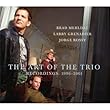 The good news about the latest, long awaited offering from the Brad Mehldau Trio is that it contains the sort of beautiful and well-played tunes one might expect. The bad news (perhaps) is it contains the same sort of beautiful and well-played tunes one might expect.
All of the songs on Ode are Mehldau originals. It opens with "M.B.," a nice, but not startling piece. It is followed by the title track. These two, "Twiggy," and "Aquaman" sound, for the most part, like material I've heard before. I like them, but they aren't all that fresh. "26" is a bit like these, but is saved by some interesting chord and time changes as well as a fiery solo. On tunes like "Dream Sketch," the group makes subtle magic. "Bee Blues" and "Stan the Man" are swinging bebop numbers that might surprise listeners. "Kurt Vibe" is a toe-tapping, mid-tempo piece that gives each player plenty of room to solo.I'm not sure what "Wyatt's Eulogy for George Harrison" is about, but the title is appropriate. It sounds like a funky dirge played over a western. "Days of Dilbert Delaney" closes the disc with emotive, Beatlesque flair.
Ode is perhaps not a groundbreaking album. But the project does find Mehldau's trio in fine form, and still stronger than most combos.
Wednesday, June 06, 2012
Bookmarks--140 And Counting
 140 And Counting by Joanne Merriam
My rating: 5 of 5 stars
In an effort to write less and say more, I have taken to using the Twitter format (@bluemonk63). Along the way, I have found several others doing the same thing, precious few of them well.
In 140 And Counting, Joanne Merriam has collected 141 pieces of microlit: tiny poems and very short stories previous published in her webzine 7X20. I had expected to find some clever little lines, the sort of thing one thinks is funny or poignant the first time it is read and tedious after the third posting. However, nearly all of them are worth reading over and over.
What should appeal to the average reader is that most of the poems will not read like the haiku so many dislike because it seems to say nothing quickly. These poems, for the most part, are well crafted and thoughtful. The best of these caused me to stop and replay them in my mind.
The stories here also work like good poems, jabbing at the senses, the heart, and the mind like a dagger making quick work of our preconceived notions about fiction. Don't be surprised if you find yourself chuckling one minute and gasping the next.
A handful of the selections didn't work for me, but there were very few of these. And when I read over them a second time, I couldn't help thinking they would work for someone, that what didn't immediately resonate with me might well spark something in another reader.
Chances are you have not heard of any of the authors in 140 and Counting. But I hope you will have before too long. Joanne Merriam has collected some terrific pieces which well represent a genre that needs to be taken seriously.
View all my reviews
Tuesday, June 05, 2012
Bookmarks--Between The Bridge And The River
 Between the Bridge and the River by Craig Ferguson
My rating: 5 of 5 stars
One might think, a few pages into Mr. Ferguson's novel, that the author is trying to piss off as many people as possible. I know I took a little offense at some of the jabs, not so much at organized religion (which has, by and large, earned the disdain), but at the pictures of Christ and St. Francis and other religious figures.
I also have trouble with any stories where there are no characters with redeeming qualities. And one almost has that in Between The Bridge And The River. Almost every main character in this rollicking novel is about as contemptible as can be drawn. Of course, like many people, as the reader gets to know some of these people, it is difficult to keep from liking or at least sympathizing with them.
On the other hand, these characters redeem themselves for me as a reader because they are interesting. They are not caricatures of bad people, but very human beings who have taken paths of what they would never call unrighteousness. Because we see their falls (or rises, if you prefer) from the beginning and from their perspective, they are much more compelling. If you read this novel and think any character is evil, then you cannot help but connect that evil to what we have come to accept.
Sure the book is philosophical, but that may only be my take on it. This is a very funny book, though not in the way viewers of Craig Ferguson's late night show have come to expect. Highly entertaining, sharply written, and thought provoking. What more could you ask for?
View all my reviews
Bookmarks--In God We Trust
 In God We Trust: All Others Pay Cash by Jean Shepherd
My rating: 4 of 5 stars
A Christmas Story is probably my favorite holiday movie, so it is with some trepidation that I finally got myself to start Jean Shepherd's book, on which much of the film is based. I try to keep away from comparisons of books and movies. They are different art forms, and so should be judged separately. And since only about three and a half chapters from this book are actually in the movie, that distinction seems even more important.
But I cannot help but make a couple of notes. For me, the movie is a funnier experience. Part of the movie's charm is Shepherd's narration, deadpan and filled with hysterical description and hyperbole. For those sections of In God We Trust that are dramatized, however, Shepherd sometimes tells more than shows. Oddly, the book as a whole is not like this. Many of the stories here are told with rich and delightful details, much like what we see and hear in the film.
In God We Trust: All Others Pay Cash is a collection of remembrances held together by the narrator (Ralph) as a grown man visiting his old hometown and spending the day sitting in the bar talking to the proprietor, his old friend, Flick. Ralph has escaped the industrial crumbling town to live and work in New York. As the day keeps going (and many beers have been drunk), Ralph goes over a variety of incidents, including his quest for the Red Ryder BB Gun, his father's "special award," his first fishing trip with the Old Man, a funny marching band story. Along the way we see Ralph's triumphs and embarrassments as well as a mostly warm picture of life during the Depression. (The images of angry women throwing gravy boats and Ralph trying to explain The Decameron of Boccaccio still make me laugh out loud.)
Shepherd's semi-autobiographical book is a satisfying read. Don't expect the movie. However, like the film, the book reminds us of our own stories and friendships. Expect to be entertained and to remember a few things.
View all my reviews
Tuesday, May 29, 2012
Bookmarks - Fast Fiction
 Fast Fiction: Creating Fiction in Five Minutes by Roberta Allen
My rating: 3 of 5 stars
Roberta Allen's Fast Fiction focuses, as one might expect from the title, on writing and refining flash fiction or what she and others call the "short short story." But she does include some information about taking these small nuggets and expanding them into longer stories and even writing novels.
The crux of Allen's method is to write for five minutes at a time, using short prompts to guide the freewriting experience. One could use what she calls a directive, such as "Write a story about a broken promise" or "Write a story about a crime," or the writer could use a picture and one of the questions posed for that picture. An example of the latter is a picture of a house with the question, "Who couldn't wait to leave this house?" The idea is to write whatever comes to mind about the topic until the timer is up without straining to worry about what the inner critic says to stymie the creative process.
As I read, I took some of her advice and modified the process to suit my own goals. I found that the experience of drafting such short works (mine were a little longer) was pretty liberating. I often started with something I thought would lead nowhere only to find an interesting (at least to me) story came out. As of this writing, I have not worked through the revision stage as she suggests, but Ms. Allen really wasn't breaking new ground for me.
So to a degree, I think the process can work. And as I reflect on the book, I think with modifications, the general idea could be used for a number of writing needs, some creative, others not so much. But I do have a serious reservation.
Ms. Allen focuses much of the book on feelings and "energy." Her answer to nearly every question about whether something works or doesn't is that it "feels right." She suggests looking for the lines that have the most energy and working from those in revision. While she talks about her own students work-shopping their exercises, she does not really address the fact that writers are not always good judges of their initial work.
In addition, Ms. Allen ignores the discipline it takes to be a writer, whether a novelist or a writer of flash fiction. I am not saying that feelings are not important, but there are far too many writers working out feelings and writing crap and many who say they are writing, but don't get the right feeling, and so produce next to nothing.
All that said, I think Fast Fiction contains some useful ideas, particularly for those writers who need to try something fresh or would be writers who can't seem to get started. But like most books on writing, one should take what can be of use and ignore the rest.
View all my reviews
Thursday, May 24, 2012
Bookmarks -- Come Climb My Hill

I ran across this volume browsing in the library in Royse City. Normally, such a book turns me off, but perhaps my recent reading and commitment to walking has awakened something in me where I could not help but smile with this quaint poem and delightful pictures.Come Climb My Hill is about what you might expect, a call to wander in nature and seek what you may not even know what you need to find. But the poem avoids the polemic and sermonizing about finding God in nature (though it admits the possibility). I love the way it begins, saying to the open reader:
because--
you have listened
to the heartbeat of the earth
you have been invited to --
Along the way, the reader is reminded "only a Master Artist/can create a meadow." Okay, that line is a little hokey, perhaps, but Mr. Abbott manages to show its truth, not by argument or shouting to just look at nature, but by describing the details and delights of simply walking where nothing distracts the eye and ear.

Bette E. Bossen's drawings are more than complementary to Mr. Abbott's verse, but I think an integral part of experience of reading the book. They encourage the reader, like the words, to take forward steps to on a simple, but transformational journey.
The verse and pictures of Come Climb My Hill don't come close to Wordsworth, but they doesn't need to. This little book is an invitation worth accepting.
Monday, May 21, 2012
Bookmarks -- If These Trees Could Talk
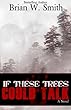 If These Trees Could Talk, by Brian W. Smith, is about two boys who are sexually abused and plot together
to kill the men who are molesting them. In addition to the victims and
the perpetrators, we meet the mother of one of the boys and the teacher
who knows something is wrong, but doesn't have the evidence to prove it.
Sounds like an engaging story.
If These Trees Could Talk, by Brian W. Smith, is about two boys who are sexually abused and plot together
to kill the men who are molesting them. In addition to the victims and
the perpetrators, we meet the mother of one of the boys and the teacher
who knows something is wrong, but doesn't have the evidence to prove it.
Sounds like an engaging story.
And for the most part, it is. If
These Trees Could Talk is very interesting, though not really
groundbreaking. It doesn't have to be unique to be a good book. Readers
will be very interested in the characters and will want to know
what happens next. But sadly, this is not as strong a novel as it could
have been.
While overall, the story reads fine, it contains too
much prose which, for lack of a better word, needs revision. There is
needless repetition, sentences that lack life or punch, and lazy
description where the author opts to refer to television shows rather
than really describe. Those problems are not on every page, but appear
frequently enough to put me off. There are also a few moments where the
narrator inserts information or sermonizes, pulling the reader right
out of the story instead of adding to it.
As I said, the novel is
readable and interesting for the most part, and I think that most who
finish it will find the twist at the end something to think about. (I'm
not sure I care for it, but am willing to admit that my feelings may be a
matter of my personal tastes rather than a flaw in the story itself.)
Smith is at least trying to tell an important tale here, and he gives us
perspectives that we might easily dismiss.
Sunday, May 20, 2012
Bookmarks -- Wanderlust: A History of Walking
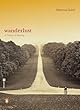
I loved this book, but I do have to get my one problem I had with it out of the way. Wanderlust, in all that it manages to cover,
does not even mention Japanese haibun, a literary form that merges short
prose and haiku. Many of these writings came
out of long walking tours and travel accounts. Not mentioning Basho's
Narrow Road to the Interior seems a crime to me.
That omission aside, I can still say that this is a terrific book, surprising even to me as a walker. From the English
walking gardens to Las Vegas' disappearing public space, Solnit manages
to weave history, literature, politics with her personal experiences concerning her subject.
Rebecca Solnit shows that walking was more than a mode of
transportation "back then," but part of the method of meditation and
rumination for many philosophers, writers, and artists; a form of
protest; and the way one most intensely experiences the world. She also
looks at the politics of walking and argues persuasively that walking
has been denigrated for many years, and that much rests on the fight, not only
for public space. Near the end of the book, she writes, "The fight for free space -- for wilderness and for public space-- must be accompanied by a fight for free time to spend wandering that space."
But Wanderlust is not a manifesto. It is filled with
fascinating stories about the people and places where this history
continues to live and be written. And even for me, one who has found great value
in the simple walk, Solnit's book has inspired me to make walking not just exercise, but an integral part of life.
Subscribe to:
Posts (Atom)